
Puff the Magic Dragon
I don’t know that I would trust anyone who doesn’t get a bit emotional when little Jackie Paper grows up and leaves his friend Puff behind. “A dragon lives forever, but not so little boys. Painted wings and giant's rings make way for other toys, One gray night it happened, Jackie Paper came no more. And Puff, that mighty dragon, he ceased his fearless roar” I was potting up some Petunia patagonica cuttings from the bench the other day, and that song came on my Spotify shuffle. I always get a bit teary eyed when that lyric hits. Harry Chapins ‘Cats in the Cradle’ does the same thing to me, everytime.
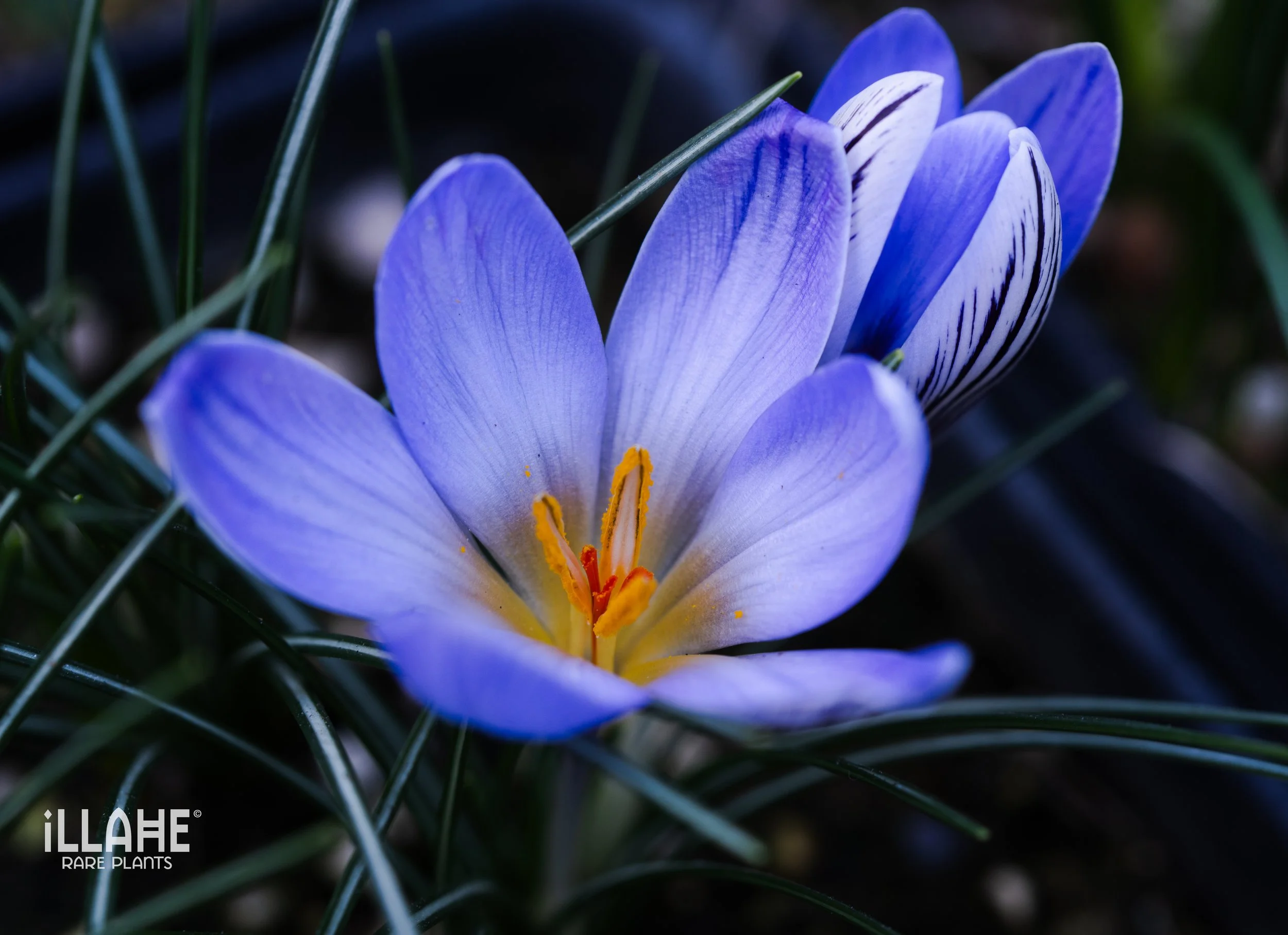
Crocus orfei has been blooming in the bulb house for about 3 weeks now.
What does that have to do with plants you ask? Nothing really, but in some crazy, concocted connection I will try to draw a line. I used to grow a lot of Crocus species, if you have heard my talk on growing alpine plants where I talk about switching from leaf mould to cow manure as the primary organic ingredient in the soil mix. You know that switch was when the Crocus collection started to diminish here. I have been rebuilding it for years now, desperately trying to find seeds of species that have disappeared from commercial lists. Some perhaps even disappearing in the wild due to all sorts of issues, urbanization, development, grazing, climate change, you name it if there is a pressure that can be put on a plant. I am just now starting to see the fruits of that labor to rebuild the Crocus selection pay off. A lot of species I sowed from seeds in the years between 2020 and 2022 are starting into bloom now. A few new ones flowered this week and it’s kind of like recapturing the magic of youth when I see a flower I have been coddling for years from a seed open for the first time. Bulbs from seed are an investment, a long haul investment that sometimes doesn’t pay off at all if you don’t get the conditions right.
Crocus malyi opened this week, one that was brought back from nursery extinction after solving the riddle of the leaf mould. From the Velebit Mountains of Croatia, this wonderful white flowered yellow throated species has rich egg yolk yellow stigmas. The Velebit mountains have brought me a number of great plants over the years and I would love to go explore the flora someday myself.
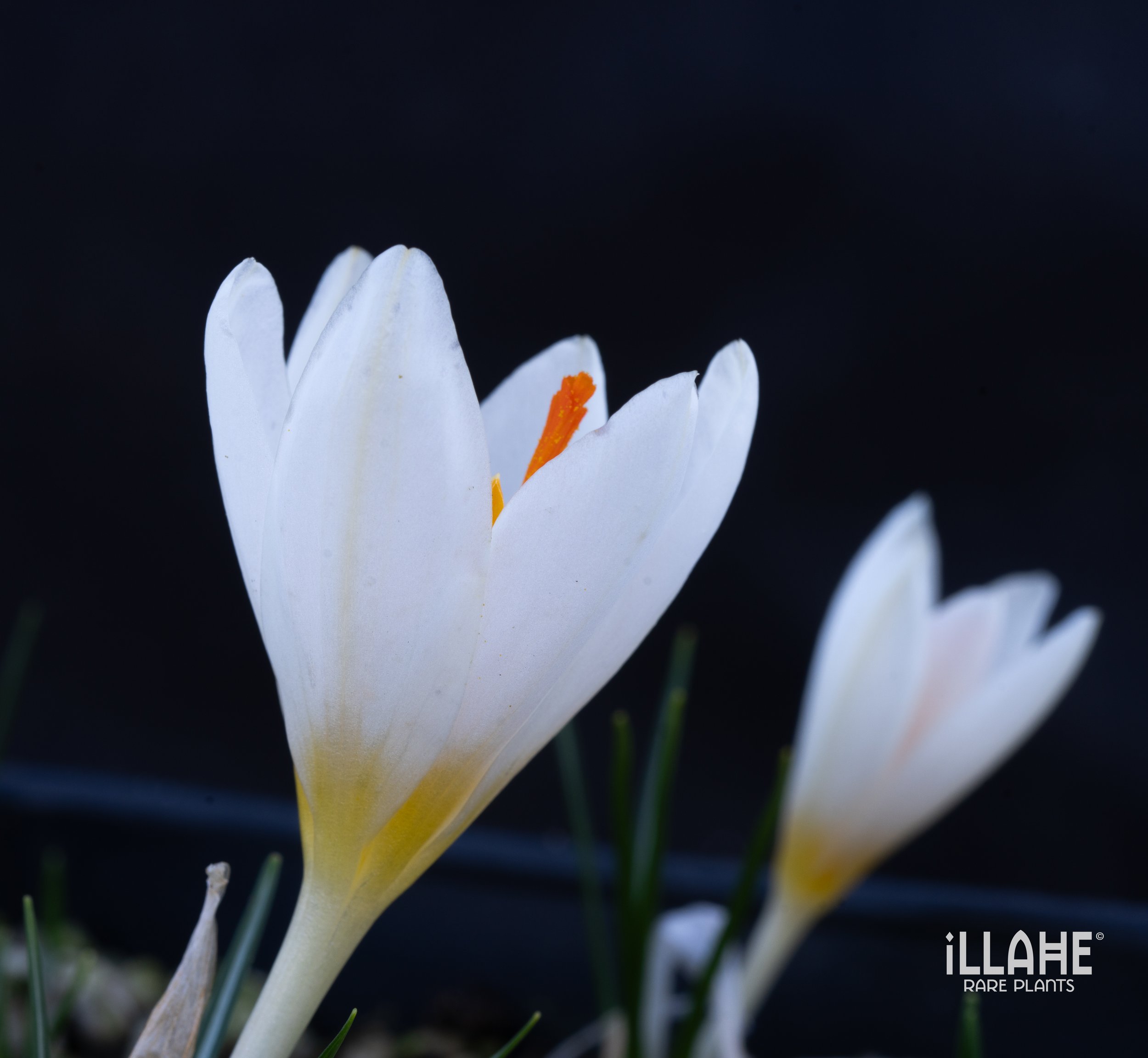
Crocus malyi
The Velebit mountains like much of the balkans have a rich dragon lore. The karst caves that dot these landscapes are home to many tales of dragons lairs. In the white limestone spine of the Dinaric Alps, where sinkholes swallow rivers and storms roll in from the Adriatic without warning, the shepherds say a dragon sleeps beneath the karst. He is not a beast of fire but of thunder, coiled in vast echoing caves where underground waters run over his scales. When black clouds gather and hail threatens the flocks, the mountain trembles and lightning splits the peaks — the dragon rising to battle the storm-demon in the sky. And if the rain falls soft instead of hard, the old people nod and say the guardian of stone has turned in his sleep and spared them once again. Its fun imagery and to a kid who grew up engrossed with anything Tolkien, legends of dragons are a reminder of an innocence lost to adulthood.
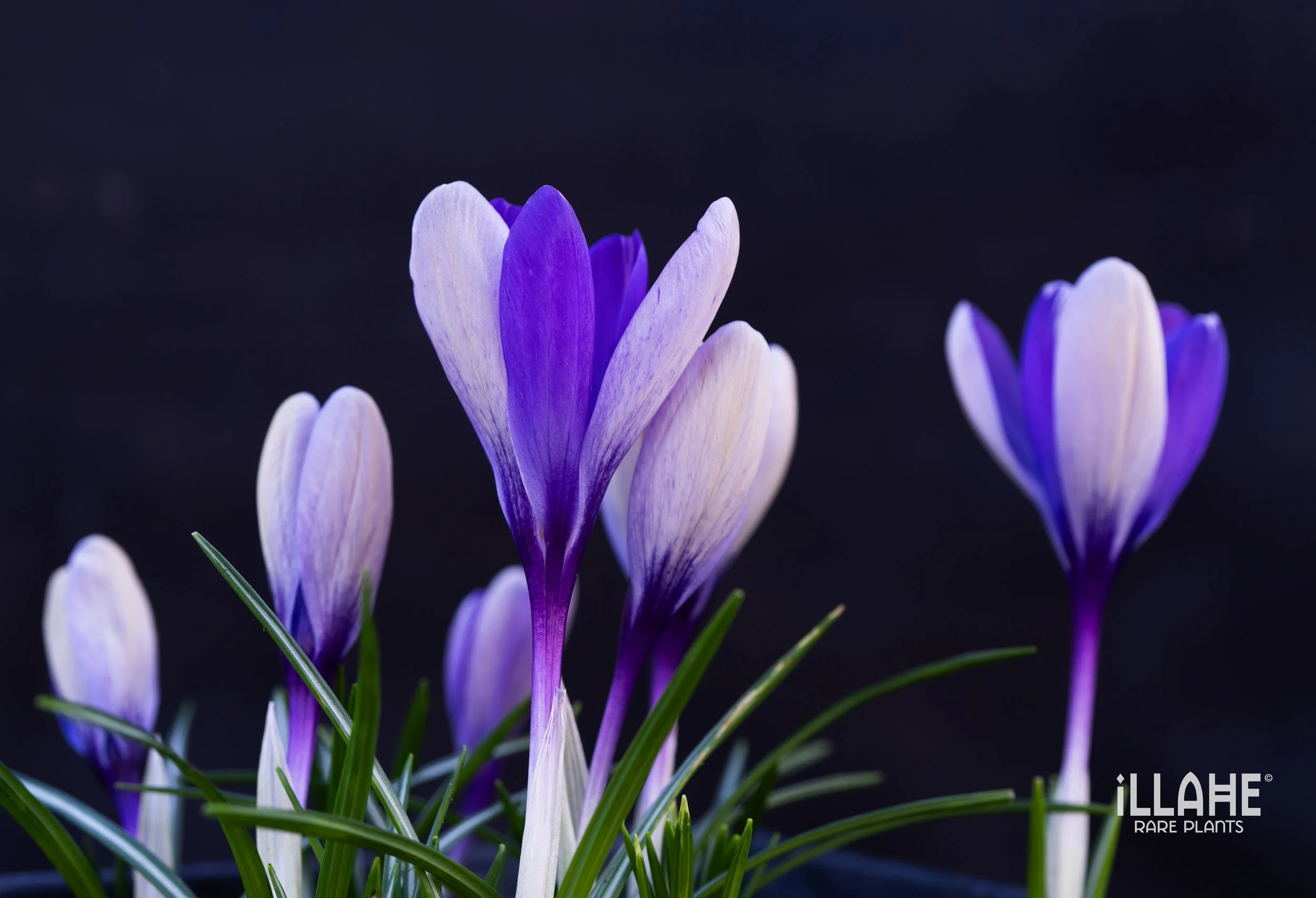
Crocus ‘Yalta’
Crocus ‘Yalta’ is a time tested selection that has been with me for many years and survived the mass extinction of the Crocus collection some years back. ‘Yalta’ was selected by Latvian bulb specialist Janis Ruksans from seed he obtained from the Nikita Botanical Garden in Yalta, Crimea. The original seed was from a Crocus tommasinianus plant that had almost certainly naturally crossed with a Crocus vernus or a Crocus vernus-type cultivar (possibly something like ‘Vanguard’).
I have been doing some scientific dives into potting soils for bulbs lately, looking hard at alternative organic amendments and currently have an experiment set up comparing a municipal biosolid compost, worm castings, and cow manure bio-digestate as the primary organic component in a replicated study looking at growth rates of two different flower bulb species, a seed germination trial and a rooted cutting growth response. Should be an interesting experiment and I’ll look forward to sharing the results. When I was younger I really wanted to do scientific horticultural research, but that turned out to be my ‘Painted wings and Giants Ring’s’. I try to fit these types of experiments into the nursery work as much as possible now days, more so out of necessity for production and profitability maximization then out of Scholarly curiosity. But both certainly have there place. Did I do it, did I draw a good enough line from Puff the magic dragon to a diminutive wildflower of the Velebit Mountains, back to my childhood and then a squiggly line to the realities of adulthood and time management?
Ok back to business:
If you are in the Philadelphia area this weekend we have a treat for you! I will be at the Delaware Chapter of NARGS talking about ‘Growing Rock Garden and Alpine plants’ This talk has 20 years of my success and failures as an alpine plant enthusiast, some science, a little bit of know how and a lot of lessons learned. As a bonus if you show up to the meeting which is Sunday March 1st, 1:30-3:30 at the Free Library of Springfield Township, 8900 Hawthorne Lane, Wyndmoor, PA you will be able to shop some of our wonderful pre-spring availability plant catalog and I am bringing out some fantastic plants like Dionysia, Petrophytum, Arenaria, Penstemon, Salvia, Telesonix, Whalenbergia, Daphne, Erigeron, etc. etc.
Also, on Monday March 1st, come and herald the start of spring perhaps? I will be talking at the Philadelphia flower show on, "From Habitat to the Home Garden: Cultivating Alpine Plants from Mountains Around the World", spreading the gospel of alpine plants according to Mark. I’m feeling very lucky to be a part of a line up of amazing speakers and I hope to see you there!
Finally, I will leave you with a shot of an amazing Fritillaria from the bulb house this week, the wonderful Fritillaria striata from Kern Co, California. I am testing out my 50mm macro lens for an upcoming trip and I was really happy with the detail it captured in this photo. Lots of Fritillaria still to come as the season is just kicking in.
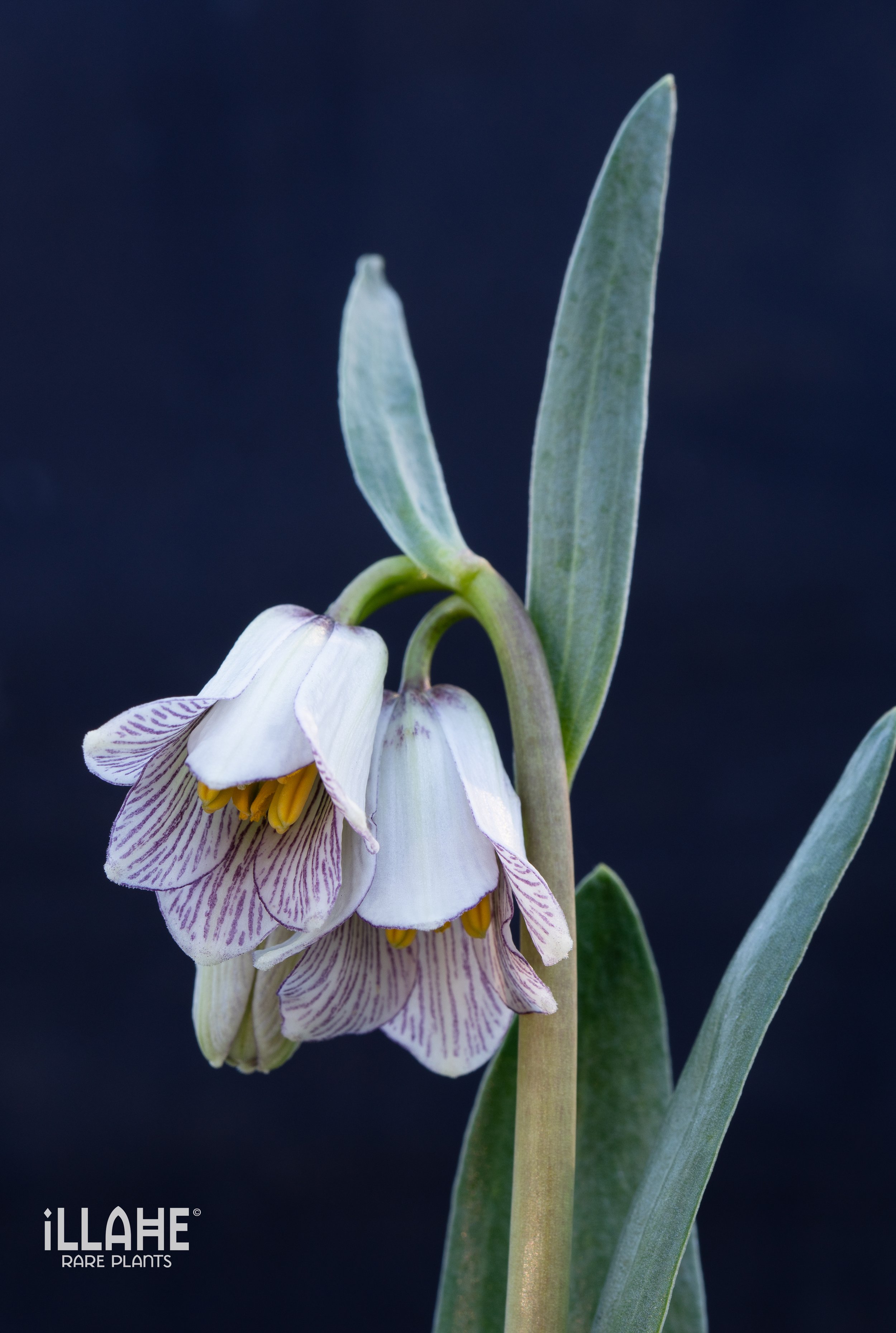
Fritillaria striata
Weather report:
Sunny and warm days ahead! It’s going to be in the 60’s coming up and the spring is going to springing hard I can tell. Stay tuned for the spring catalog shipping update!