
Changing Phases
“If you want to change the future you must change what you are doing in the present”
Mark Twain
We are going to start off 2026 with some science, and a cool look at the future of energy saving technology in the greenhouse. One of the goals when I decided to make a go of doing illahe Rare Plants as my almost full time job (I’m teaching at Chemeketa again this winter term). Was to try to implement as many low impact, eco-friendly, energy saving and innovative ideas as possible. We want to be a change agent wherever possible, and a healthy lack of fear of failing has us trying things that maybe others won’t give a shot. If you haven’t heard my talk on The Geothermal ‘Climate Battery’ Greenhouse design that we built at illahe you have an opportunity coming up in February, but you have to head over the the Calgary Rock and Alpine Garden Society website to sign up as a member and you can watch it remotely from the comfort of your own home. Click here for details.
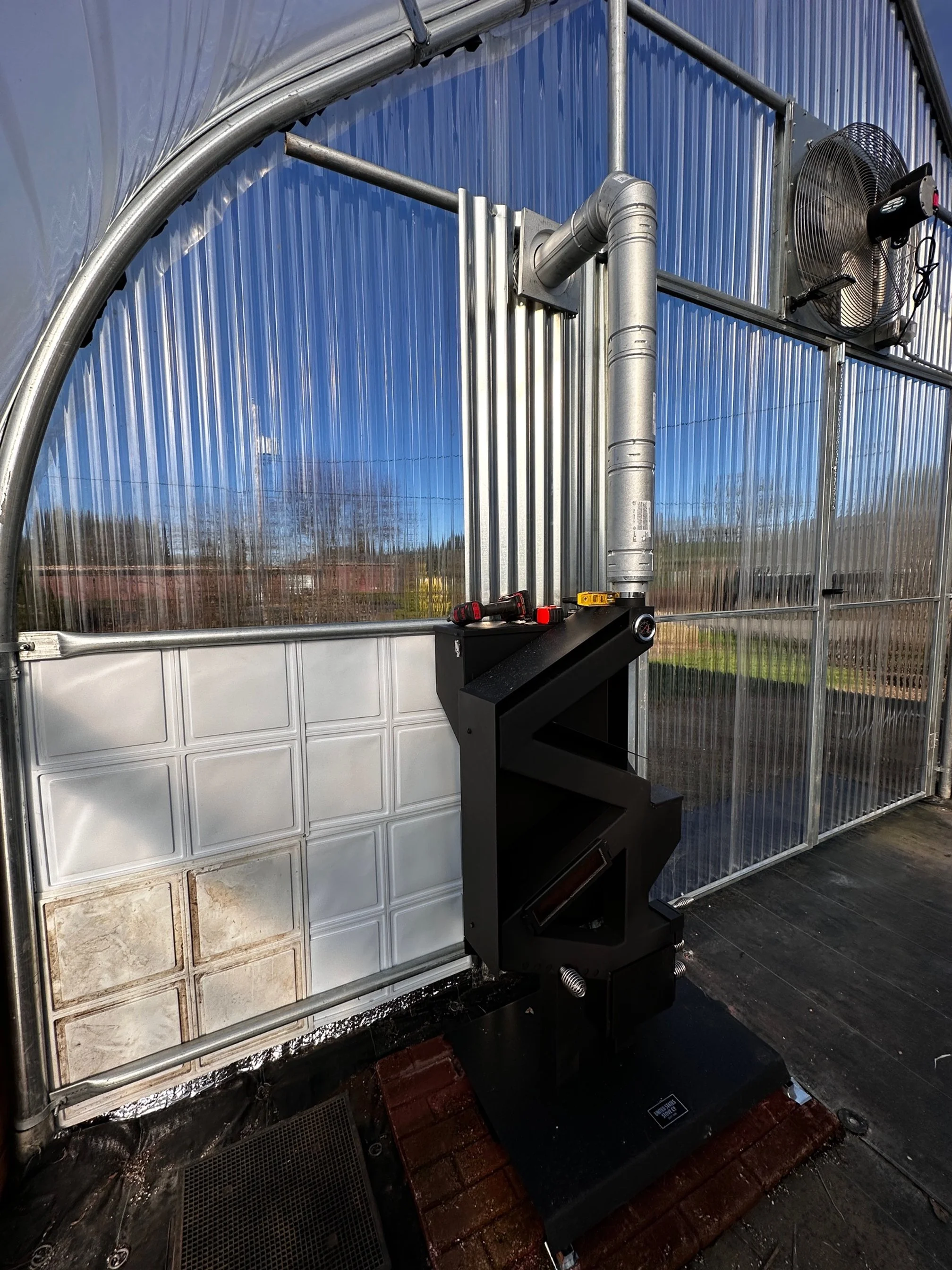
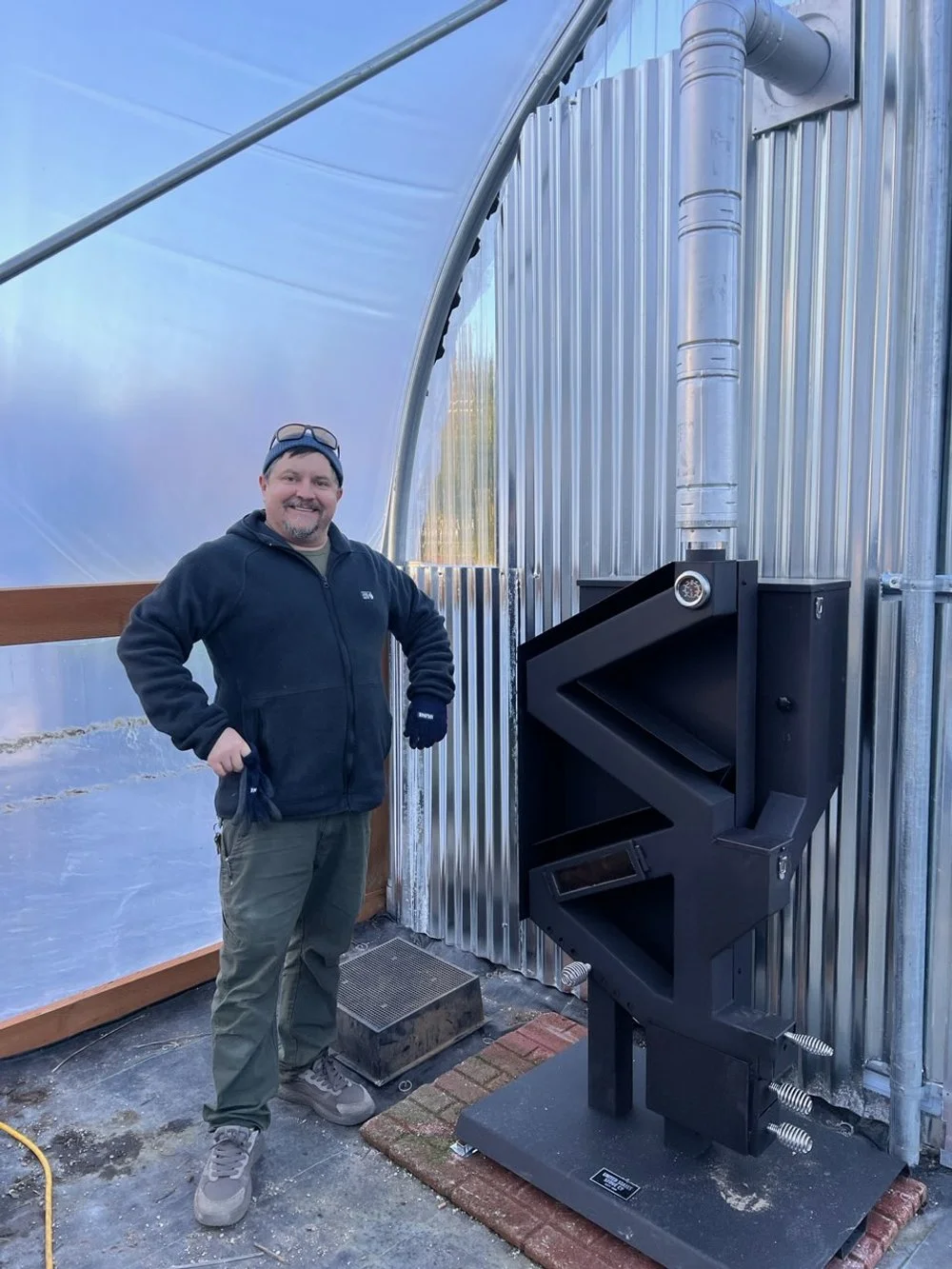
One of the cool things we implemented into the design of the Geothermal house was Phase Change Material Tiles, or PCM for short. Phase Change Materials absorb or release heat as they transition between solid and liquid states. When the interior of a greenhouse warms above a set temperature, the PCM melts and stores large amounts of heat (latent heat). When temperatures drop, it solidifies, releasing that stored heat back into the space. These utilize just the warmth of the sun being trapped in the greenhouse to power the heat savings and return. We used some of these PCM tiles in the “Eco-Radiator” design on the north wall of the geothermal house, and also found them to be excellent at saving electricity when placed below electric heat mats used to root cuttings. While these have been super effective, they require a temperature of around 70 degrees to change phases and while that works for the heat mats and behind the pellet stove when it’s running, they don’t work as effectively in a typical Oregon winter day. The company that makes these, Texas based Fore Energy, recently released a new product designed to change phases at a much lower temperature than the previous PCM tile design. The company sent me a handful of their new Karibu Greenhouse PCM thermal panels to try out and in this blog post I’m going to to into what those are, some testing I did and how they can be used in greenhouses to help cut heating costs by providing passive heat storage.

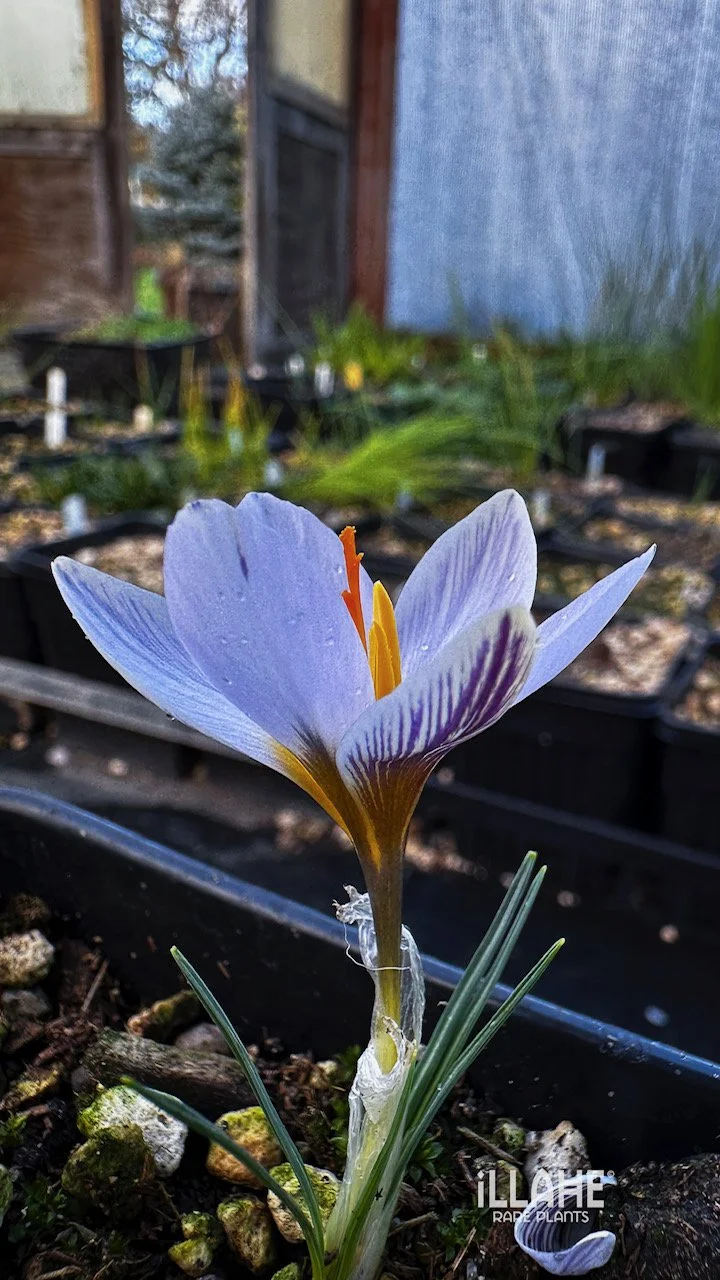
Crocus laevigatus ‘Fontenayi’ welcoming the new year with it’s bright, two toned blooms in the bulb house.
A little Science:
What are PCM Tiles and what do they do:
Phase Change Material (PCM) tiles in greenhouses are an emerging passive technology used to store and release thermal energy to help stabilize internal temperatures, reduce energy use, and improve plant growth conditions without active heating or cooling systems. These tiles or panels use waxes, fatty acids, biobased organics, salt hydrates or eutectic composites set in tile or brick form. You can think of these as Thermal Batteries, that charge up during the day as they collect heat and then draw down as they release heat during the cool of night. Historically, greenhouses growers have used thermal mass storage such as water barrels, rock walls, concrete floors and brick sill walls to collect day time heat and buffer temperatures swings. Visitors in the early days of illahe may remember the 50 gallon blue water drums in the bulb house to store heat. Even now I have 800 gallons of IBC totes in the bulb house to provide some thermal buffering. However these older methods occupy a lot of space in the greenhouse that could be used to grow plants, and they are also pretty inefficient at capturing, storing and then releasing heat. Modern PCM panels or tiles are small, and much more efficient. In the greenhouse PCM tiles help moderate daily temperature swings — lowering peak daytime heat and boosting nighttime lows without external energy input. Studies and model simulations show that PCM integration can extend the viable growing season in passive solar greenhouses by storing daytime solar energy and releasing it at night. In the plant production world extending the growing season is king and every square foot of growing space translates directly to dollars that a grower can earn in a season. Fore energy’s website lists the following specs for the new product:
Each Karibu Greenhouse PCM Thermal Panel provides approximately 250 BTUs of thermal storage.
A standard kit of 10 panels provides:
• 2,500 BTUs of thermal storage
• Approximately 725 watt-hours of usable thermal energy
This past week I had the opportunity to test out some of the new PCM thermal panels for incorporation in the geothermal greenhouse. Check out the gallery and I’ll cover some of what my initial tests showed and how I ran this test. It’s important to note that I tested a single Karibu panel, although it was butted up to another panel. The graph shows only temps recorded from one single panel.
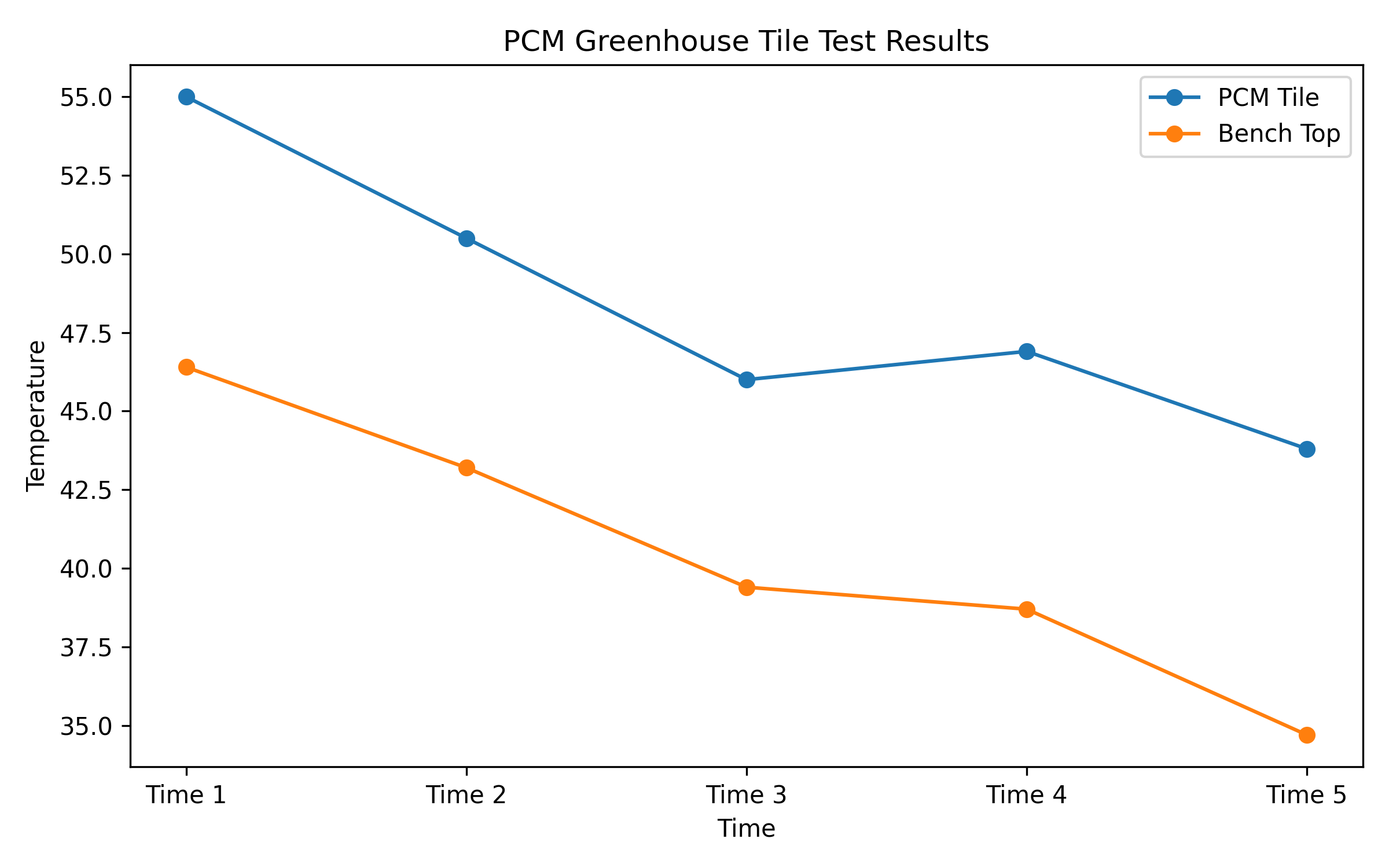
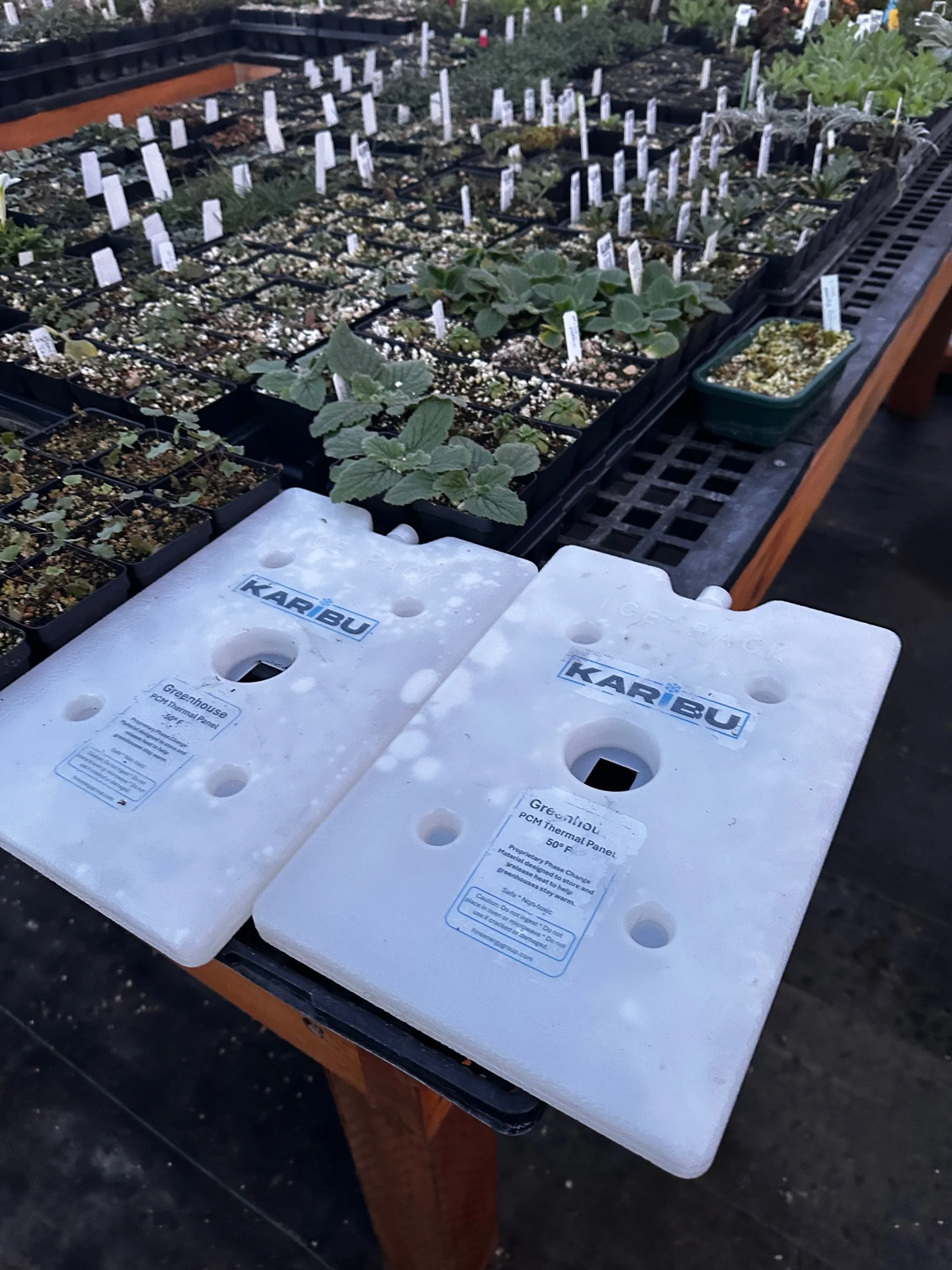
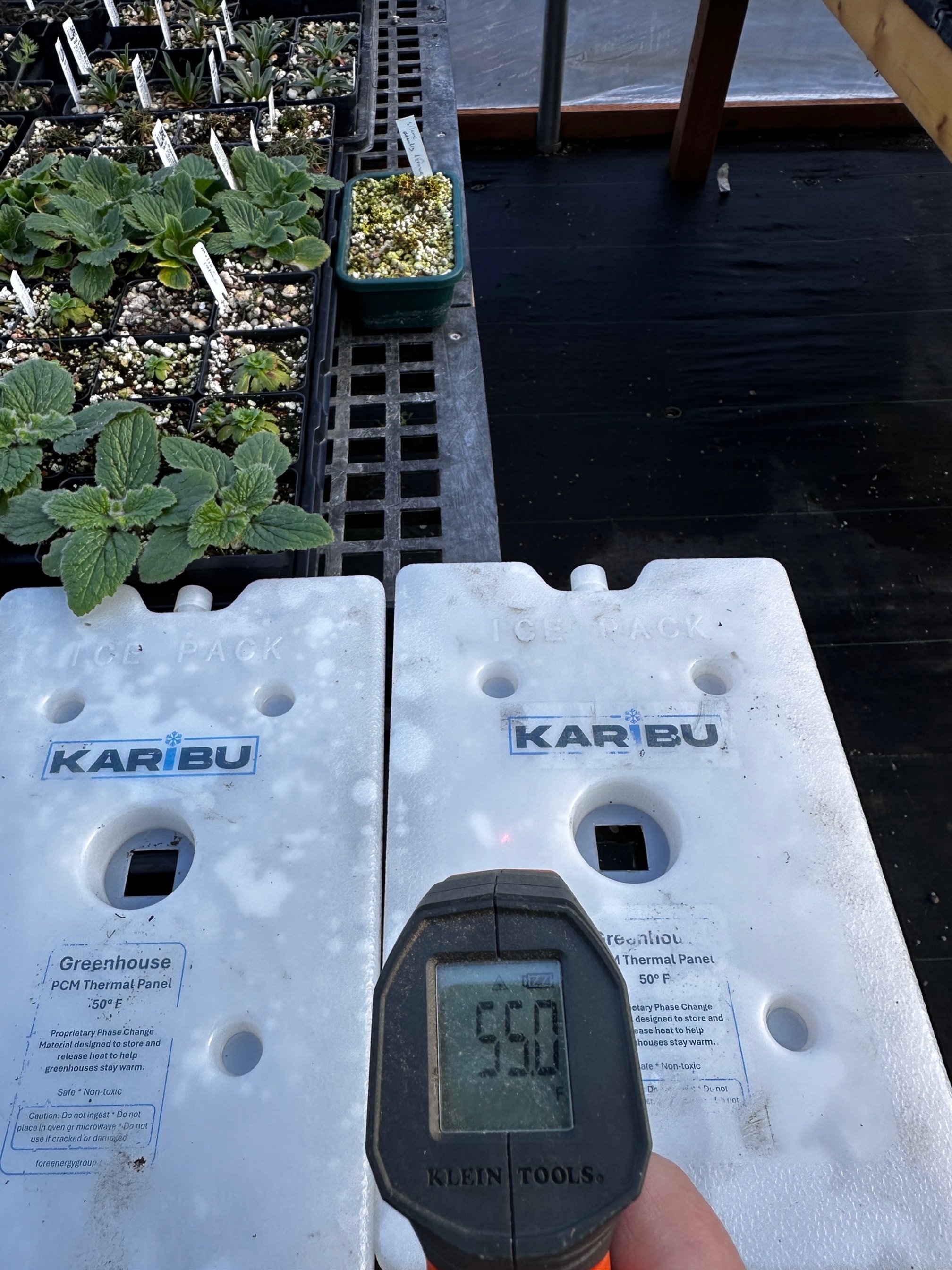

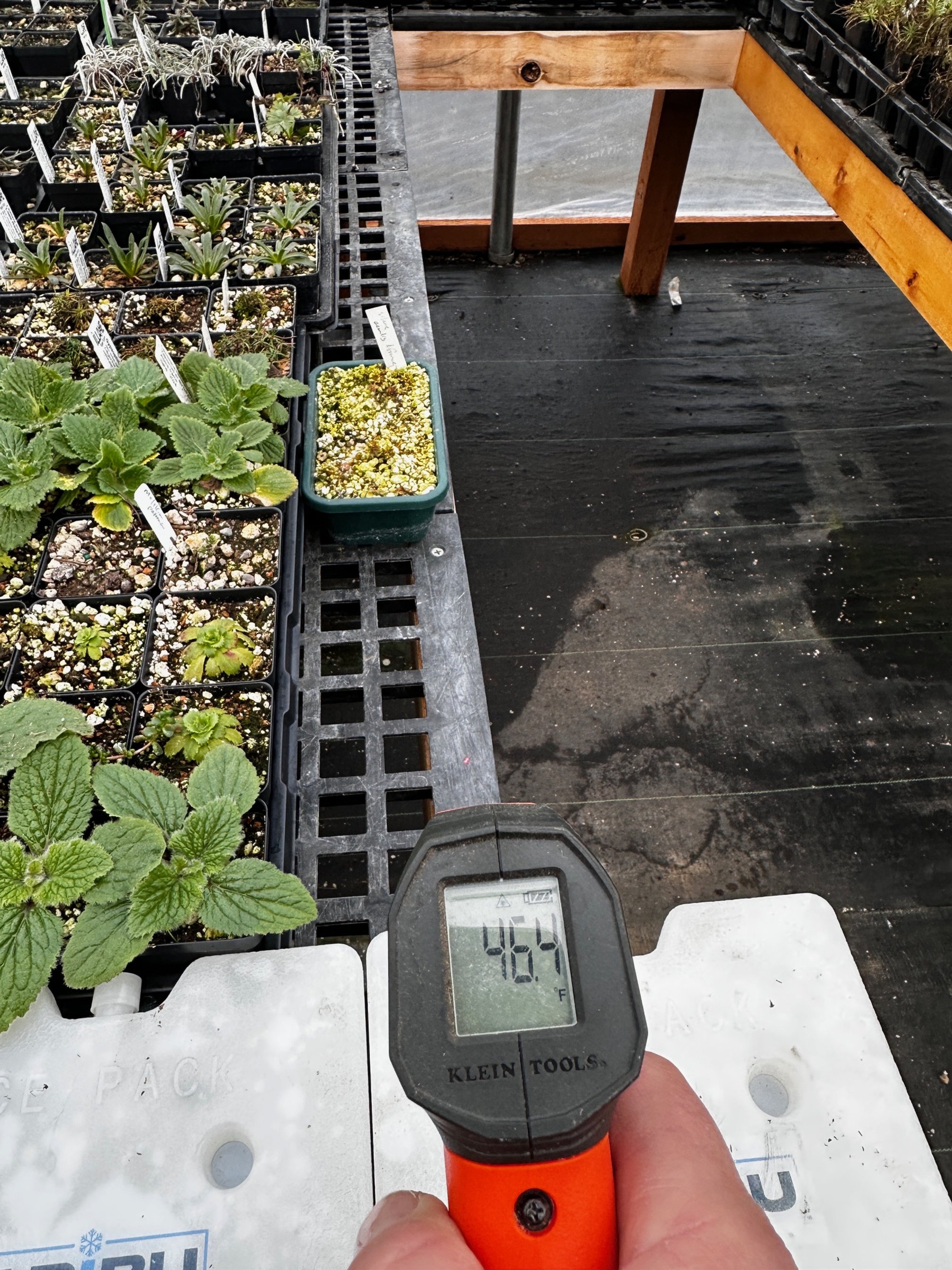
This was a very basic initial test and I plan to do more, testing as time allows, but the initial testing looks really good. The PCM tile maintained consistently higher temperatures than the bench top across all time points and exhibited a reduced cooling rate. This indicates effective thermal energy storage and delayed heat release, resulting in greater thermal buffering compared to a non-PCM surface. The increasing temperature differential over time supports the PCM tile’s role in moderating heat loss under cooling conditions. I think one of the most telling points is how it actually raises slightly as it goes just below it’s phase change point. The test was run under what would be considered the ideal testing conditions for me in a Western Oregon greenhouse. It was early January, the sun came out and warmed the greenhouse up into the mid 50’s. A clear day here in January almost always guarantees a frosty cold night, the exact kind of conditions that you want to store some heat over night in the greenhouse. Sure enough the low got to 28 that night, and with the geothermal running and only a handful of the PCM tiles in the greenhouse, the greenhouse got to 35 degrees. This is the sort of weather pattern that for me is pretty consistent through the winter, on cloudy days the nights tend to stay warmer and with the cloud cover we almost never frost. So the PCM tile charges on clearer days and
I plan to mount a few under the benches, and in this regard the smaller footprint of the thermal panels is a welcome improvement in the design, although the single central mounting point could be somewhat limiting, something to explore in a future post. Future tests will involve some testing of the pots interface with the bench top to see how the root zone might be affected by incorporating PCM tiles. I’ll also run some tests on a bench without PCM tiles trying to keep as many of the remaining parameters in place. I think it’s increasingly up to people like you and me to figure out how to solve the worlds energy problems as you’ll learn in the post script you cannot rely on our government to do it any longer.
I want to champion this technology and I hope other people give it a go, when I can afford to buy some more I will definitely be adding more of these fantastic passive energy savers to my greenhouse.
The company that makes these was cool enough to send me a discount code to share with folks who want to try the panels at a discount. You can learn more about these at Fore Energy’s website: https://foreenergygroup.com/karibu-greenhouse if you decide to try some out use this discount code for 10% off your order: ILLAHEPCM
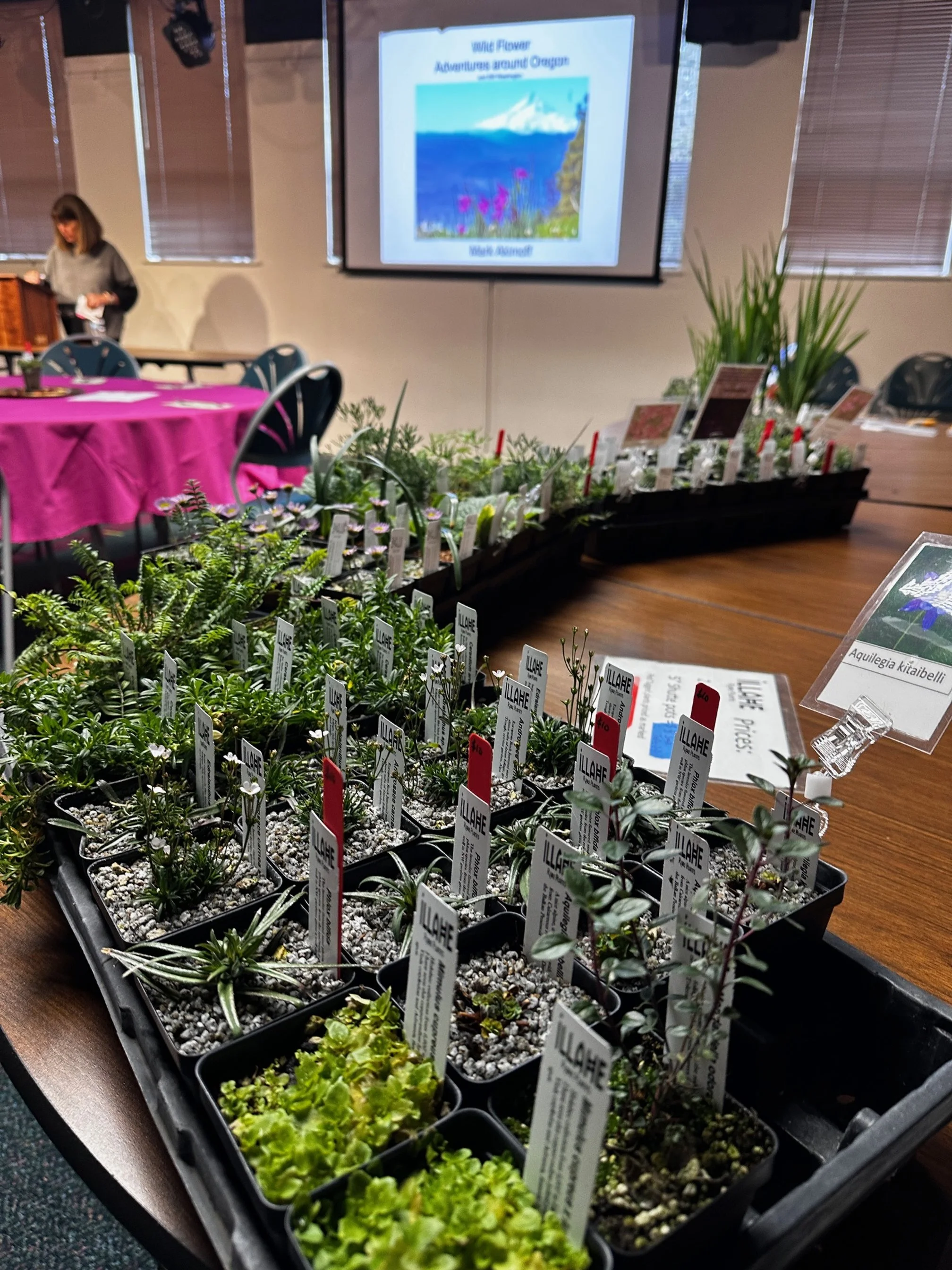
I had a great time doing my talk on “Wildflower Adventures around Oregon and SW Washington” at the Oswego Garden Club this week. I threw a few flats together for the event and while it’s still very much winter we are thinking about spring and assure you some great plants are coming in 2026.
Post script:
Oil was the word of the week. Whatever direction we are headed where we are increasingly relying on non renewable resources is the wrong one. This simple little test of a product that has potential to save greenhouse growers that heat via fossil fuels like oil, propane, natural gas or even electricity showed that there are technologies out there that we should all be implementing wherever we can. Why aren't PCM tiles used in our daily lives at every opportunity? This winter break, we were having dinner with my daughter and one of her best friends, who is a graduate student at the University of Colorado. She was telling us of dozens of grad students she knows that can’t find funding for research work, work that was centered on solar technologies and renewable energy. American students who want to study a better way, and develop new technologies that could lead us into the future had their funding pulled out from under them. It’s no secret that as a country the United States is de-investing in renewable resources. The big beautiful assholes bill that gave more money to the rich and took away resources, markets and opportunities from pretty much everyone else will set us back decades if not a century from where we should be. China in the last few years has out invested the US in Solar and Wind technologies by 3 times. Estimates of future disparities between the countries put them in the lead for decades compared to where we are going. They have invested hundreds of billions of more dollars into the technologies while the US has doubled down on coal and oil and gotten rid of any incentive for the lower to middle income people to invest in clean energy. I had one of the predatory solar companies knock on my door this winter break, so I entertained them and let them run some numbers for me. In the end, I would essentially give my roof space to the power company and end up paying the same astronomical electricity bill in the long run. The technology is here to have a cleaner planet, but the avarice of those in charge won’t allow us access to it. In the long run the United states will falter and fall because of this. On a long enough time scale, resource management is critical to civilizations ability to rise or fall. Watching as our leaders take us away from renewable energies and back towards ancient and polluting technology while dumbing down our students and destroying our science and technology base will have dire consequences.
Are we playing a long game or a short game here?
The time to change the future is now.