
Dionysia
A little greek mythology to start the weekend?
In Greek myth, Dionysus is the only god who wins by yielding. When the king Pentheus of Thebes tried to ban his rites, Dionysus did not strike him down or raise an army. He allowed himself to be arrested, smiled as his chains fell away, and gently encouraged Pentheus to spy on the forbidden celebrations—disguised as a woman. The king’s downfall was not force but curiosity; not violence but inversion. On the mountainside, Pentheus was torn apart by the ecstatic Maenads, led unknowingly by his own mother, Agave, who carried home her son’s head believing it to that of a wild animal, and only later recognizing it. Dionysus revealed himself only after the madness lifted, a god whose power lay in exposing the fragility of repression rather than in brute strength.
The botanical names Dionysia and Agave unexpectedly echo this mythic pairing. The genus Dionysia, named for the god of ecstasy and allure, consists of plants that seem impossibly lush—golden, fragrant cushions blooming from sheer rock faces and hostile terrain. They seduce rather than dominate, thriving where severity should rule. Agave, whose name comes from the same tragic mother in the myth, carries the opposite temperament: architectural, rigid, armored, built around restraint and delayed release. Together, the names form a quiet dialogue between surrender and control, indulgence and austerity—two strategies for survival drawn from the same ancient story, now written into the language of plants. Of course in the greenhouse I have both Agave and Dionysia growing where they are pampered and coddled and cared for on the daily. Both plants of harsh environments, built to thrive on neglect and austerity.
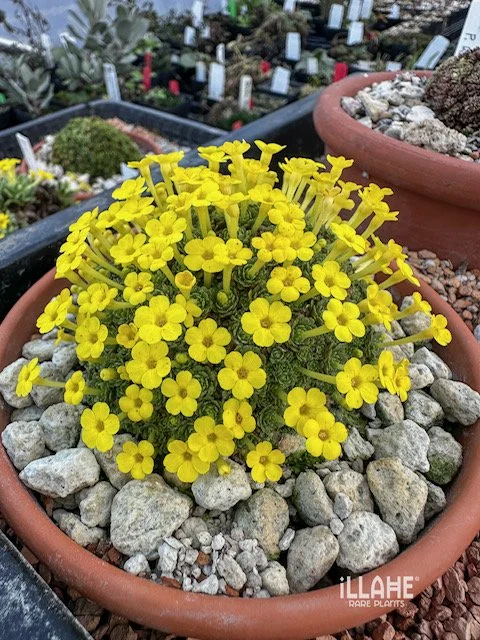
Dionysia aff zetterlandii, I say aff because this came to me as D. zschummelii but that has pink flowers, I will be keying this one out to be sure shortly.
Dionysia was named by the Austrian botanist Eduard Fenzl in the mid-19th century (1843).
Fenzl chose Dionysia after Dionysus, the Greek god of wine, ecstasy, and sensual pleasure. The name wasn’t about drunkenness so much as delight and allure—a nod to how unexpectedly beautiful and enchanting these tiny plants are, especially considering the harsh, cliff-clinging habitats they come from in Iran, Afghanistan, and Central Asia. Maybe about survival against odds? Fenzl was the keeper of the Imperial Herbarium in Vienna, Although he rarely traveled far himself, he named and described plants from some of the most dangerous regions of the world—Persia, Afghanistan, Central Asia—using collections sent back by explorers, diplomats, and military surgeons. This made him an expert in plants he had never seen alive. In Vienna, he became known for his uncanny ability to reconstruct a plant’s habit, ecology, and even scent from dried herbarium sheets. Colleagues joked that Fenzl “saw landscapes in fragments,” which is particularly fitting for someone who named cliff-dwelling genera like Dionysia from pressed scraps of yellow flowers.
Not an easy genus to cultivate, which besides it’s beauty is another reason I’m drawn to it, love a good challenge and these plants offer it. I had a cool discovery these past few weeks of a hybrid of Dionysia aretiodes showing up in a batch of seedlings. A very generous Kenton Seth sent me some older seed he was cleaning out of a refrigerator and it in was a packet of D. aretiodes. Check out what showed up and I still have a number of them to analyze as they are only now maturing into blooming size plants. The gallery also has a few sneak peaks of upcoming catalog offerings.
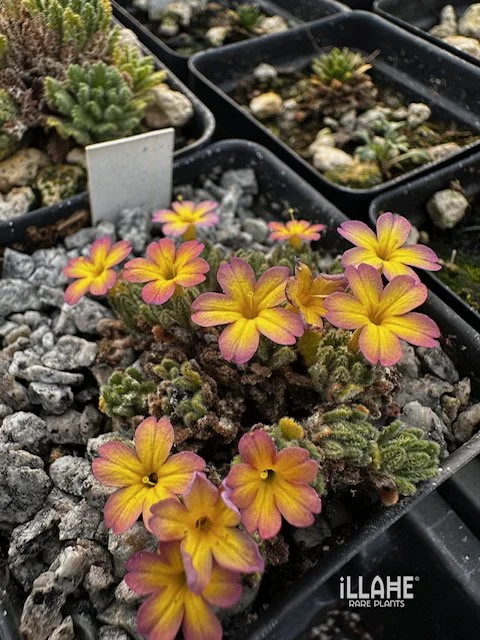
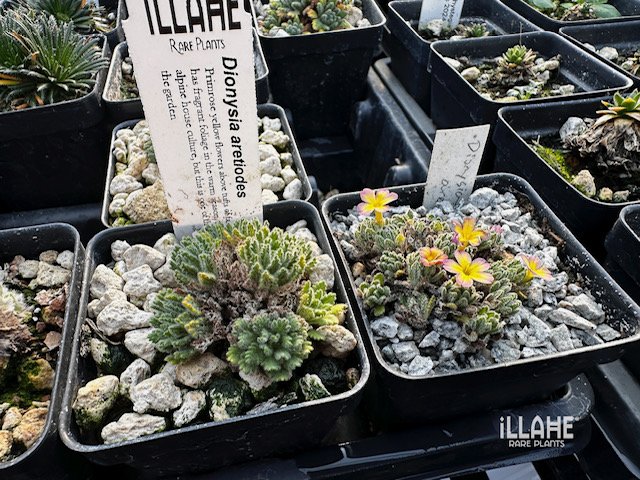
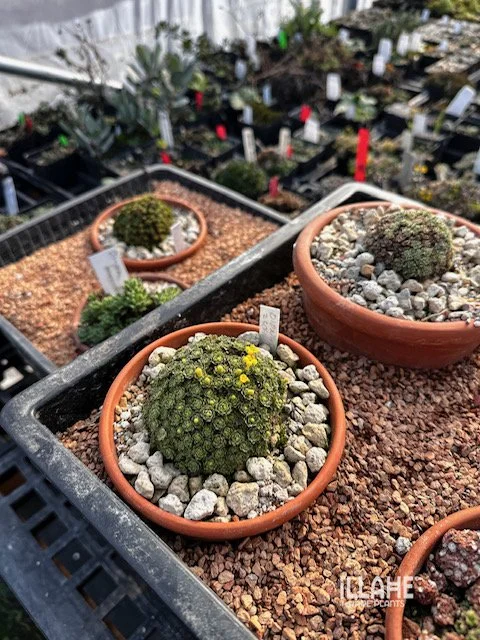
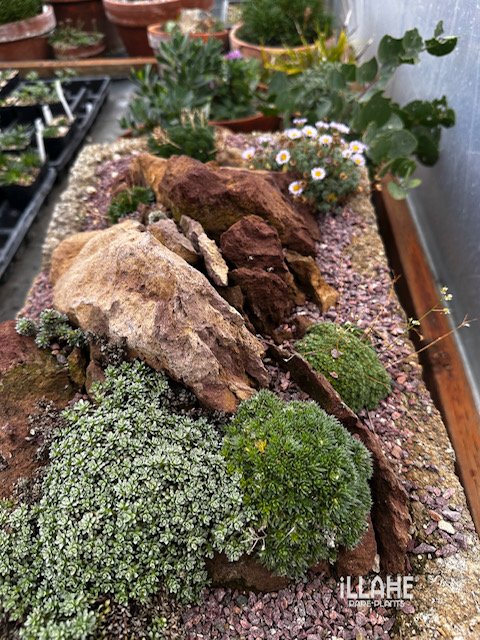
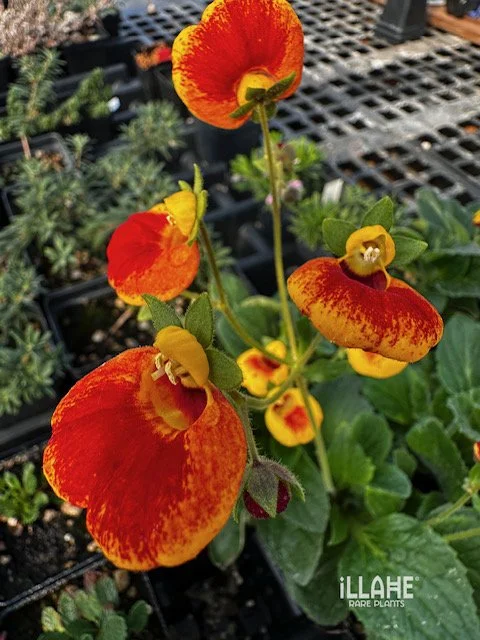
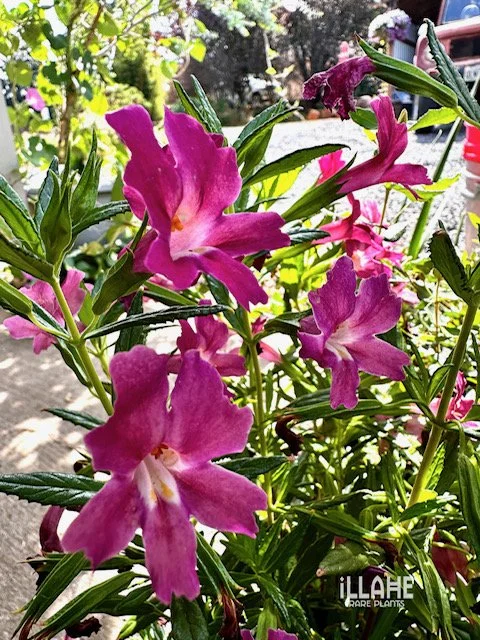
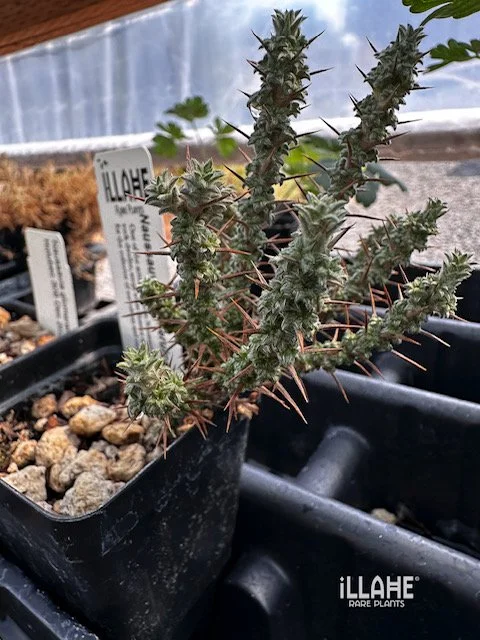
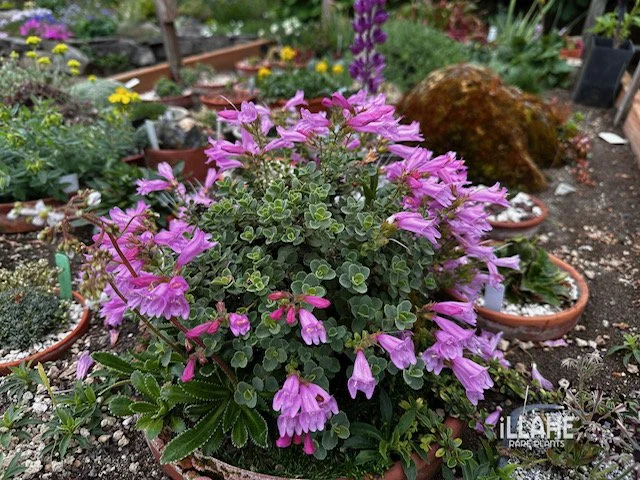
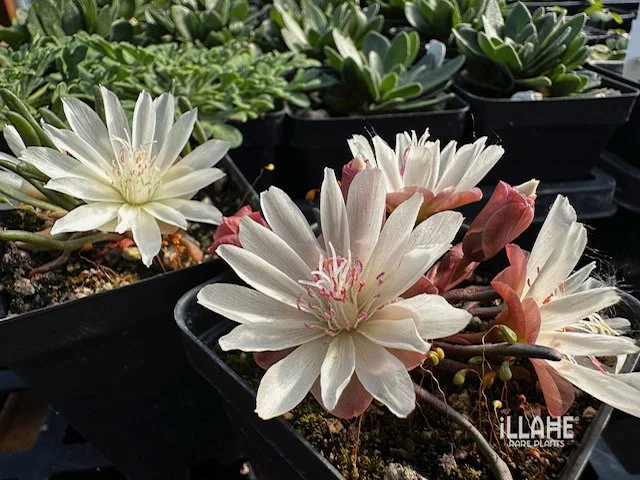
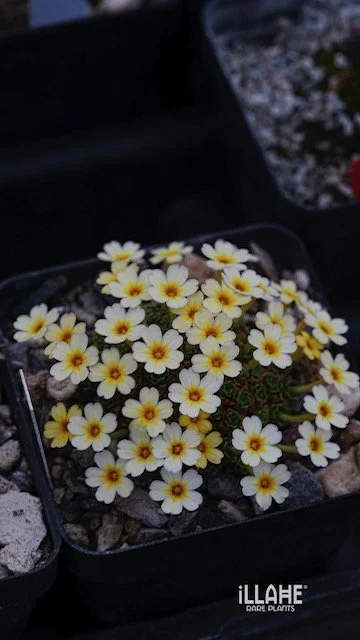
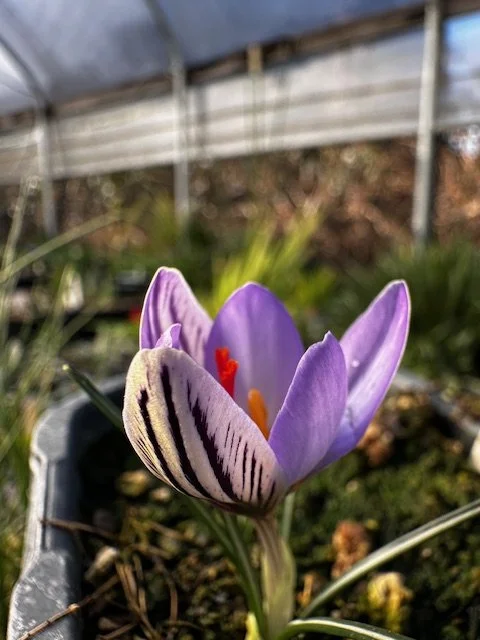
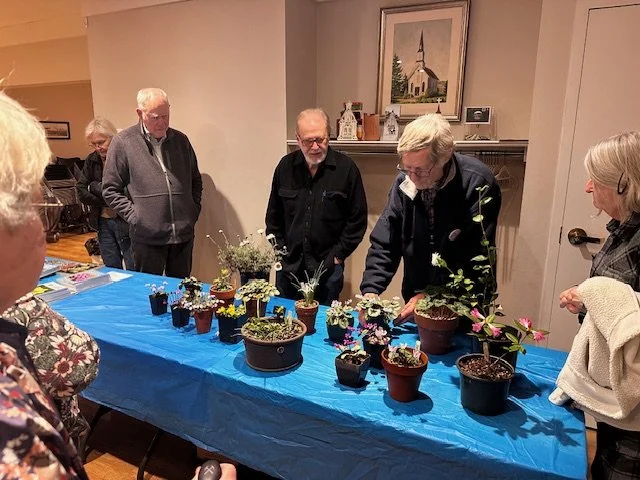
This week was crazy busy, I spoke at the Ashland garden club on Monday to a terrific group. Thanks to all who bought plants! It really helps getting through the lean days of winter. Tuesday it was teaching, and propagation work. I was able to get some cuttings from the late Kathy Allens garden and so grateful to the Siskiyou chapter of NARGS for keeping her garden up. Thursday was a fantastic meeting of the Columbia Willamette Chapter of NARGS, Jane McGary gave a great presentation on Bulbs in their native habitats. Many different species from all around the world, but the coastal areas to the north of Santiago Chile were mindblowing! I have to see the Huasco dunes in bloom before I die! The rest of the week was spent propagating plants, and working on some pumice planters to frame the geothermal house. They are turning out great and I will do a post on them soon.
If you are interested in learning more about the cultivation of the plants seen here, check out the Ontario Rock Garden and Hardy Plant Society it might not be too late to sign up for tomorrows zoom lecture where I will be discussing tips and tricks for growing some of these fantastic treasures. Or hit me up about having me up to your club or group for a private plant sale and in person or zoom presentation?
Happy to see the rain back, after a very spring like week. I actually had to mow the lawn in February which meant a good bit of work getting the lawn tractor fired up, swapping batteries and such.