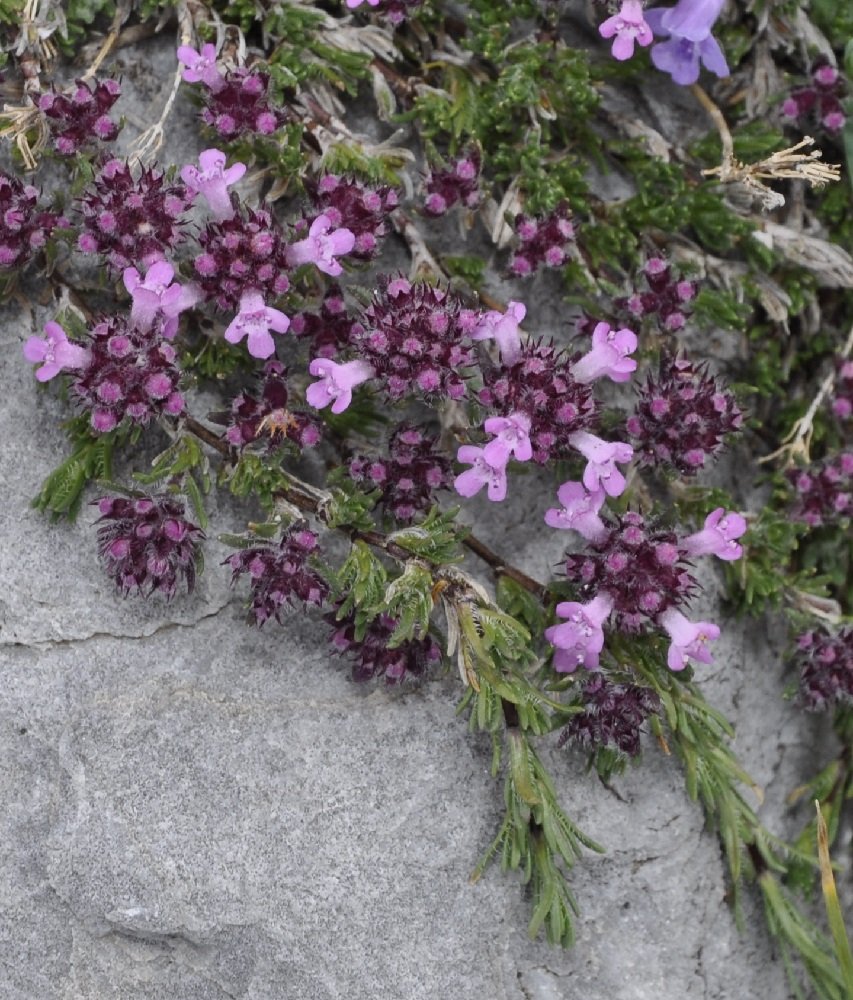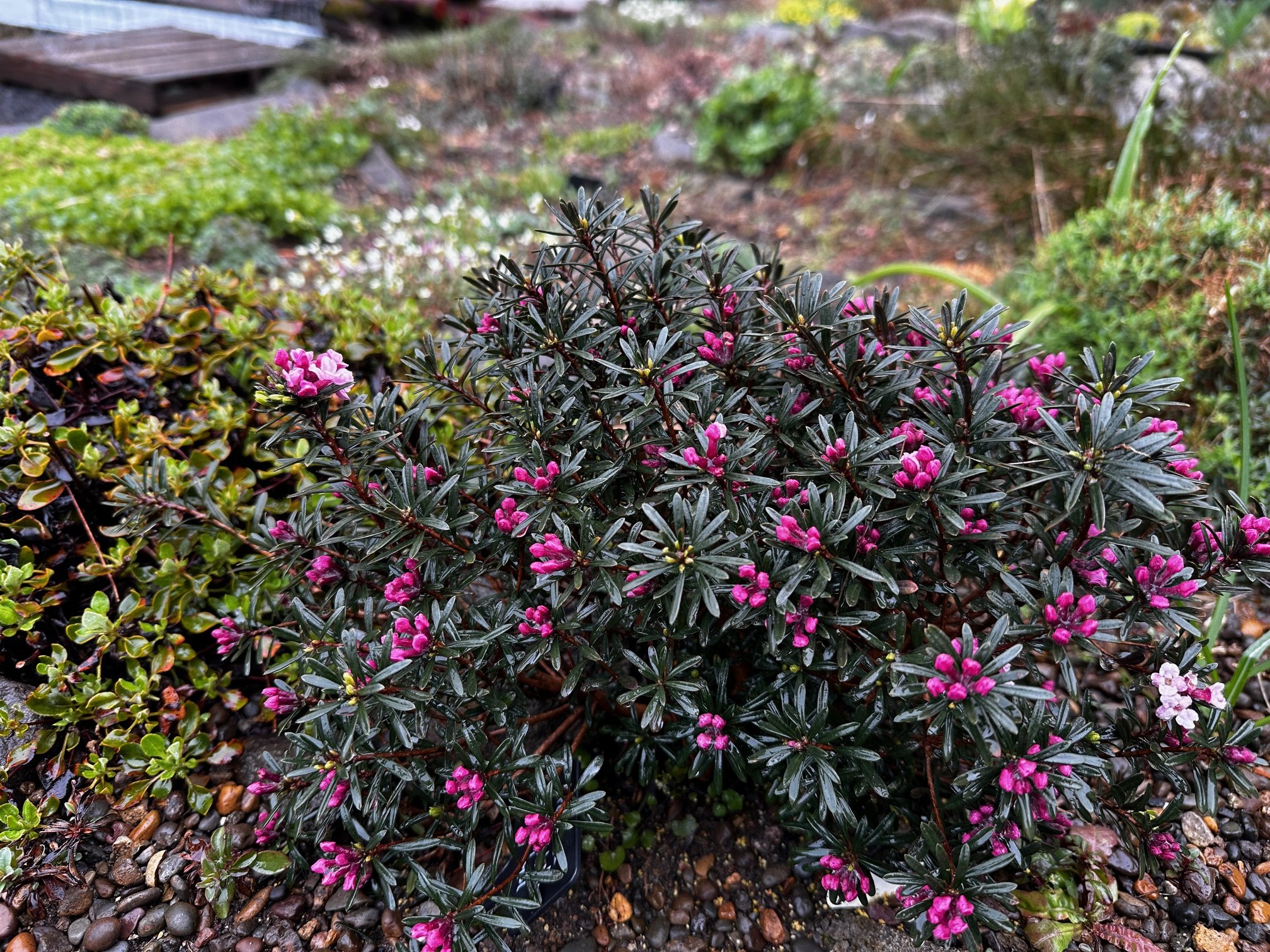
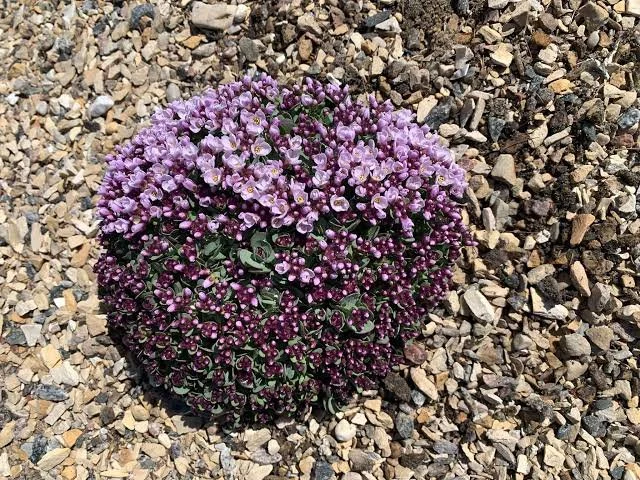
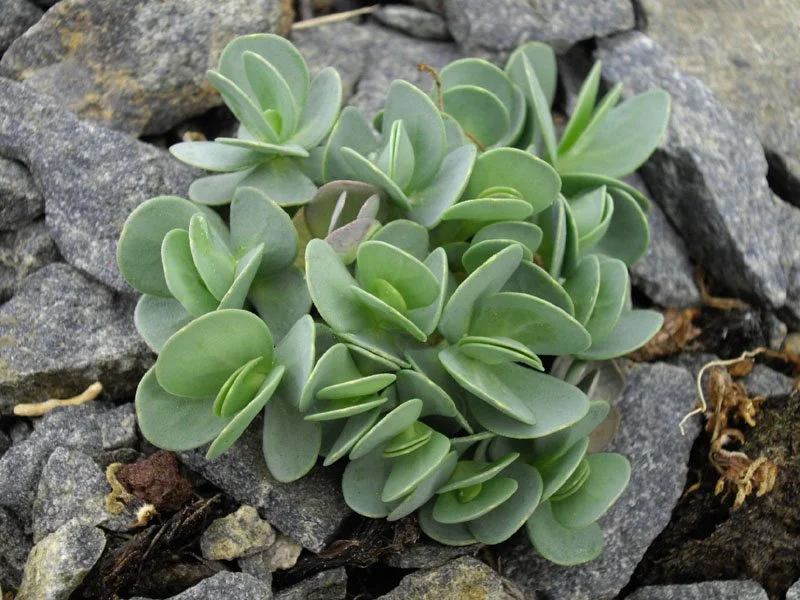
A delightful, compact stonecress forming a low, spreading cushion of rounded, thick, blue-gray to gray-green leaves. In early spring, the branches become covered with tight clusters of fragrant, rosy-purple flowers that open into small, four-petaled blooms. Native from Turkey through Lebanon, it is a plant of dry, stony, generally limestone-based habitats and is particularly well suited to the conditions of a classic rock garden.
One of the more desirable small Aethionema for the rock garden, it remains attractive even when not in flower, with its neat evergreen cushion providing excellent texture among rocks and other alpine plants. Grow it in full sun and very sharply drained, gritty soil, preferably with an alkaline or limestone component. It is especially effective planted in a dry crevice, trough, or at the edge of a raised alpine bed. The species has also been known as Eunomia oppositifolia, a name still encountered in older rock-garden literature.
A delightful, compact stonecress forming a low, spreading cushion of rounded, thick, blue-gray to gray-green leaves. In early spring, the branches become covered with tight clusters of fragrant, rosy-purple flowers that open into small, four-petaled blooms. Native from Turkey through Lebanon, it is a plant of dry, stony, generally limestone-based habitats and is particularly well suited to the conditions of a classic rock garden.
One of the more desirable small Aethionema for the rock garden, it remains attractive even when not in flower, with its neat evergreen cushion providing excellent texture among rocks and other alpine plants. Grow it in full sun and very sharply drained, gritty soil, preferably with an alkaline or limestone component. It is especially effective planted in a dry crevice, trough, or at the edge of a raised alpine bed. The species has also been known as Eunomia oppositifolia, a name still encountered in older rock-garden literature.