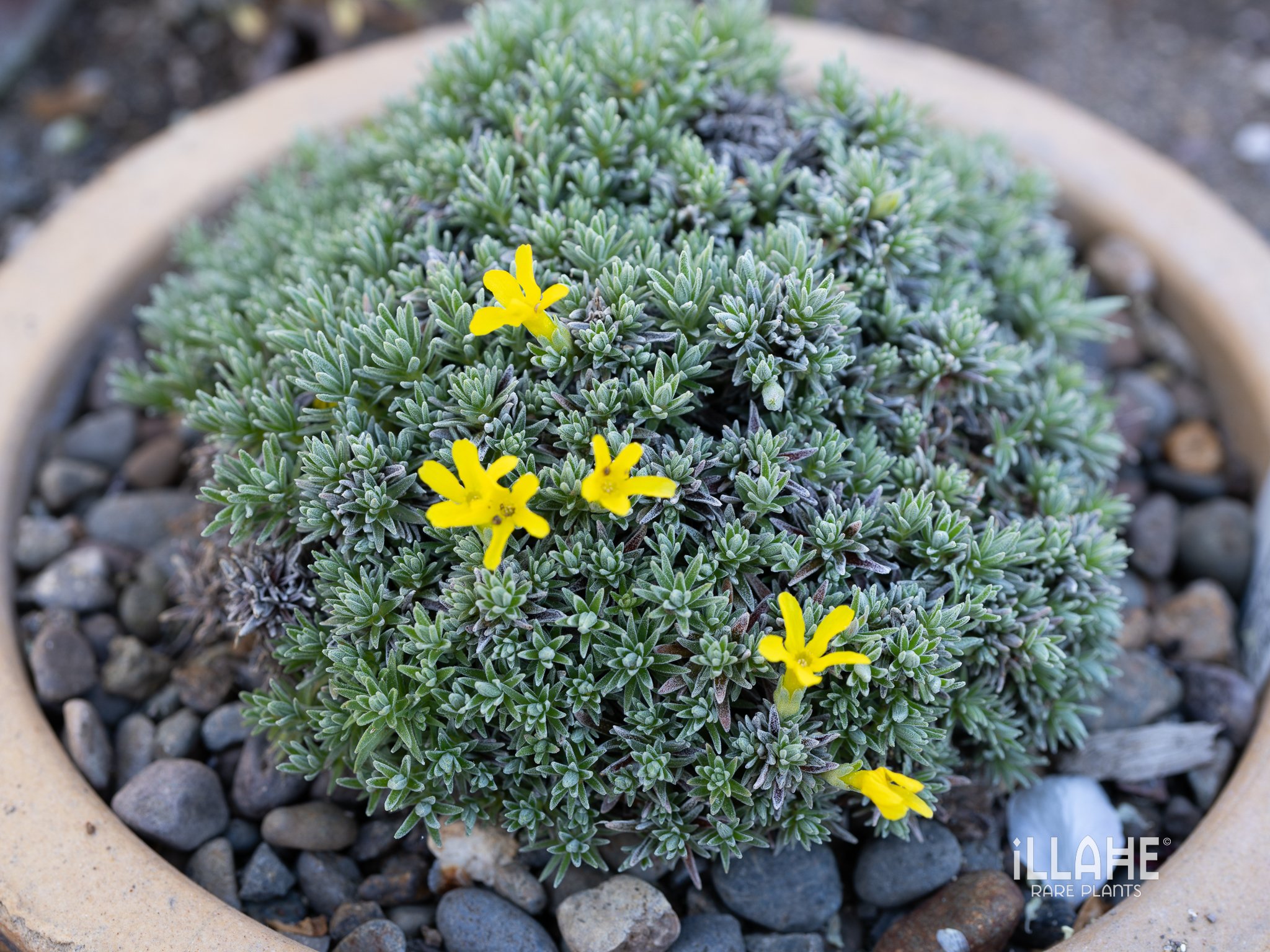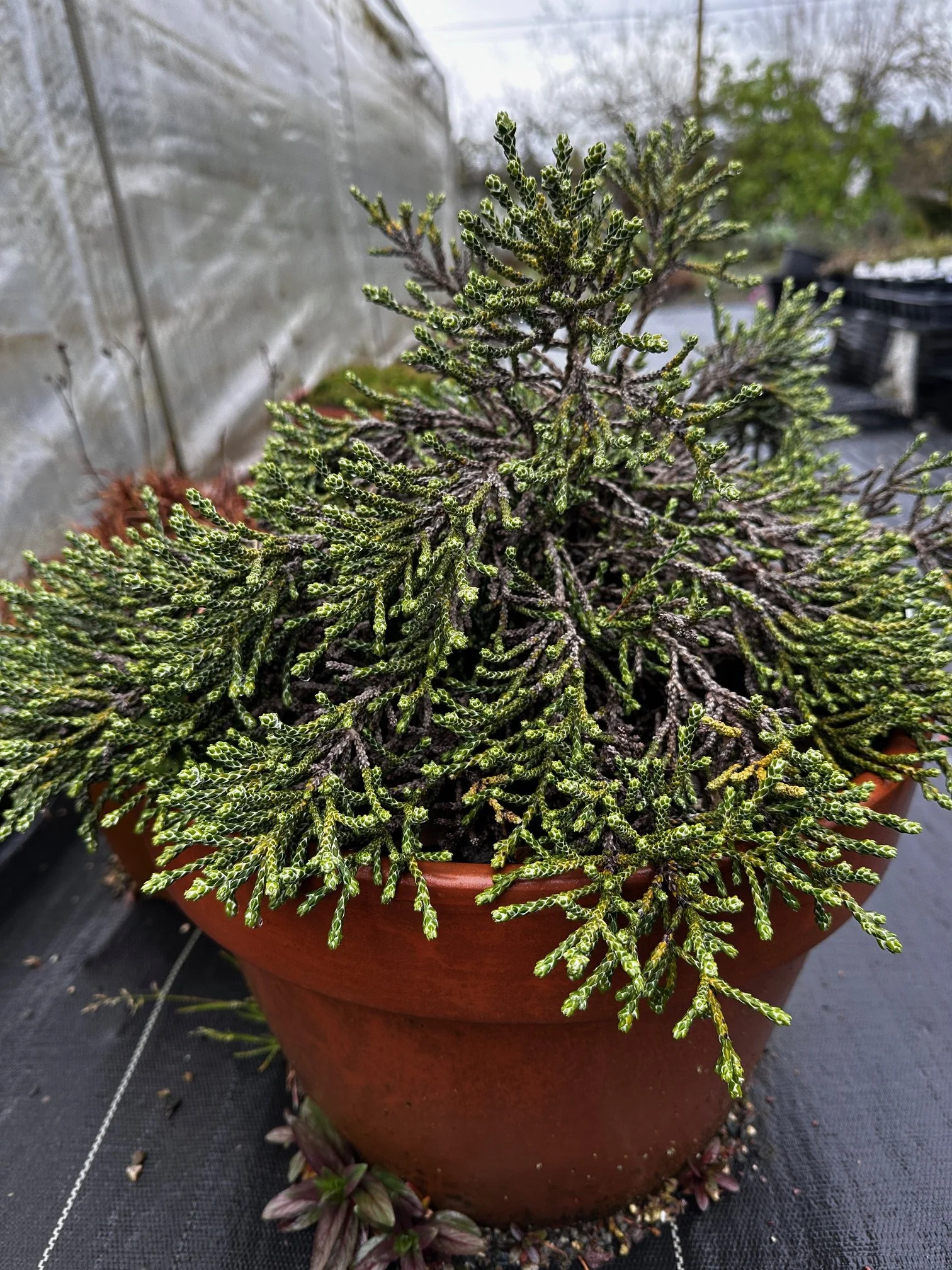
Androsace brachystegia is a rare, compact cushion-forming alpine perennial native to high elevations of the Himalayas, where it inhabits exposed, wind-scoured ridges and rocky ledges. It develops into tight, hemispherical cushions composed of densely packed, tiny rosettes of linear to spatulate evergreen leaves, creating a finely textured, moss-like mound that hugs the substrate with remarkable tenacity.
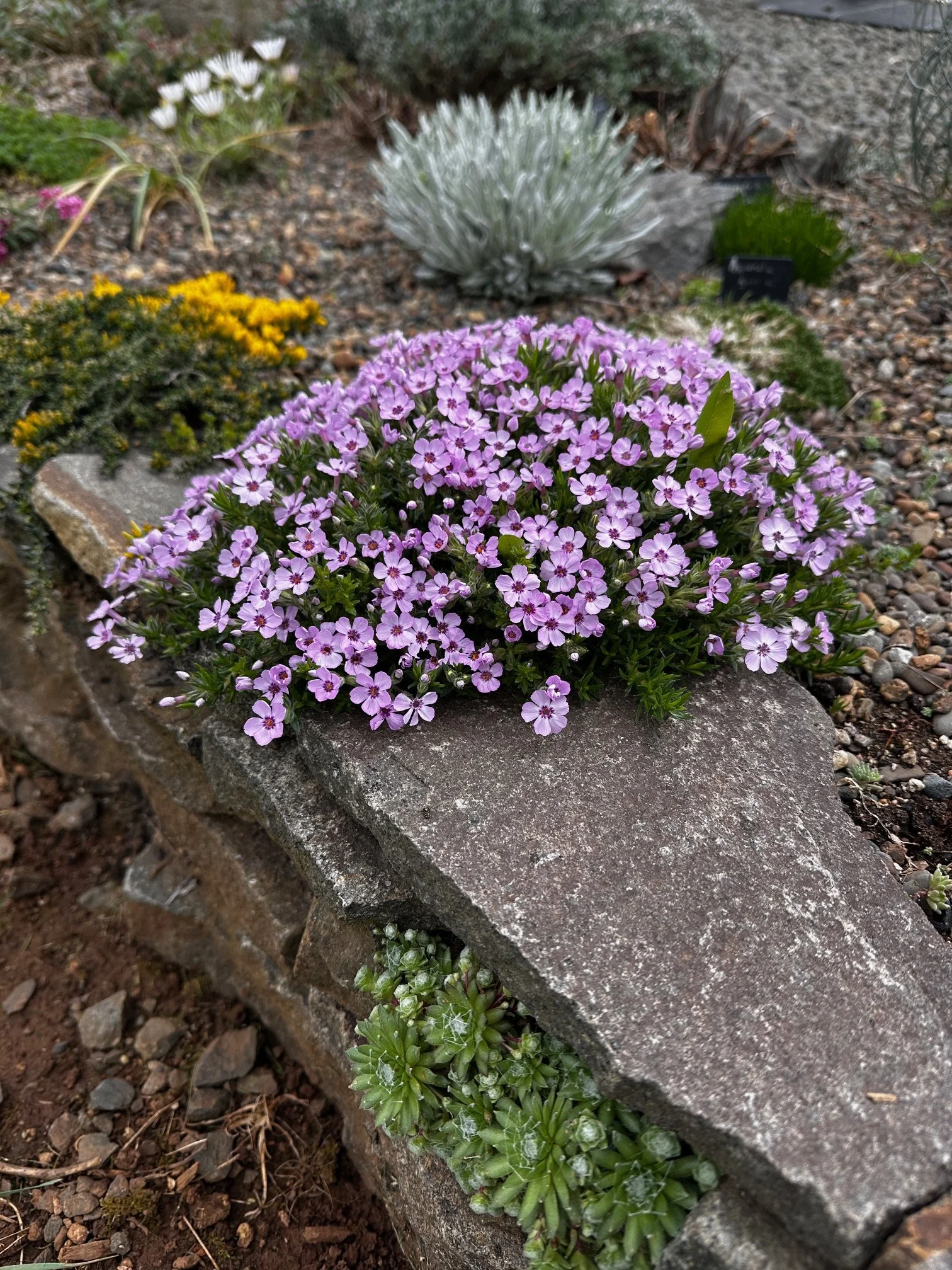
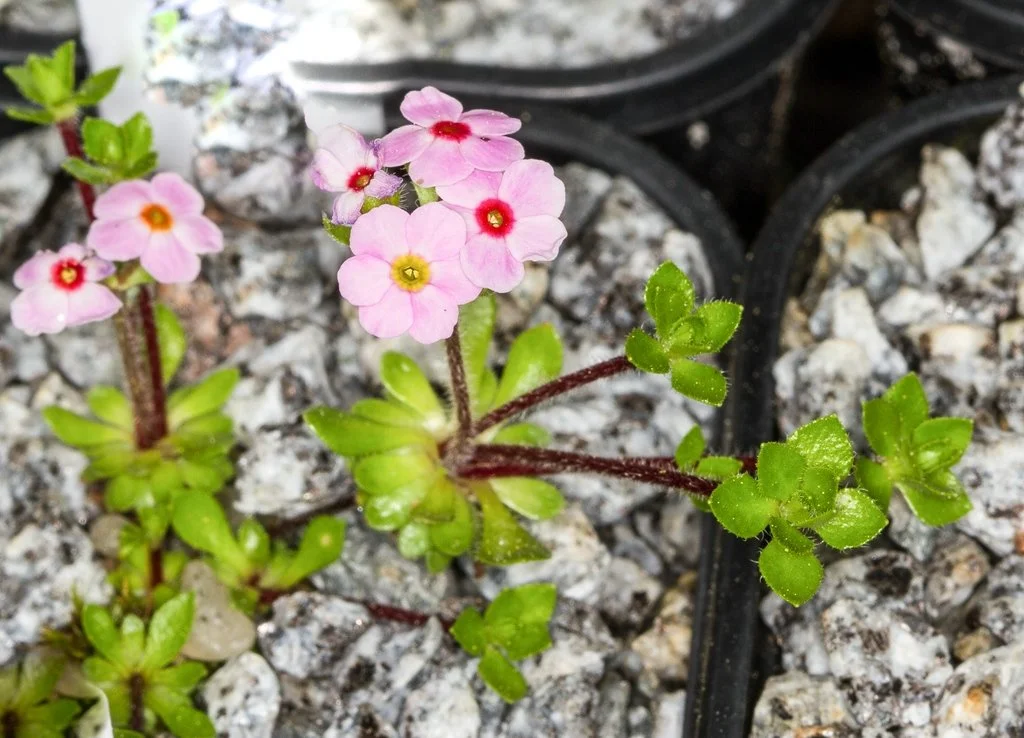
In late spring to early summer, the cushions are dotted with short flowering stems bearing small, pale pink to soft white flowers, often with a deeper pink eye. The blooms emerge just above the foliage, giving the appearance of a delicate dusting of color across the surface of the cushion. Despite their modest size individually, the flowers are produced in sufficient quantity to give mature plants a luminous, jeweled effect in peak bloom.
Best grown in full sun and exceptionally well-drained, mineral-rich soils, Androsace brachystegia requires conditions that mimic high alpine scree or crevice habitats. It performs best in troughs, alpine houses, or carefully constructed rock gardens where drainage is sharp and competition is absent. Protection from winter wet is essential in milder climates.
Typically remaining under 2–3 inches tall, it expands very slowly, forming long-lived cushions that become increasingly dense and floriferous with age. This species is prized by alpine specialists for its extreme refinement, compact architecture, and ability to create living “cushion landscapes” in miniature.
Androsace brachystegia is a rare, compact cushion-forming alpine perennial native to high elevations of the Himalayas, where it inhabits exposed, wind-scoured ridges and rocky ledges. It develops into tight, hemispherical cushions composed of densely packed, tiny rosettes of linear to spatulate evergreen leaves, creating a finely textured, moss-like mound that hugs the substrate with remarkable tenacity.
In late spring to early summer, the cushions are dotted with short flowering stems bearing small, pale pink to soft white flowers, often with a deeper pink eye. The blooms emerge just above the foliage, giving the appearance of a delicate dusting of color across the surface of the cushion. Despite their modest size individually, the flowers are produced in sufficient quantity to give mature plants a luminous, jeweled effect in peak bloom.
Best grown in full sun and exceptionally well-drained, mineral-rich soils, Androsace brachystegia requires conditions that mimic high alpine scree or crevice habitats. It performs best in troughs, alpine houses, or carefully constructed rock gardens where drainage is sharp and competition is absent. Protection from winter wet is essential in milder climates.
Typically remaining under 2–3 inches tall, it expands very slowly, forming long-lived cushions that become increasingly dense and floriferous with age. This species is prized by alpine specialists for its extreme refinement, compact architecture, and ability to create living “cushion landscapes” in miniature.