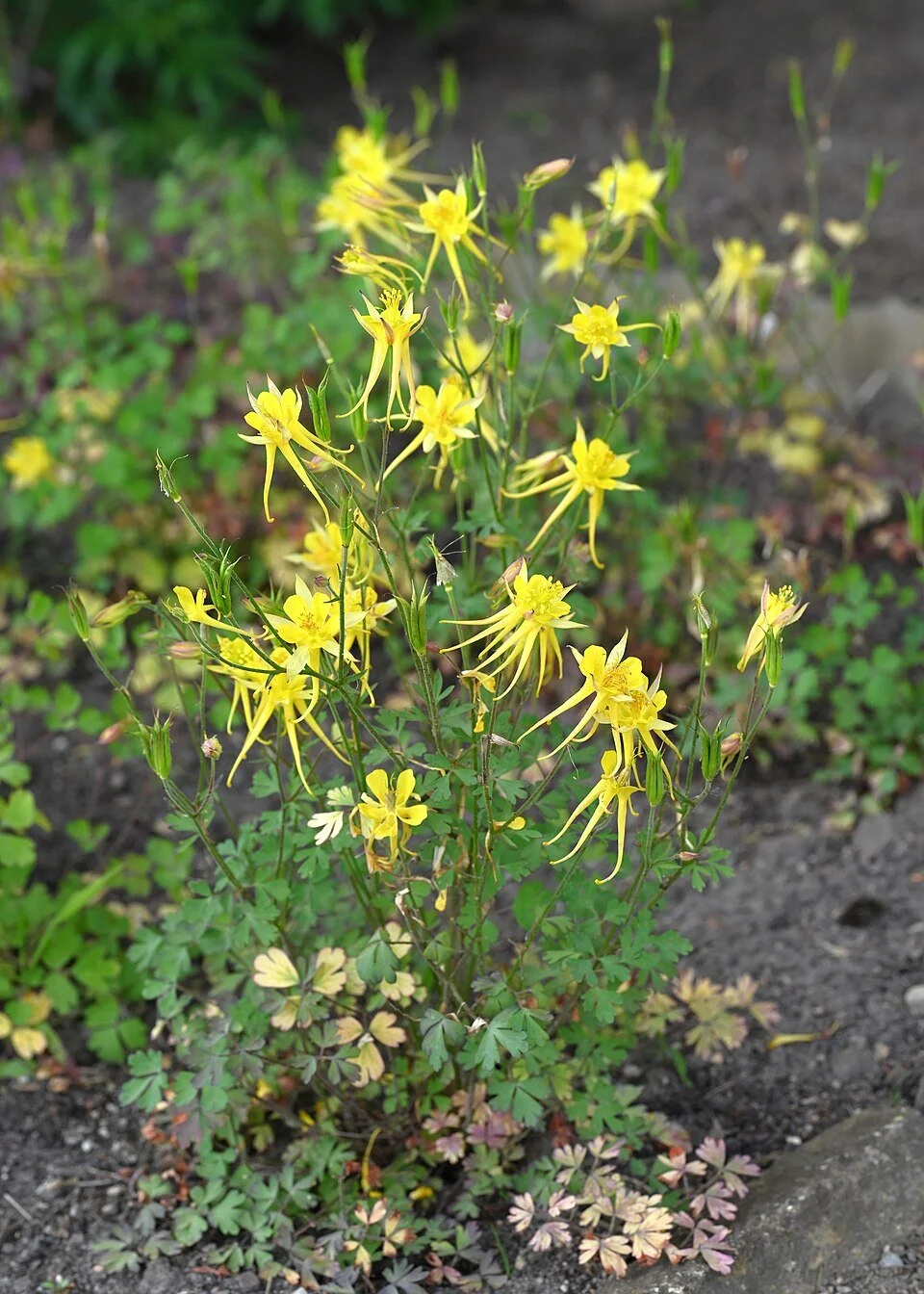
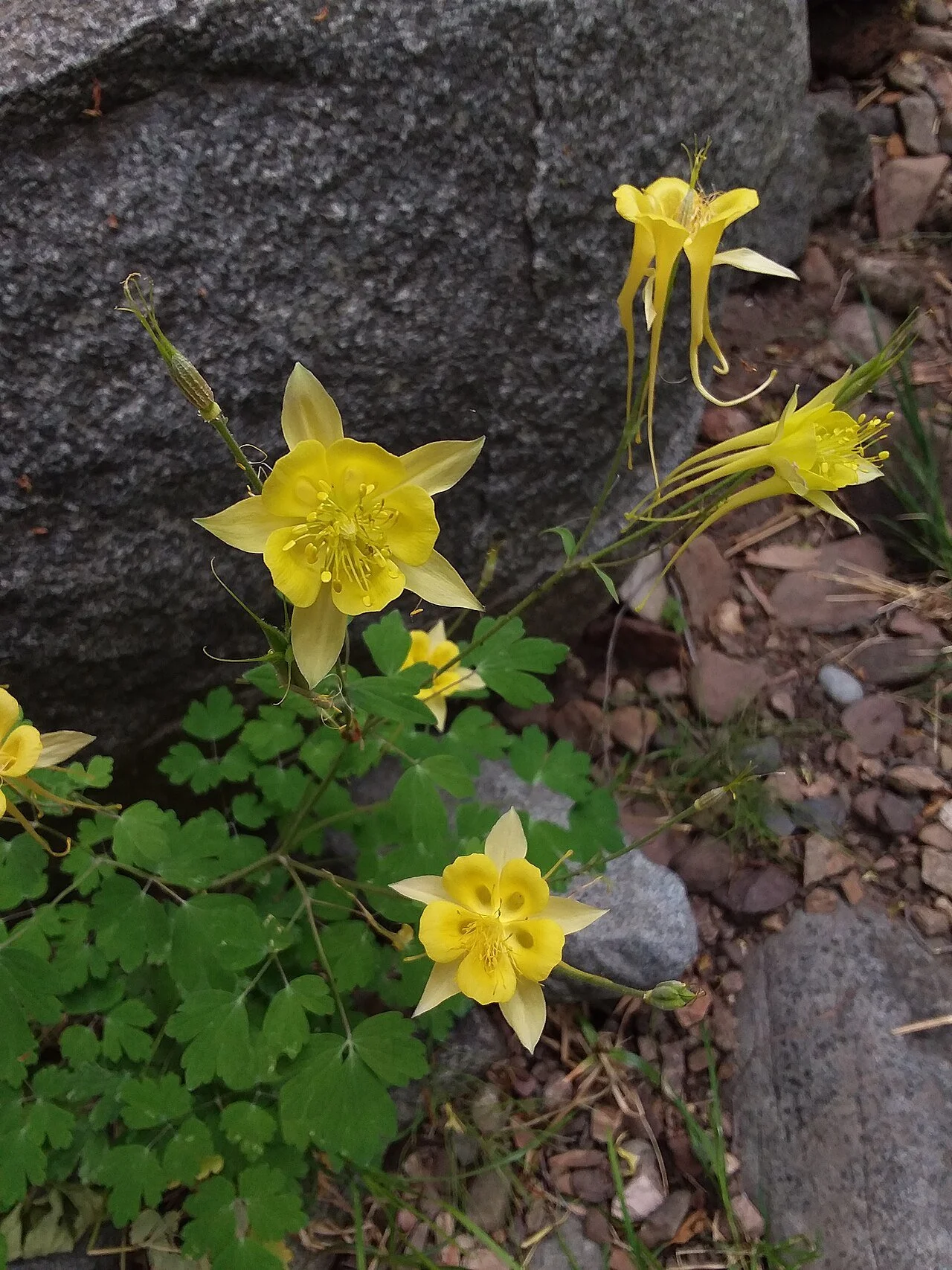
A superb southwestern native columbine, Aquilegia chrysantha forms handsome clumps of finely divided, blue-green foliage topped in late spring and summer by large, luminous yellow flowers with exceptionally long, slender spurs. The flowers are held on wiry stems above the foliage and can continue blooming for several weeks, with established plants often flowering again later in the season.
Native from Utah, Arizona, New Mexico and Colorado south into northern Mexico, Golden Columbine is found in mountainous habitats ranging from moist canyon bottoms and streamside sites to rocky slopes and seep-fed ledges. This adaptability makes it useful in the garden as both a rock-garden plant and a more substantial perennial for a dry woodland or open border. Give it well-drained soil and some protection from the hottest afternoon sun where summers are hot and dry.
The unusually long floral spurs are an adaptation for moth pollination, and recent pollination research shows that the species is visited by hawkmoths, hummingbirds, and pollen-collecting insects. It is therefore an excellent plant for a wildlife or pollinator garden, providing resources for a remarkably diverse group of flower visitors. Hardy to approximately Zone 4–9
A superb southwestern native columbine, Aquilegia chrysantha forms handsome clumps of finely divided, blue-green foliage topped in late spring and summer by large, luminous yellow flowers with exceptionally long, slender spurs. The flowers are held on wiry stems above the foliage and can continue blooming for several weeks, with established plants often flowering again later in the season.
Native from Utah, Arizona, New Mexico and Colorado south into northern Mexico, Golden Columbine is found in mountainous habitats ranging from moist canyon bottoms and streamside sites to rocky slopes and seep-fed ledges. This adaptability makes it useful in the garden as both a rock-garden plant and a more substantial perennial for a dry woodland or open border. Give it well-drained soil and some protection from the hottest afternoon sun where summers are hot and dry.
The unusually long floral spurs are an adaptation for moth pollination, and recent pollination research shows that the species is visited by hawkmoths, hummingbirds, and pollen-collecting insects. It is therefore an excellent plant for a wildlife or pollinator garden, providing resources for a remarkably diverse group of flower visitors. Hardy to approximately Zone 4–9