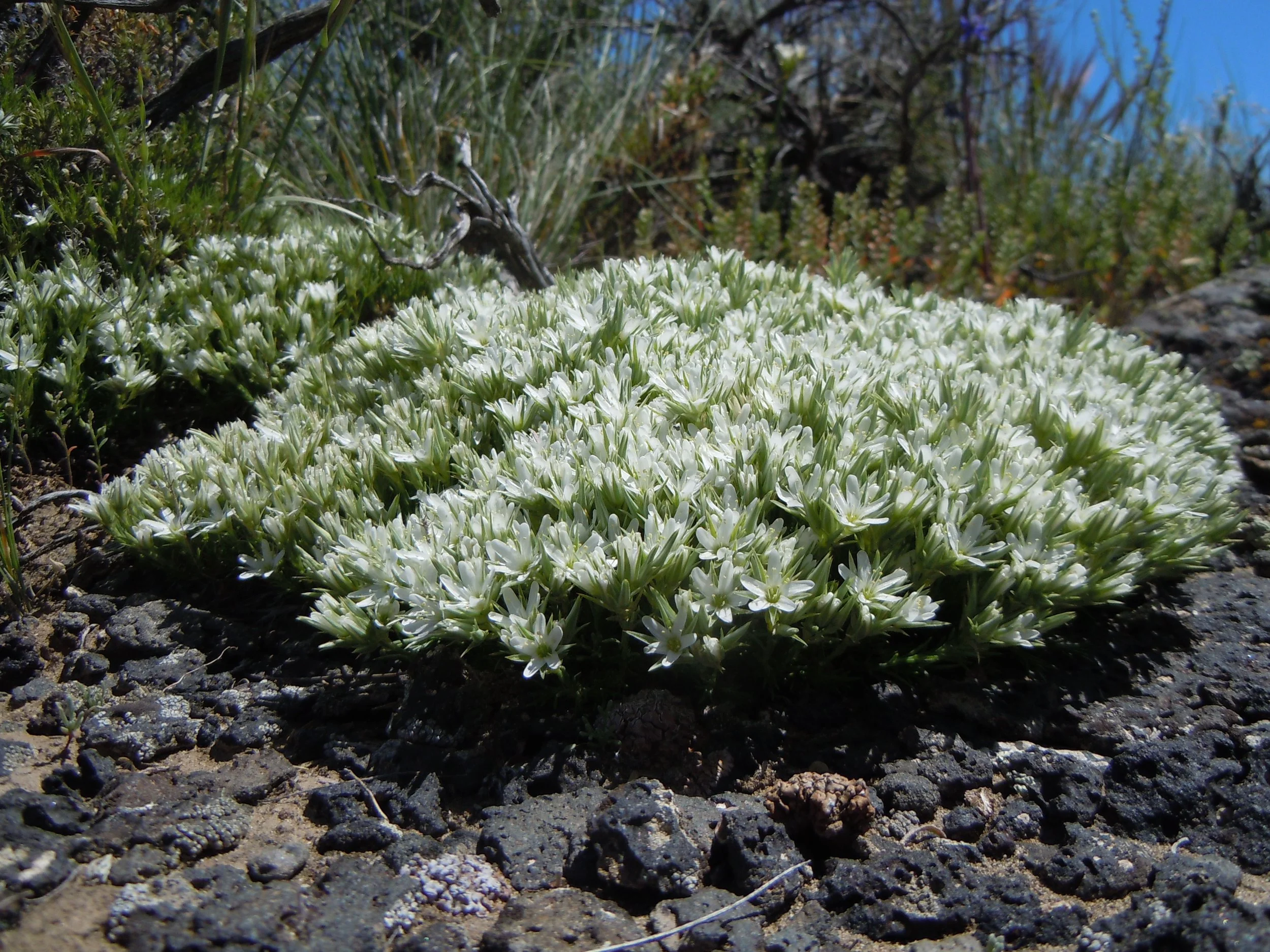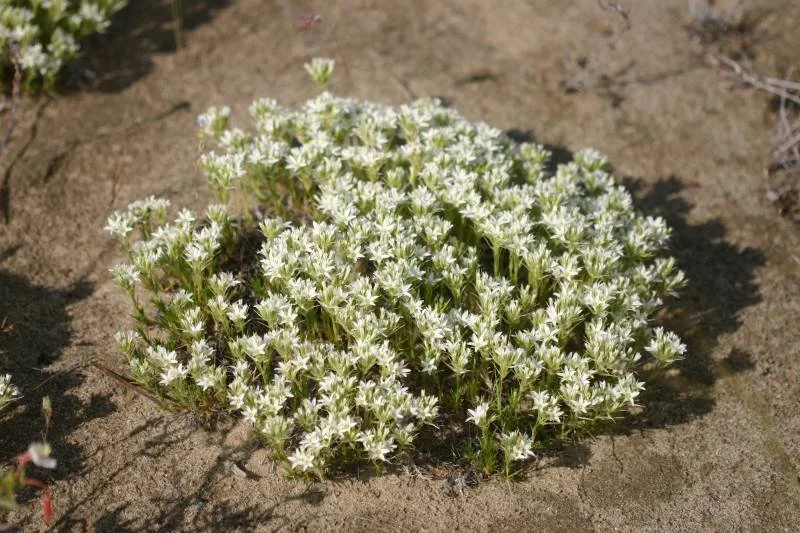
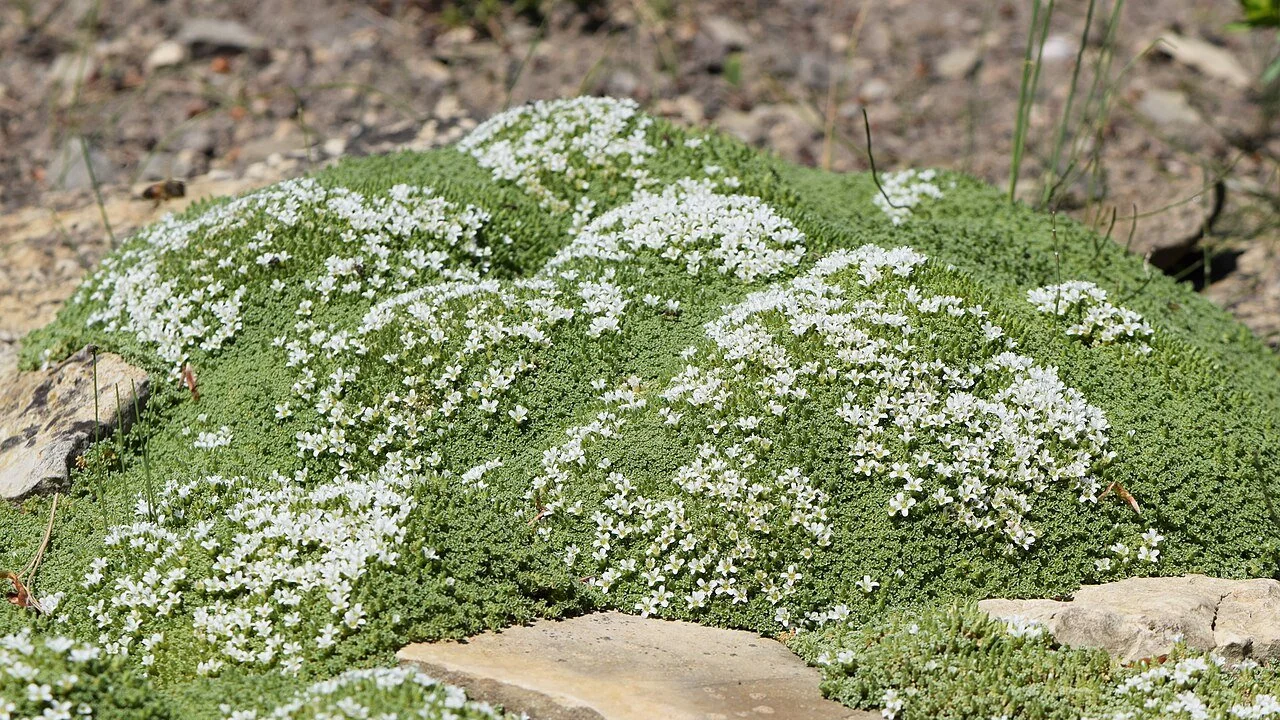
A true high-alpine jewel from the wind-scoured limestone summits of the Sierra Nevada of southern Spain. It forms remarkably tight, low cushions of minute, sharply imbricated leaves in cool tones of gray-green to blue, creating a smooth, almost sculpted surface that hugs the rock. In late spring to early summer, small white flowers appear just above the cushion, delicate and proportionate, adding a subtle brightness without disturbing the plant’s compact geometry.
Adapted to extreme exposure, intense sun, and mineral soils, excellent drainage is always a good idea and it thrives in lean, gritty substrates. It is ideally suited to troughs, crevice gardens, and carefully constructed alpine beds, where its dense habit can be appreciated up close. Avoid rich soils and excess moisture—especially winter wet—which can quickly compromise its tight structure, although this very tough selection came from the garden of the late Kathy Allen who had wonderful patches of it in the open. Hardy to approximately USDA Zone 5, it benefits from protection from prolonged cold moisture in wetter climates.
Among the finest cushion plants in cultivation, this form is prized for its precision and durability under the right conditions. Given a sharply drained site and a restrained hand, Arenaria tetraquetra develops into a long-lived, jewel-like specimen, embodying the austerity and beauty of its high mountain origins
A true high-alpine jewel from the wind-scoured limestone summits of the Sierra Nevada of southern Spain. It forms remarkably tight, low cushions of minute, sharply imbricated leaves in cool tones of gray-green to blue, creating a smooth, almost sculpted surface that hugs the rock. In late spring to early summer, small white flowers appear just above the cushion, delicate and proportionate, adding a subtle brightness without disturbing the plant’s compact geometry.
Adapted to extreme exposure, intense sun, and mineral soils, excellent drainage is always a good idea and it thrives in lean, gritty substrates. It is ideally suited to troughs, crevice gardens, and carefully constructed alpine beds, where its dense habit can be appreciated up close. Avoid rich soils and excess moisture—especially winter wet—which can quickly compromise its tight structure, although this very tough selection came from the garden of the late Kathy Allen who had wonderful patches of it in the open. Hardy to approximately USDA Zone 5, it benefits from protection from prolonged cold moisture in wetter climates.
Among the finest cushion plants in cultivation, this form is prized for its precision and durability under the right conditions. Given a sharply drained site and a restrained hand, Arenaria tetraquetra develops into a long-lived, jewel-like specimen, embodying the austerity and beauty of its high mountain origins