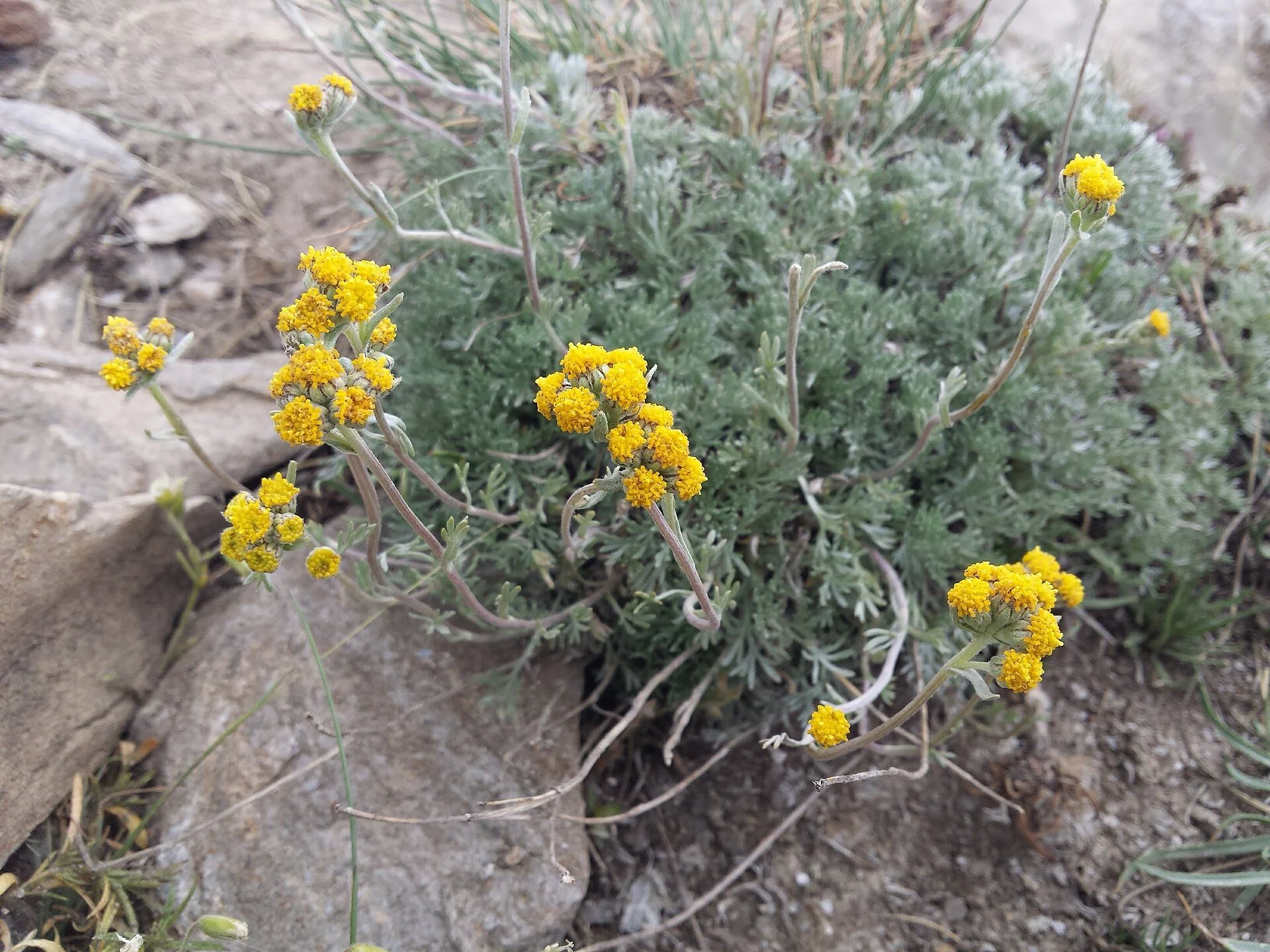
Artemisia glacialis is a diminutive alpine wormwood native to the high mountains of the Alps, where it inhabits windswept screes, rocky ledges, and glacial moraines at extreme elevations. Adapted to some of the harshest growing conditions in Europe, it forms tight, low cushions of finely dissected, silvery-gray foliage that hugs the ground, minimizing exposure to cold wind and intense alpine sun. I picture the once alive Otzi man, that mummi that they found thawing in the alps, kneeling down to gather some of this to use in a poultice for his wounds. Crazy story the guy that found that mummy, was hiking alone in the alps and was found dead himself. Some kind of voodoo thing or a curse of the mummy perhaps. Look it up his name was Helmut Simon.
The leaves are deeply divided and densely covered in fine hairs, giving the plant its characteristic soft, frosted appearance and contributing to its remarkable drought and cold tolerance. In summer, short stems rise just above the foliage bearing small, inconspicuous yellowish flower heads, typical of the genus, though the primary ornamental value lies in the luminous texture of the foliage rather than the bloom.
In cultivation, Artemisia glacialis demands sharp drainage, full sun, and lean, mineral soils. It is best suited to alpine troughs, crevice gardens, or sharply drained rock gardens where conditions remain cool and dry, especially in winter. Excess moisture, particularly in warm conditions, is quickly fatal. This is an outstanding foliage plant for crevice or rock garden with it’s glowing silver leaves. Moon garden plant extraordinaire.
Hardy in USDA Zones 4–7 with excellent drainage, this is a true alpine specialist valued for its refined, silvery texture, compact form, and authenticity as a plant of high mountain scree habitats
Artemisia glacialis is a diminutive alpine wormwood native to the high mountains of the Alps, where it inhabits windswept screes, rocky ledges, and glacial moraines at extreme elevations. Adapted to some of the harshest growing conditions in Europe, it forms tight, low cushions of finely dissected, silvery-gray foliage that hugs the ground, minimizing exposure to cold wind and intense alpine sun. I picture the once alive Otzi man, that mummi that they found thawing in the alps, kneeling down to gather some of this to use in a poultice for his wounds. Crazy story the guy that found that mummy, was hiking alone in the alps and was found dead himself. Some kind of voodoo thing or a curse of the mummy perhaps. Look it up his name was Helmut Simon.
The leaves are deeply divided and densely covered in fine hairs, giving the plant its characteristic soft, frosted appearance and contributing to its remarkable drought and cold tolerance. In summer, short stems rise just above the foliage bearing small, inconspicuous yellowish flower heads, typical of the genus, though the primary ornamental value lies in the luminous texture of the foliage rather than the bloom.
In cultivation, Artemisia glacialis demands sharp drainage, full sun, and lean, mineral soils. It is best suited to alpine troughs, crevice gardens, or sharply drained rock gardens where conditions remain cool and dry, especially in winter. Excess moisture, particularly in warm conditions, is quickly fatal. This is an outstanding foliage plant for crevice or rock garden with it’s glowing silver leaves. Moon garden plant extraordinaire.
Hardy in USDA Zones 4–7 with excellent drainage, this is a true alpine specialist valued for its refined, silvery texture, compact form, and authenticity as a plant of high mountain scree habitats