
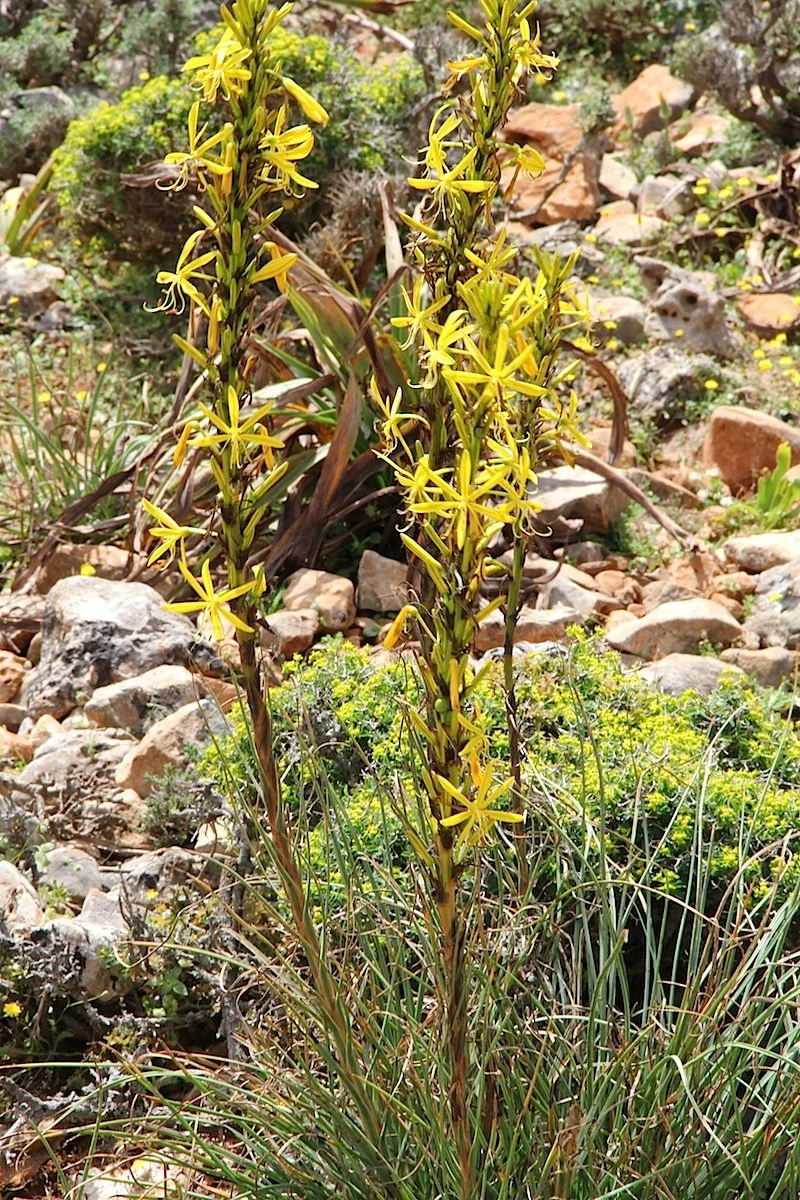
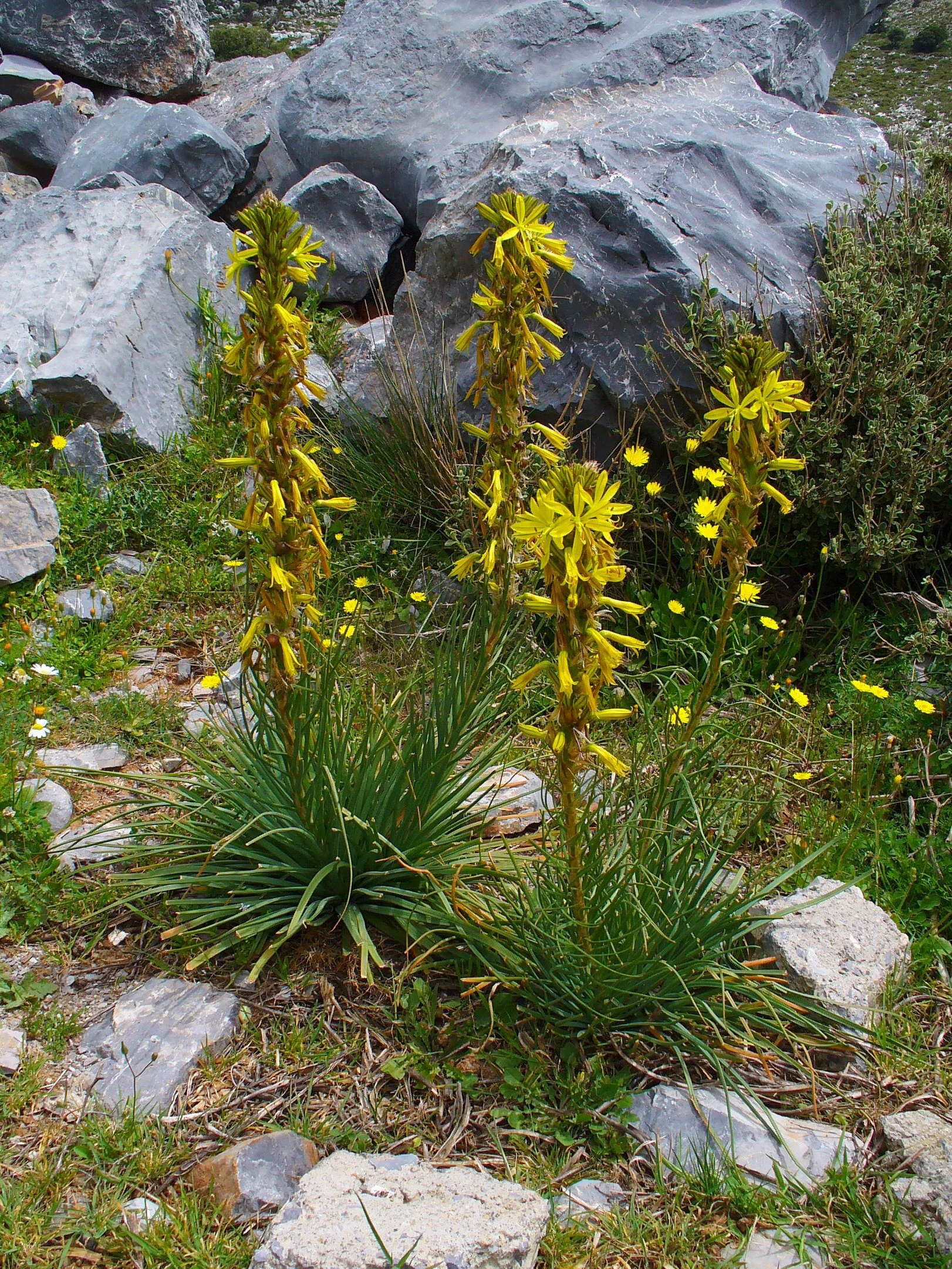
If you can keep your cat from eating it, Asphodeline lutea rises from a tufted base of narrow, blue-green leaves to send up elegant spires of soft golden-yellow flowers in late spring and early summer. Each star-shaped bloom is carried along a slender, upright stem, opening sequentially to create a prolonged display that moves gently above the foliage like a slow, deliberate flame. The overall effect is both architectural and airy, lending vertical rhythm to dry borders and rock gardens without overwhelming its companions.
In cultivation, Asphodeline lutea thrives in full sun and sharply drained soils, particularly those with a limestone influence that reflect its native habitats across the Mediterranean basin. It is especially well suited to gravel gardens, dry slopes, and the more open reaches of the rock garden where its upright habit can be appreciated. Once established, it shows considerable drought tolerance, persisting through long, hot summers with minimal supplemental water.
Hardiness is generally reliable in USDA Zones 5 through 9, provided winter wet is not excessive. In colder or wetter climates, excellent drainage is essential, and plants benefit from the protection of a raised bed or alpine house conditions. Though long-lived, it resents disturbance once established, slowly increasing in stature and presence over time.
I don’t know why but Sam the nursery cat just loves to chomp on these, I caught him the other day grazing mouthfuls like a cow would.
If you can keep your cat from eating it, Asphodeline lutea rises from a tufted base of narrow, blue-green leaves to send up elegant spires of soft golden-yellow flowers in late spring and early summer. Each star-shaped bloom is carried along a slender, upright stem, opening sequentially to create a prolonged display that moves gently above the foliage like a slow, deliberate flame. The overall effect is both architectural and airy, lending vertical rhythm to dry borders and rock gardens without overwhelming its companions.
In cultivation, Asphodeline lutea thrives in full sun and sharply drained soils, particularly those with a limestone influence that reflect its native habitats across the Mediterranean basin. It is especially well suited to gravel gardens, dry slopes, and the more open reaches of the rock garden where its upright habit can be appreciated. Once established, it shows considerable drought tolerance, persisting through long, hot summers with minimal supplemental water.
Hardiness is generally reliable in USDA Zones 5 through 9, provided winter wet is not excessive. In colder or wetter climates, excellent drainage is essential, and plants benefit from the protection of a raised bed or alpine house conditions. Though long-lived, it resents disturbance once established, slowly increasing in stature and presence over time.
I don’t know why but Sam the nursery cat just loves to chomp on these, I caught him the other day grazing mouthfuls like a cow would.