Aster alpinus ‘Goliath’ is a robust and exceptionally floriferous selection of the alpine aster, derived from the high mountain floras of Europe where the species inhabits limestone screes, alpine meadows, and rocky slopes. Unlike the typical diminutive forms, ‘Goliath’ is notable for its larger stature, stronger stems, and oversized blooms, while still retaining the compact, tufted habit characteristic of true alpine plants.
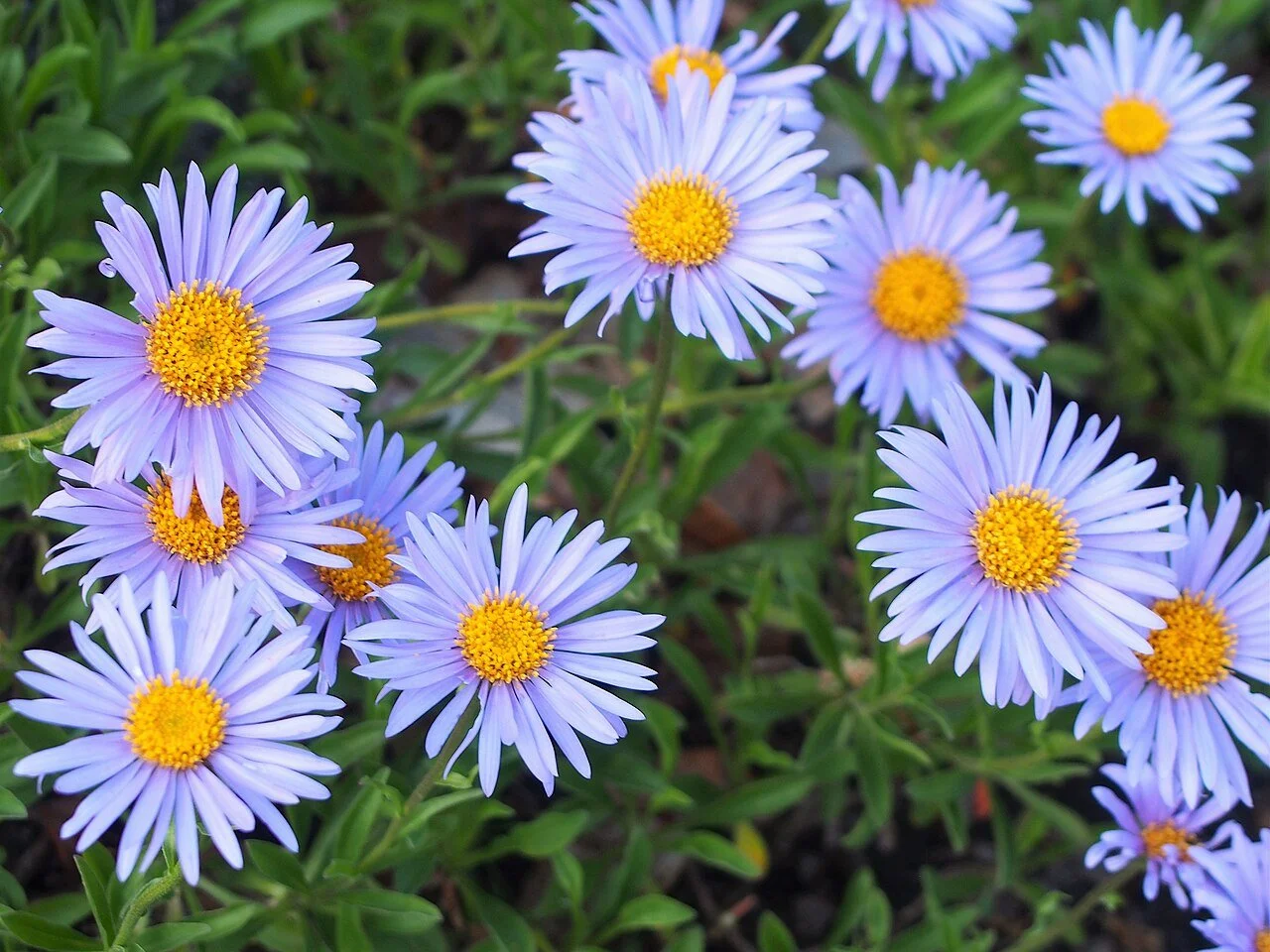
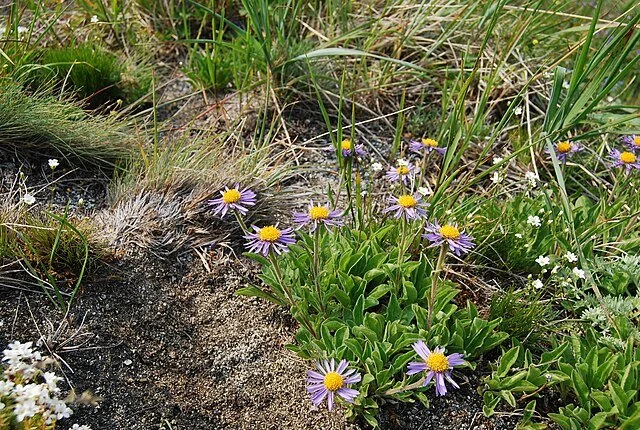
It forms a low, slowly expanding clump of spatulate to lance-shaped green leaves, slightly rough in texture and forming a tidy basal rosette. In late spring to early summer, it produces sturdy stems bearing large, daisy-like flowers in rich violet-blue, each with a bright golden-yellow center that creates a strong visual contrast. The flowers are significantly larger than standard wild forms, making this selection especially showy in the rock garden.
In cultivation, it thrives in full sun and sharply drained soils, preferring lean, mineral conditions similar to its native alpine habitats. It is particularly well suited to rock gardens, crevice plantings, and alpine troughs where its bold flowers can be appreciated at close range without competition from more vigorous neighbors..
Aster alpinus ‘Goliath’ is a robust and exceptionally floriferous selection of the alpine aster, derived from the high mountain floras of Europe where the species inhabits limestone screes, alpine meadows, and rocky slopes. Unlike the typical diminutive forms, ‘Goliath’ is notable for its larger stature, stronger stems, and oversized blooms, while still retaining the compact, tufted habit characteristic of true alpine plants.
It forms a low, slowly expanding clump of spatulate to lance-shaped green leaves, slightly rough in texture and forming a tidy basal rosette. In late spring to early summer, it produces sturdy stems bearing large, daisy-like flowers in rich violet-blue, each with a bright golden-yellow center that creates a strong visual contrast. The flowers are significantly larger than standard wild forms, making this selection especially showy in the rock garden.
In cultivation, it thrives in full sun and sharply drained soils, preferring lean, mineral conditions similar to its native alpine habitats. It is particularly well suited to rock gardens, crevice plantings, and alpine troughs where its bold flowers can be appreciated at close range without competition from more vigorous neighbors..