
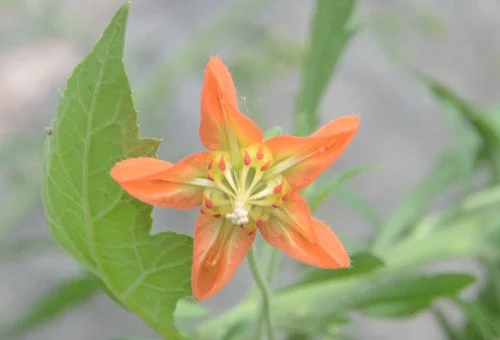

A fascinating and unusual member of the Loasaceae, Caiophora lateritia is a vigorous climbing perennial from the mountains of Bolivia and northwestern Argentina. The stems are covered with stinging hairs and climb through surrounding vegetation, bearing deeply divided foliage and striking, open flowers in shades of brick-red to orange. Flower color is variable, with yellow and white forms also reported in wild populations, most of the ones I have grown have been in the orange/brick red color.
In Argentina it has an unusually broad elevational range, growing from the lower Yungas at around 300 meters to high-elevation Alnus forests, shrublands, and grasslands near 3,000 meters. This makes it an especially interesting plant for the adventurous gardener interested in unusual South American flora. The stems and foliage should be handled with care because of the stinging hairs characteristic of the species. I’m not sure exactly how we will ship these but probably all wrapped up with a warning about unwrapping them to wear gloves.
The showy flowers possess conspicuous nectar scales typical of the Loasaceae and are adapted for visits by insects. Members of the genus Caiophora have been documented interacting with a diverse array of pollinators, making this an intriguing addition to a garden designed to support native and exotic flower-visiting insects
A fascinating and unusual member of the Loasaceae, Caiophora lateritia is a vigorous climbing perennial from the mountains of Bolivia and northwestern Argentina. The stems are covered with stinging hairs and climb through surrounding vegetation, bearing deeply divided foliage and striking, open flowers in shades of brick-red to orange. Flower color is variable, with yellow and white forms also reported in wild populations, most of the ones I have grown have been in the orange/brick red color.
In Argentina it has an unusually broad elevational range, growing from the lower Yungas at around 300 meters to high-elevation Alnus forests, shrublands, and grasslands near 3,000 meters. This makes it an especially interesting plant for the adventurous gardener interested in unusual South American flora. The stems and foliage should be handled with care because of the stinging hairs characteristic of the species. I’m not sure exactly how we will ship these but probably all wrapped up with a warning about unwrapping them to wear gloves.
The showy flowers possess conspicuous nectar scales typical of the Loasaceae and are adapted for visits by insects. Members of the genus Caiophora have been documented interacting with a diverse array of pollinators, making this an intriguing addition to a garden designed to support native and exotic flower-visiting insects