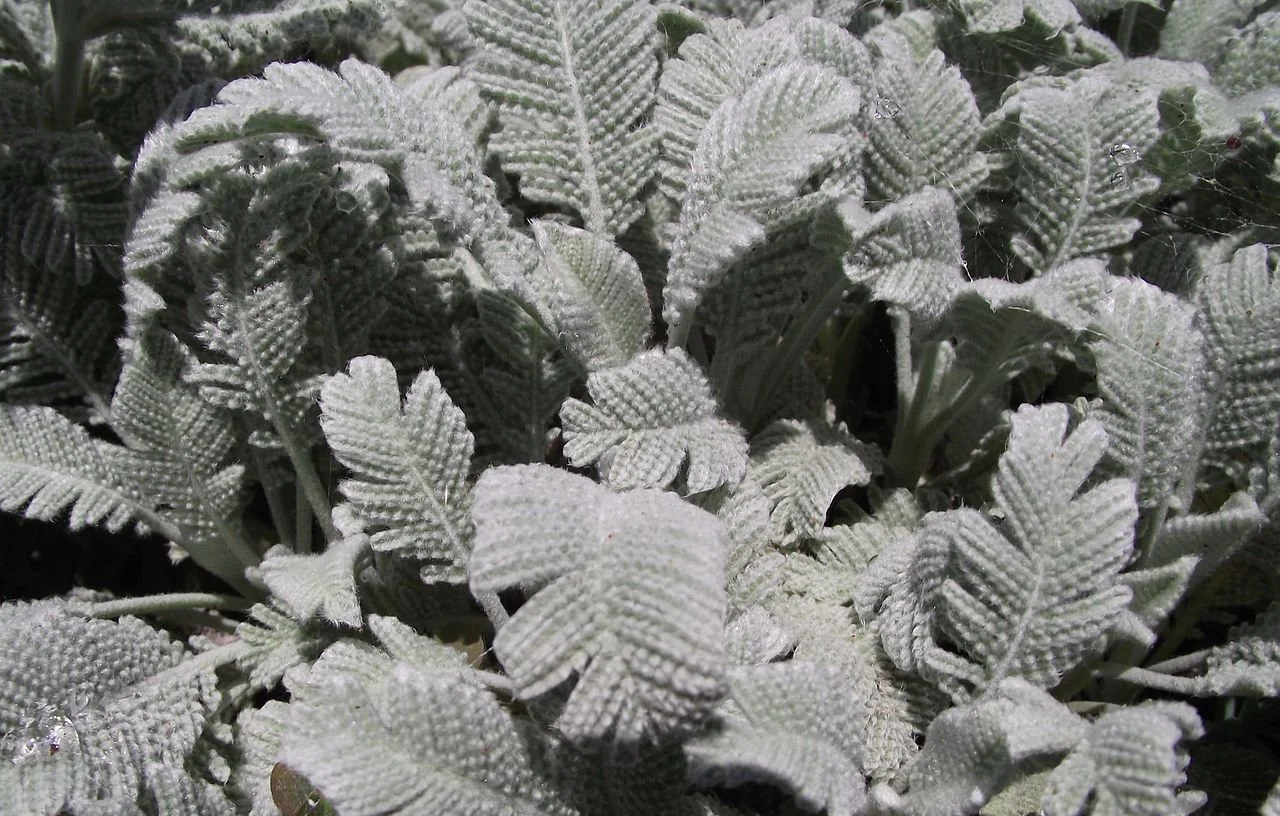

Calceolaria cana is a compact, softly textured perennial subshrub native to the coastal mountains and dry interior valleys of Chile, where it grows on rocky slopes, gravelly soils, and open scrubland in Mediterranean-type climates. It typically forms low, rounded clumps of gray-green foliage, the leaves finely pubescent and slightly woolly, giving the plant a shiny, silvery appearance even when not in bloom.
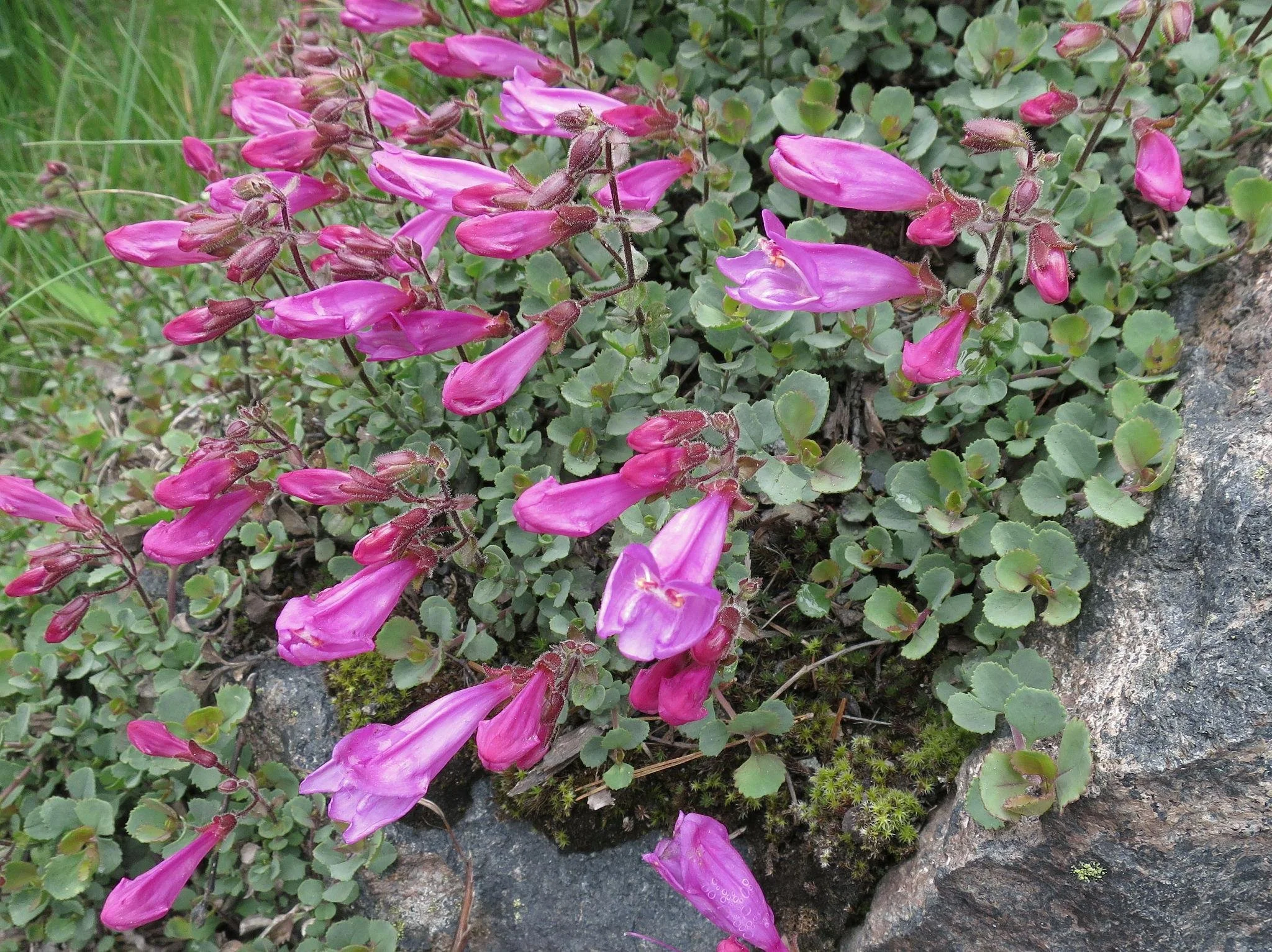
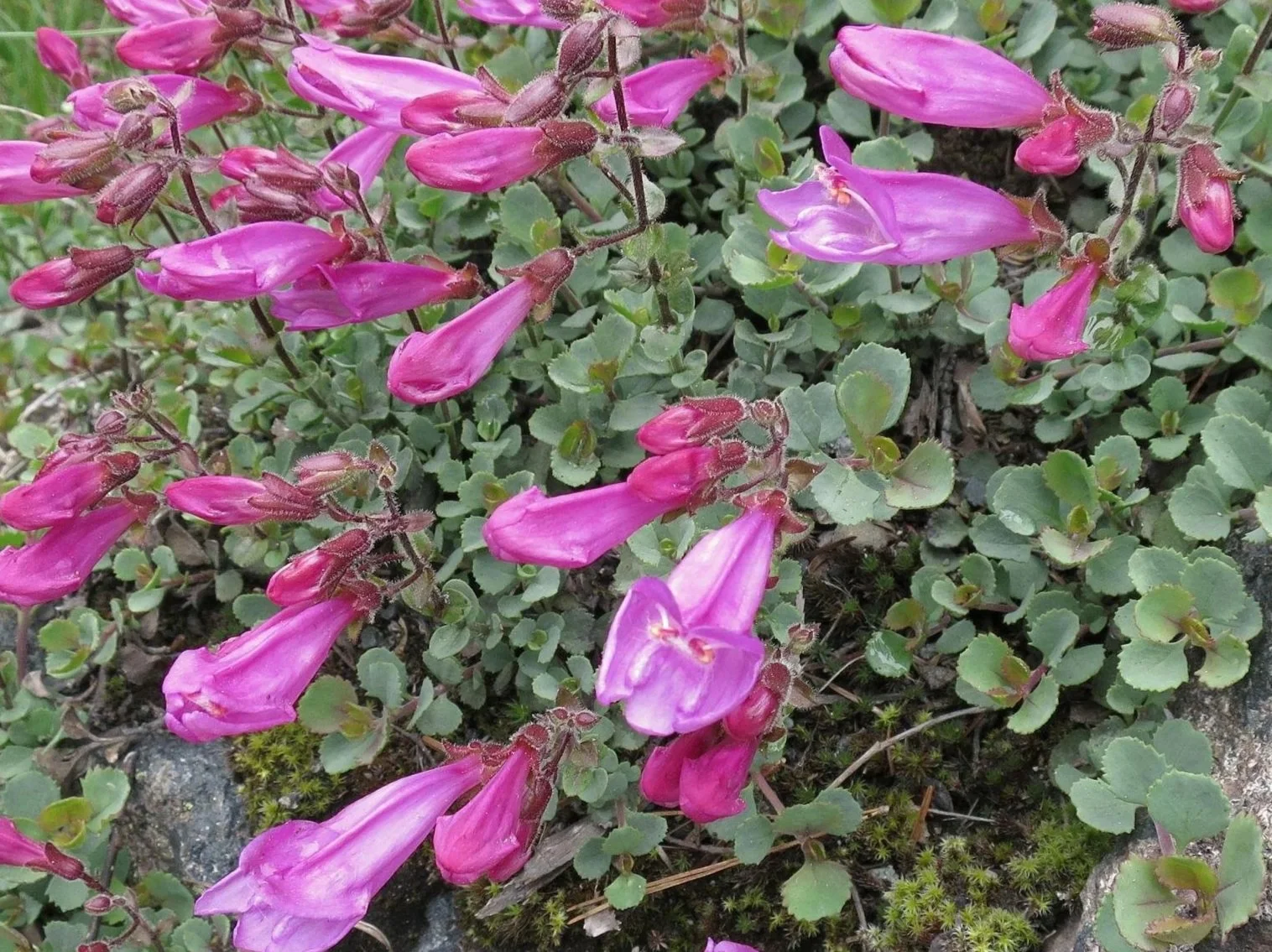
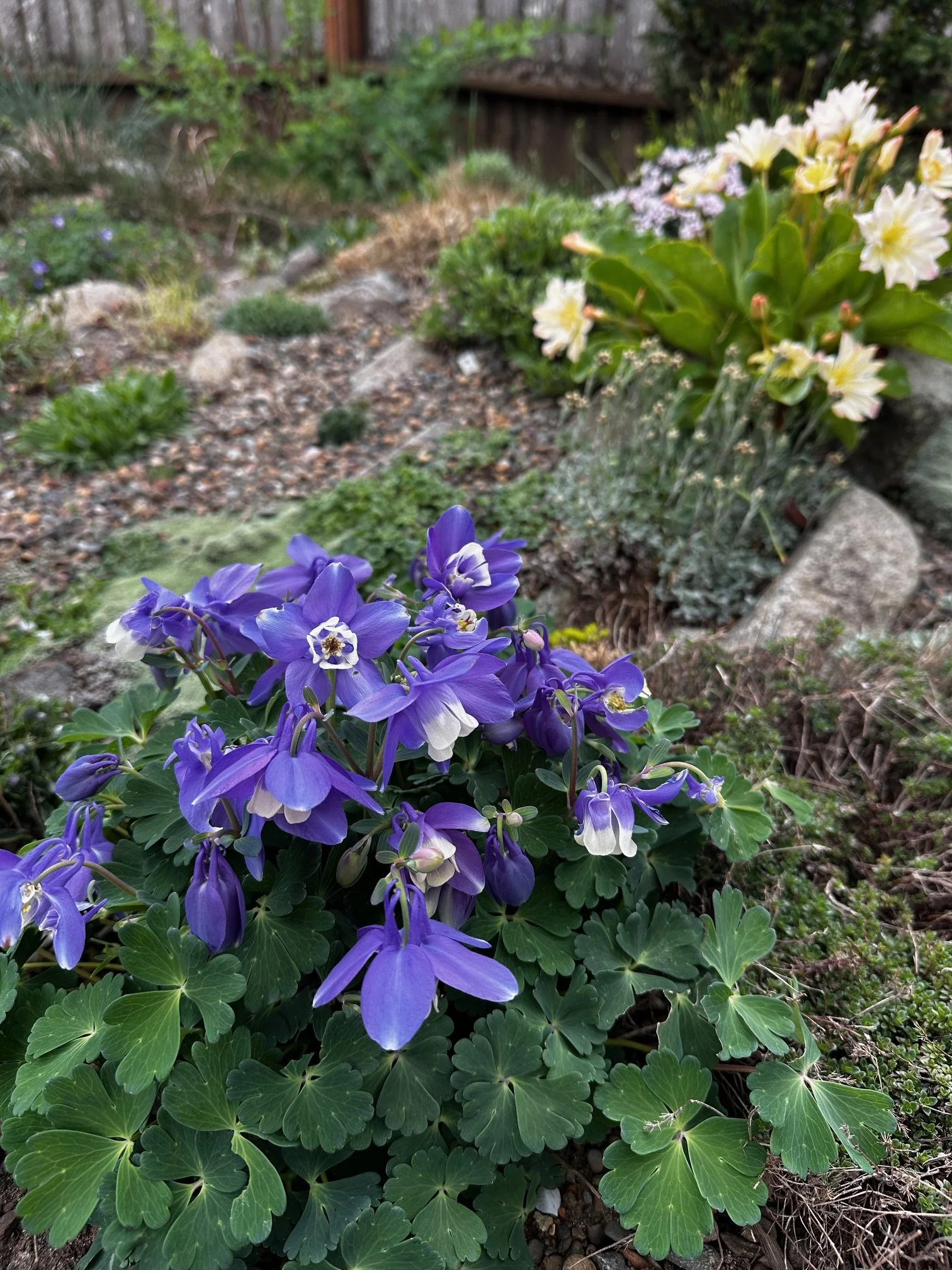
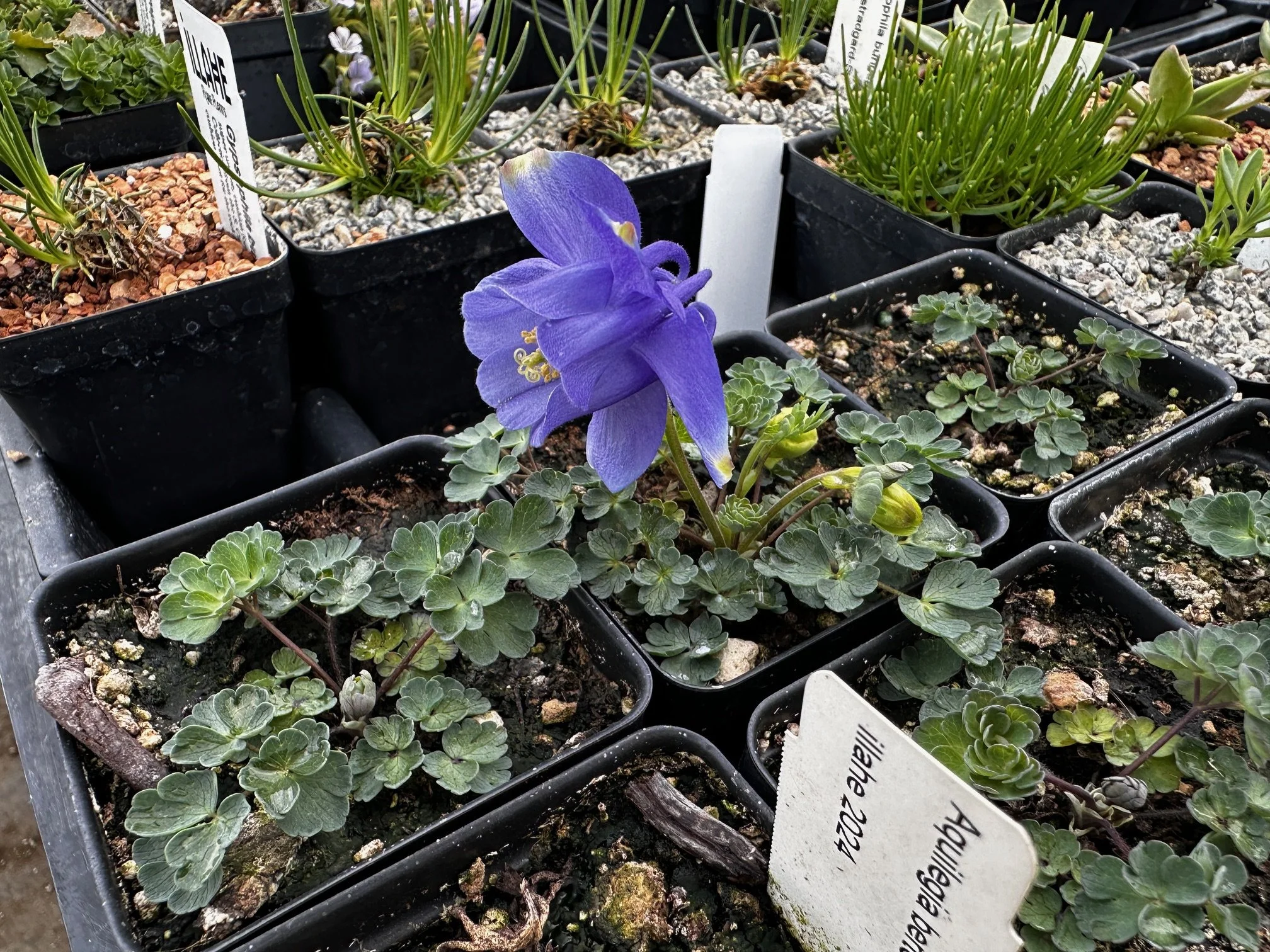
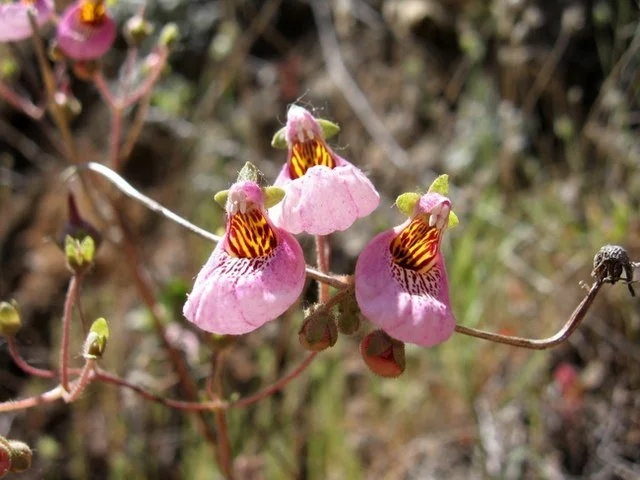
In late spring to early summer, it produces upright stems bearing inflated, pouch-shaped flowers of purple/white often lightly freckled or marked within the corolla. These distinctive “slipper flowers” float above the foliage on 12-18” stems.
In cultivation, Calceolaria cana is best suited to well-drained rock gardens, raised beds, and trough plantings where its compact form and unusual flowers can be appreciated up close. It prefers full sun in cool-summer climates or light shade where heat is more intense, and it requires sharply drained, mineral soils to persist long-term. Protection from winter wet is essential as the foliage holds water too well.
Hardy in USDA Zones approximately 7–9 depending on drainage and exposure, this species brings a soft, almost desert-like texture to the garden, punctuated by its bright, pouchy blooms. It is particularly effective in alpine and Mediterranean-style plantings where restrained foliage and sculptural floral forms are valued over mass display.s.
Calceolaria cana is a compact, softly textured perennial subshrub native to the coastal mountains and dry interior valleys of Chile, where it grows on rocky slopes, gravelly soils, and open scrubland in Mediterranean-type climates. It typically forms low, rounded clumps of gray-green foliage, the leaves finely pubescent and slightly woolly, giving the plant a shiny, silvery appearance even when not in bloom.
In late spring to early summer, it produces upright stems bearing inflated, pouch-shaped flowers of purple/white often lightly freckled or marked within the corolla. These distinctive “slipper flowers” float above the foliage on 12-18” stems.
In cultivation, Calceolaria cana is best suited to well-drained rock gardens, raised beds, and trough plantings where its compact form and unusual flowers can be appreciated up close. It prefers full sun in cool-summer climates or light shade where heat is more intense, and it requires sharply drained, mineral soils to persist long-term. Protection from winter wet is essential as the foliage holds water too well.
Hardy in USDA Zones approximately 7–9 depending on drainage and exposure, this species brings a soft, almost desert-like texture to the garden, punctuated by its bright, pouchy blooms. It is particularly effective in alpine and Mediterranean-style plantings where restrained foliage and sculptural floral forms are valued over mass display.s.