
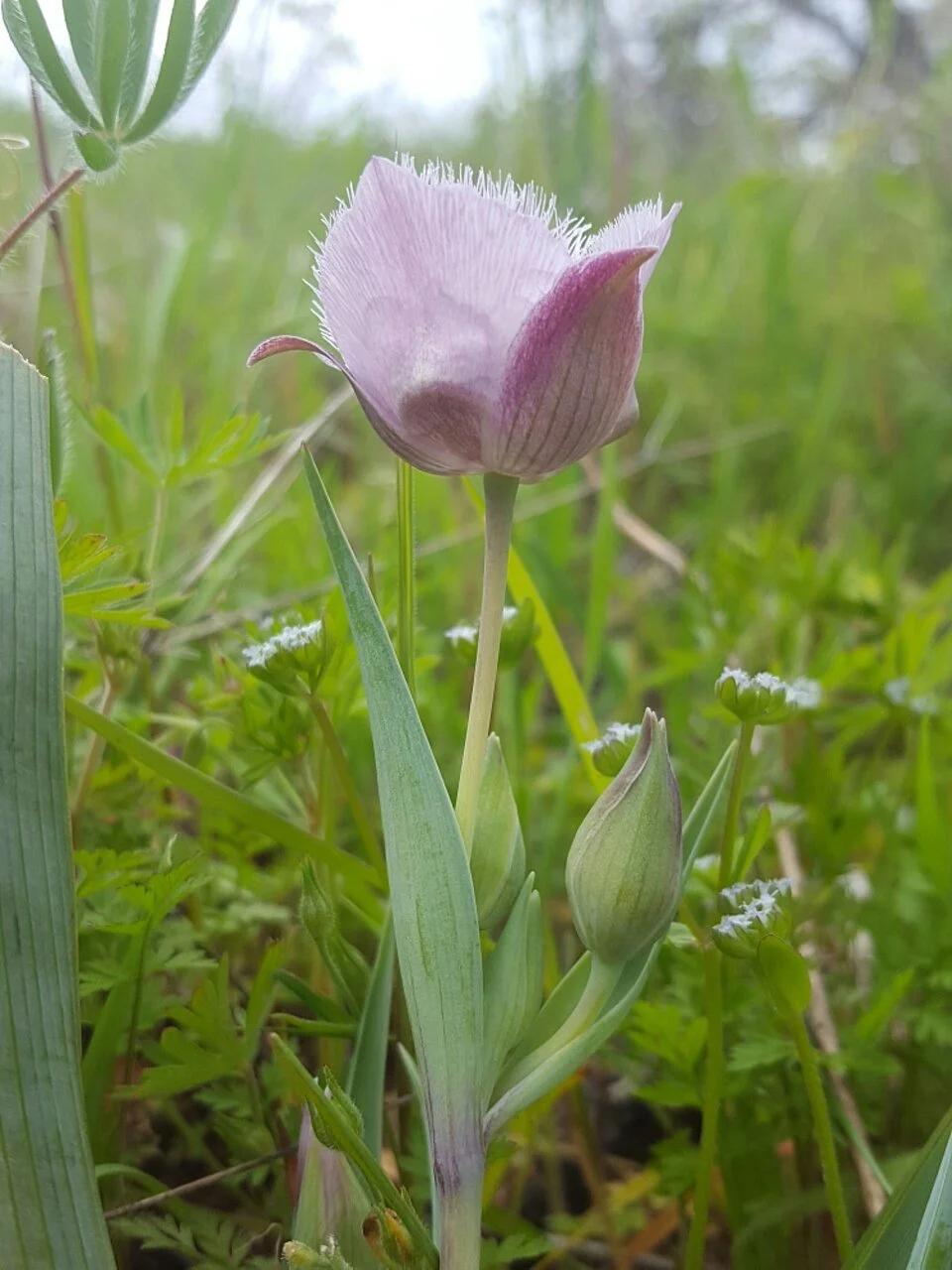
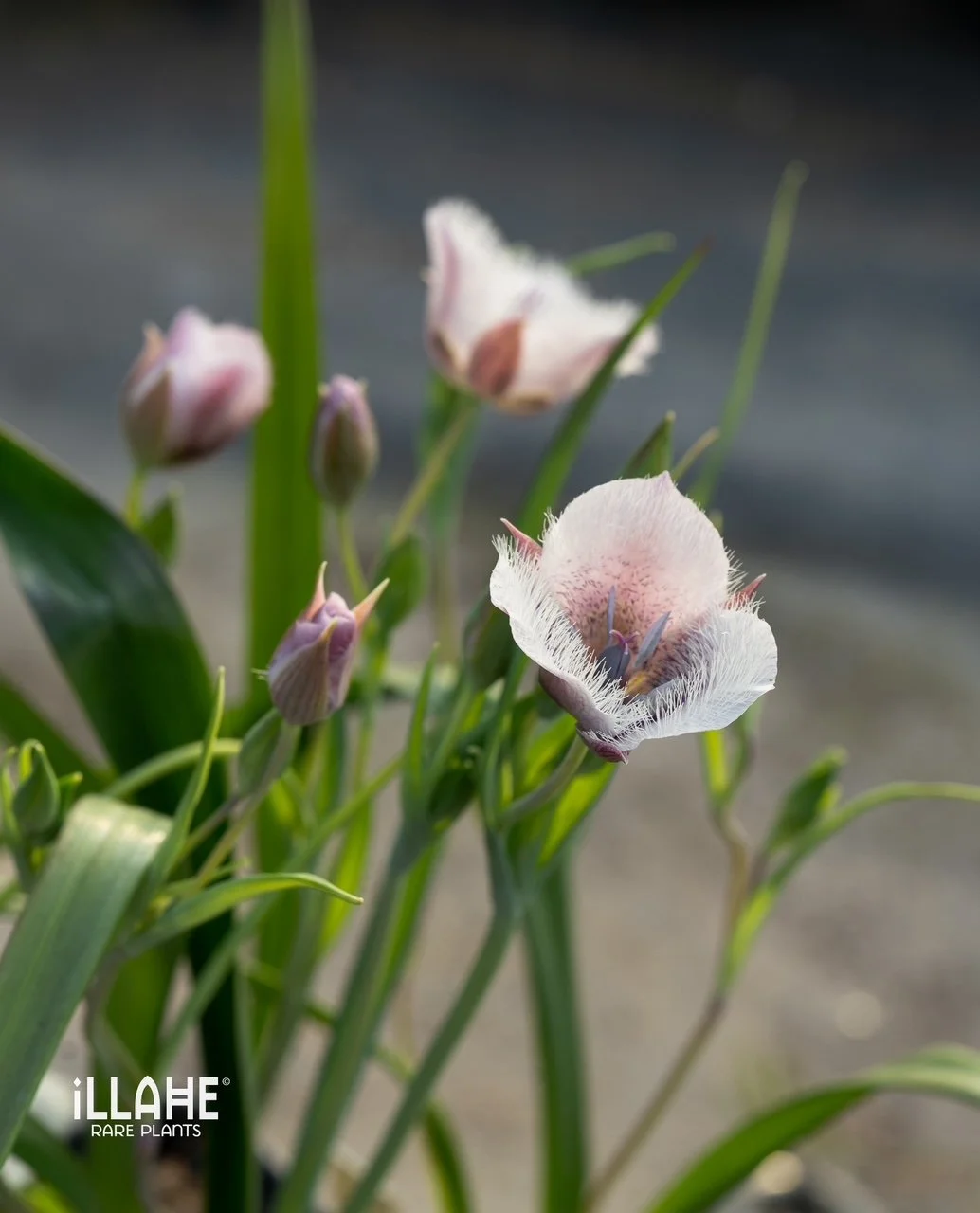
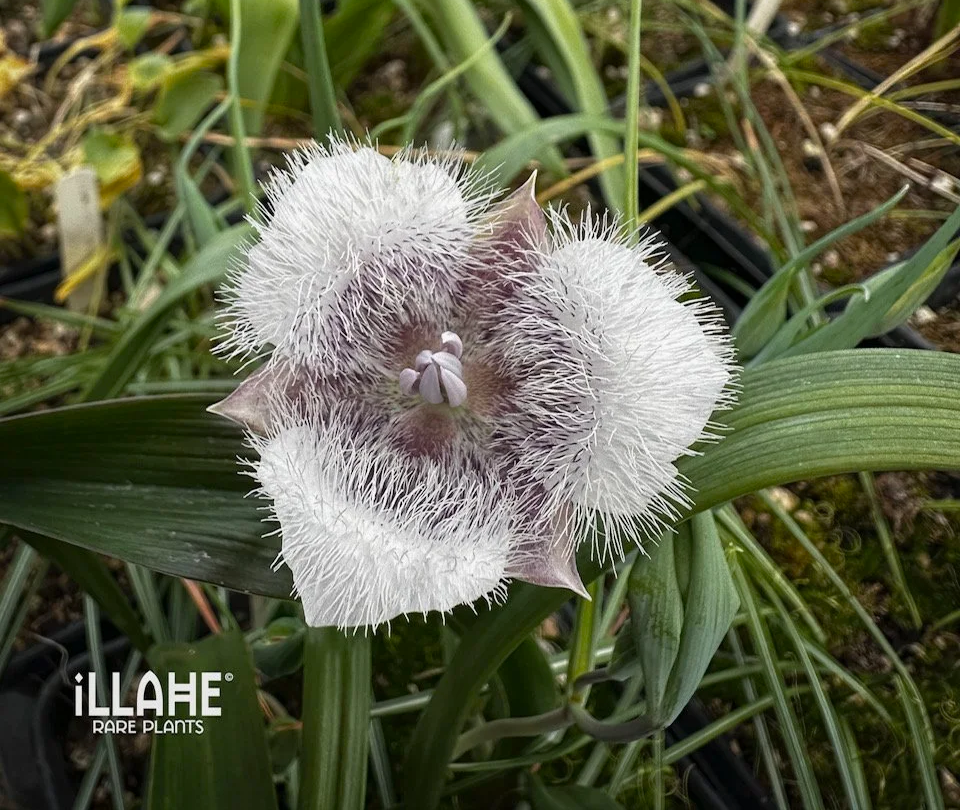
Among the earliest and most charming of the Pacific Northwest mariposa lilies, Calochortus tolmiei is a diminutive species native to open oak woodlands, grassy balds, and rocky slopes from southwestern British Columbia through western Oregon and into northern California. It’s the cats ear that I get to see in early spring not far from the farm at illahe. Its delicate, cup-shaped flowers range from creamy white to soft lavender, often with variable pinkish and lavender hues, and tufts of silky hairs that guide native pollinators. Though modest in stature, each bloom is a miniature masterpiece worthy of close inspection.
Flowering in mid to late spring, this species is perfectly suited to rock gardens, raised beds, and bulb frames where its understated elegance can be appreciated. The slender, glaucous foliage matures quickly before entering its natural summer dormancy, an adaptation to the dry Mediterranean climate of the Pacific Northwest.
One of the easiest western Calochortus to cultivate, C. tolmiei prospers in sharply drained, gravelly soil with ample moisture during winter and spring, followed by a dry summer rest. Once established, it will persist for many years and may slowly increase under favorable conditions. Its compact habit and exceptional markings make it an indispensable species for collectors of western North American bulbs and native plants.
Named in honor of the Scottish physician, botanist, and explorer William Fraser Tolmie, this species commemorates one of the earliest scientific explorers of the Pacific Northwest, whose collections greatly advanced the botanical knowledge of the region.
Height: 4–10 in. (10–25 cm)
Bloom Season: Mid to late spring
Hardiness: USDA Zones 5–8
Culture: Full sun to light afternoon shade; sharply drained, gravelly soil; winter and spring moisture followed by a dry summer dormancy.
Among the earliest and most charming of the Pacific Northwest mariposa lilies, Calochortus tolmiei is a diminutive species native to open oak woodlands, grassy balds, and rocky slopes from southwestern British Columbia through western Oregon and into northern California. It’s the cats ear that I get to see in early spring not far from the farm at illahe. Its delicate, cup-shaped flowers range from creamy white to soft lavender, often with variable pinkish and lavender hues, and tufts of silky hairs that guide native pollinators. Though modest in stature, each bloom is a miniature masterpiece worthy of close inspection.
Flowering in mid to late spring, this species is perfectly suited to rock gardens, raised beds, and bulb frames where its understated elegance can be appreciated. The slender, glaucous foliage matures quickly before entering its natural summer dormancy, an adaptation to the dry Mediterranean climate of the Pacific Northwest.
One of the easiest western Calochortus to cultivate, C. tolmiei prospers in sharply drained, gravelly soil with ample moisture during winter and spring, followed by a dry summer rest. Once established, it will persist for many years and may slowly increase under favorable conditions. Its compact habit and exceptional markings make it an indispensable species for collectors of western North American bulbs and native plants.
Named in honor of the Scottish physician, botanist, and explorer William Fraser Tolmie, this species commemorates one of the earliest scientific explorers of the Pacific Northwest, whose collections greatly advanced the botanical knowledge of the region.
Height: 4–10 in. (10–25 cm)
Bloom Season: Mid to late spring
Hardiness: USDA Zones 5–8
Culture: Full sun to light afternoon shade; sharply drained, gravelly soil; winter and spring moisture followed by a dry summer dormancy.