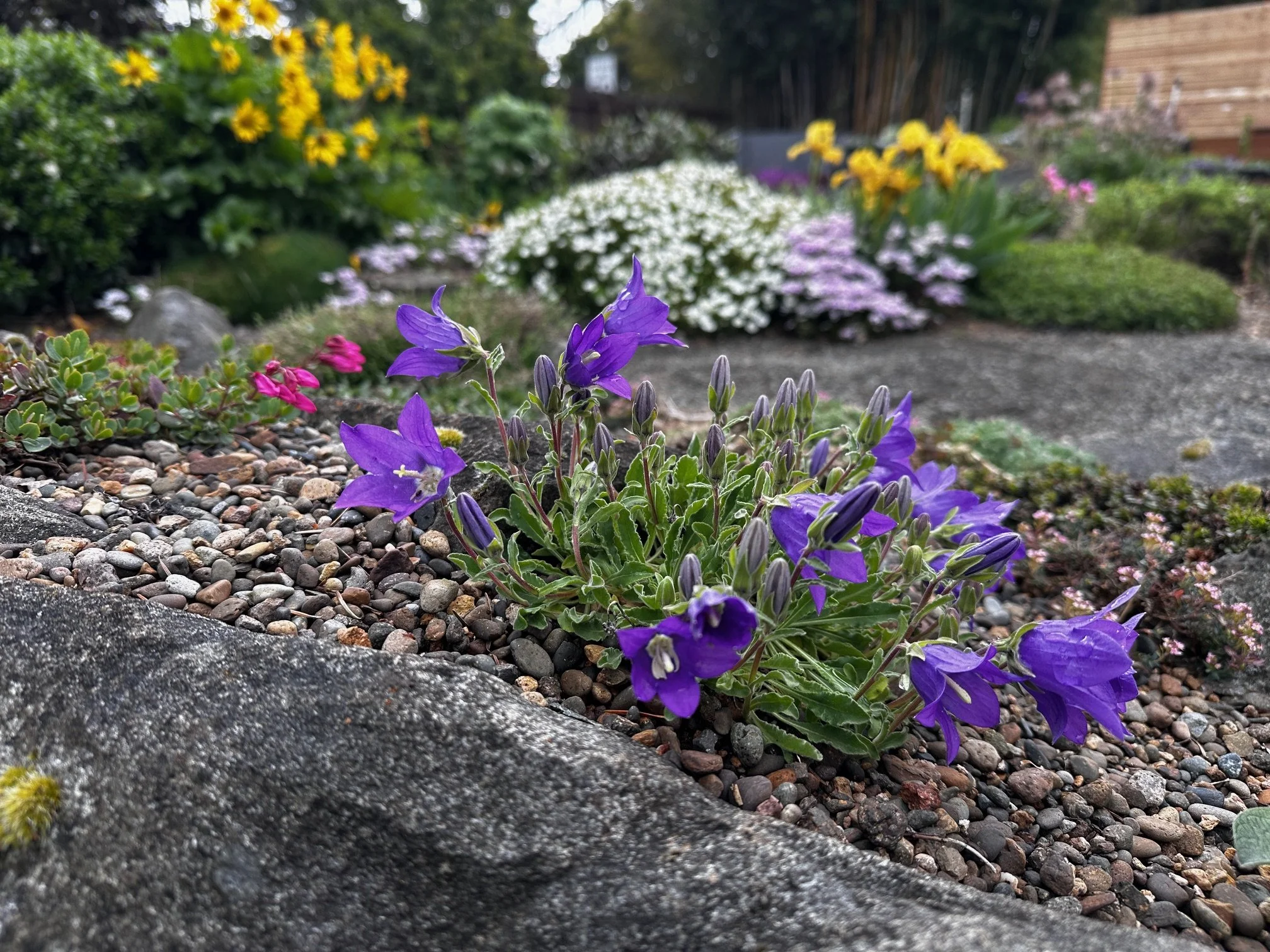
A diminutive, high-mountain bellflower of exceptional charm, this subspecies forms tight cushions to low mats of small, rounded to slightly toothed leaves, often clustered along short, creeping stems. In late spring to midsummer, it produces proportionally large, upward-facing to slightly nodding bell-shaped flowers in soft violet-blue, held just above the foliage and giving the plant a delicate, jewel-like appearance in crevice and scree habitats.
Native to rocky alpine and subalpine slopes of the eastern Mediterranean and Near East, it is associated with limestone and calcareous screes in mountainous regions of the Anatolia and adjacent highlands. It typically grows in exposed, well-drained sites where snowmelt provides brief seasonal moisture followed by long periods of summer drought.
In cultivation, Campanula saxifraga subsp. aucheri is best suited to troughs, crevice gardens, and sharply drained alpine beds. Here at illahe it’s flowering wonderfully in the big rock crevice that centers our traditional and oldest rock garden. It demands full sun, excellent drainage, and a lean, mineral-based substrate, performing poorly in rich or persistently moist soils. Once established, it is relatively drought tolerant but benefits from protection against winter wet in colder, wetter climates. Hardy to approximately USDA Zone 5–6.
Highly prized by alpine growers, this subspecies combines compact, restrained foliage with unexpectedly generous floral display, making it one of the more refined members of the bellflower group for small-scale rock garden, crevice or trough cultivation.
A diminutive, high-mountain bellflower of exceptional charm, this subspecies forms tight cushions to low mats of small, rounded to slightly toothed leaves, often clustered along short, creeping stems. In late spring to midsummer, it produces proportionally large, upward-facing to slightly nodding bell-shaped flowers in soft violet-blue, held just above the foliage and giving the plant a delicate, jewel-like appearance in crevice and scree habitats.
Native to rocky alpine and subalpine slopes of the eastern Mediterranean and Near East, it is associated with limestone and calcareous screes in mountainous regions of the Anatolia and adjacent highlands. It typically grows in exposed, well-drained sites where snowmelt provides brief seasonal moisture followed by long periods of summer drought.
In cultivation, Campanula saxifraga subsp. aucheri is best suited to troughs, crevice gardens, and sharply drained alpine beds. Here at illahe it’s flowering wonderfully in the big rock crevice that centers our traditional and oldest rock garden. It demands full sun, excellent drainage, and a lean, mineral-based substrate, performing poorly in rich or persistently moist soils. Once established, it is relatively drought tolerant but benefits from protection against winter wet in colder, wetter climates. Hardy to approximately USDA Zone 5–6.
Highly prized by alpine growers, this subspecies combines compact, restrained foliage with unexpectedly generous floral display, making it one of the more refined members of the bellflower group for small-scale rock garden, crevice or trough cultivation.