This name appears in some older or regional treatments, referring to plants from the Caucasus (hence kavkazorum). In those contexts, it was used to distinguish a somewhat more compact, often tighter-growing form with subtle morphological differences adapted to harsher, high-elevation conditions.
However, like much in Campanula, its status is not universally accepted. Many modern taxonomies have folded subsp. kavkazorum back into Campanula betulifolia without recognizing it formally, treating the differences as part of the species’ natural variability across its range.
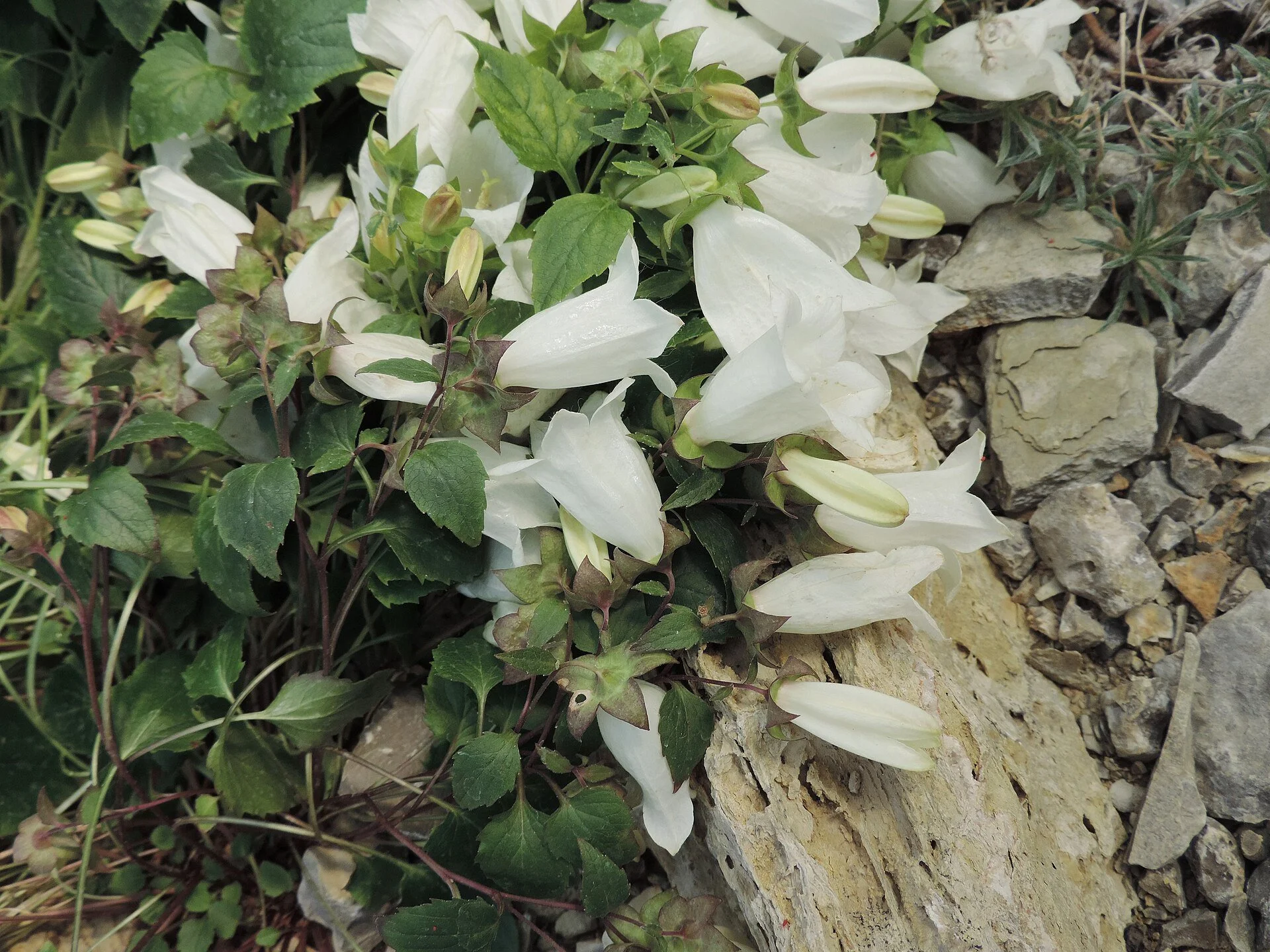
In horticulture, though, the name still has some usefulness. When you see kavkazorum attached to a plant, it often implies a particularly choice alpine form—compact, floriferous, and well-suited to crevice work—very much in keeping with the best expressions of the species in cultivation.
Whether you are a lumper or a splitter this is a fantastic Bellflower for the crevice garden or large trough.
This name appears in some older or regional treatments, referring to plants from the Caucasus (hence kavkazorum). In those contexts, it was used to distinguish a somewhat more compact, often tighter-growing form with subtle morphological differences adapted to harsher, high-elevation conditions.
However, like much in Campanula, its status is not universally accepted. Many modern taxonomies have folded subsp. kavkazorum back into Campanula betulifolia without recognizing it formally, treating the differences as part of the species’ natural variability across its range.
In horticulture, though, the name still has some usefulness. When you see kavkazorum attached to a plant, it often implies a particularly choice alpine form—compact, floriferous, and well-suited to crevice work—very much in keeping with the best expressions of the species in cultivation.
Whether you are a lumper or a splitter this is a fantastic Bellflower for the crevice garden or large trough.