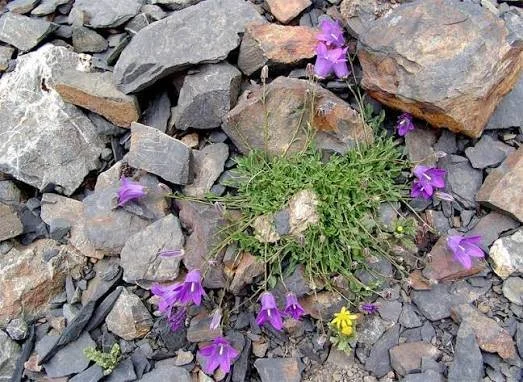
A superb miniature bellflower from the Caucasus, Campanula petrophila is a choice plant for the serious rock gardener. It forms tight clumps of small, ovate basal leaves, with short, prostrate stems carrying remarkably large blue-purple, bell-shaped flowers. In cultivation it develops its best compact form when grown outdoors in a gritty alpine bed rather than under glass.
Native to the Caucasus, including the North Caucasus and Transcaucasus, this species grows in cool, exposed mountain rock crevices at high elevation. Its natural affinity for rocky habitats makes it particularly well suited to alpine troughs, scree gardens, crevice gardens, and pockets between stones. Provide full sun and extremely sharp drainage, especially through the winter; specialist campanulas generally dislike wet, heavy soil.
The blue-purple bells are attractive to a variety of flower-visiting insects. Campanula species are visited by bees, flies, and other insects, making these diminutive alpine bellflowers useful additions to a pollinator-friendly rock garden. Hardy to approximately Zone 5–8.
A superb miniature bellflower from the Caucasus, Campanula petrophila is a choice plant for the serious rock gardener. It forms tight clumps of small, ovate basal leaves, with short, prostrate stems carrying remarkably large blue-purple, bell-shaped flowers. In cultivation it develops its best compact form when grown outdoors in a gritty alpine bed rather than under glass.
Native to the Caucasus, including the North Caucasus and Transcaucasus, this species grows in cool, exposed mountain rock crevices at high elevation. Its natural affinity for rocky habitats makes it particularly well suited to alpine troughs, scree gardens, crevice gardens, and pockets between stones. Provide full sun and extremely sharp drainage, especially through the winter; specialist campanulas generally dislike wet, heavy soil.
The blue-purple bells are attractive to a variety of flower-visiting insects. Campanula species are visited by bees, flies, and other insects, making these diminutive alpine bellflowers useful additions to a pollinator-friendly rock garden. Hardy to approximately Zone 5–8.