Campanula thyrsoides — Yellow Bellflower
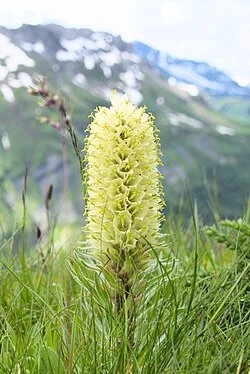
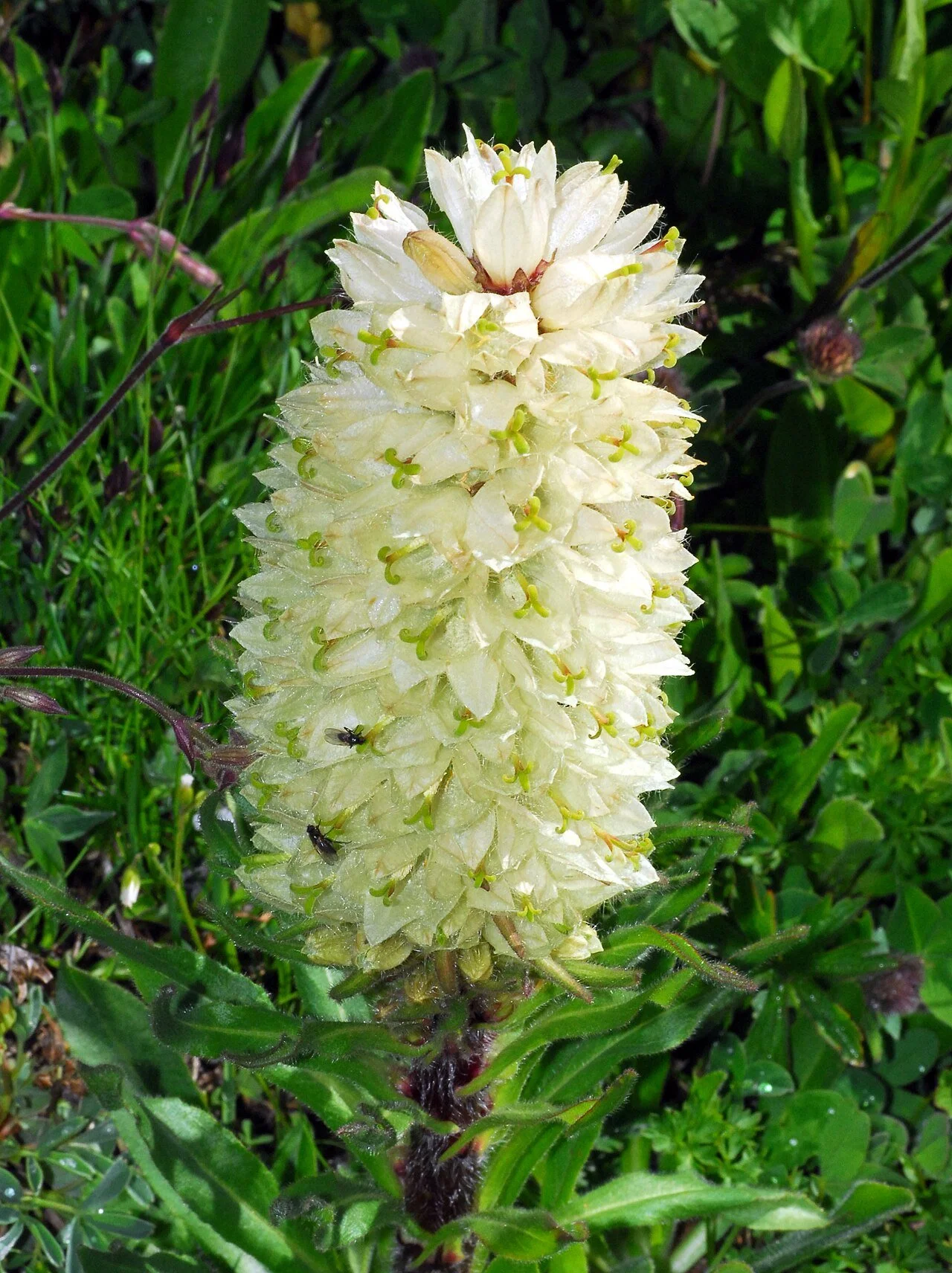
One of the most distinctive of the alpine bellflowers, Campanula thyrsoides produces a strong, upright stem densely clothed in narrow, gray-green leaves and topped with a dense spike of unusual pale yellow, bell-shaped flowers. Unlike most Campanula, which are blue or violet, the soft yellow flowers make this species immediately recognizable.
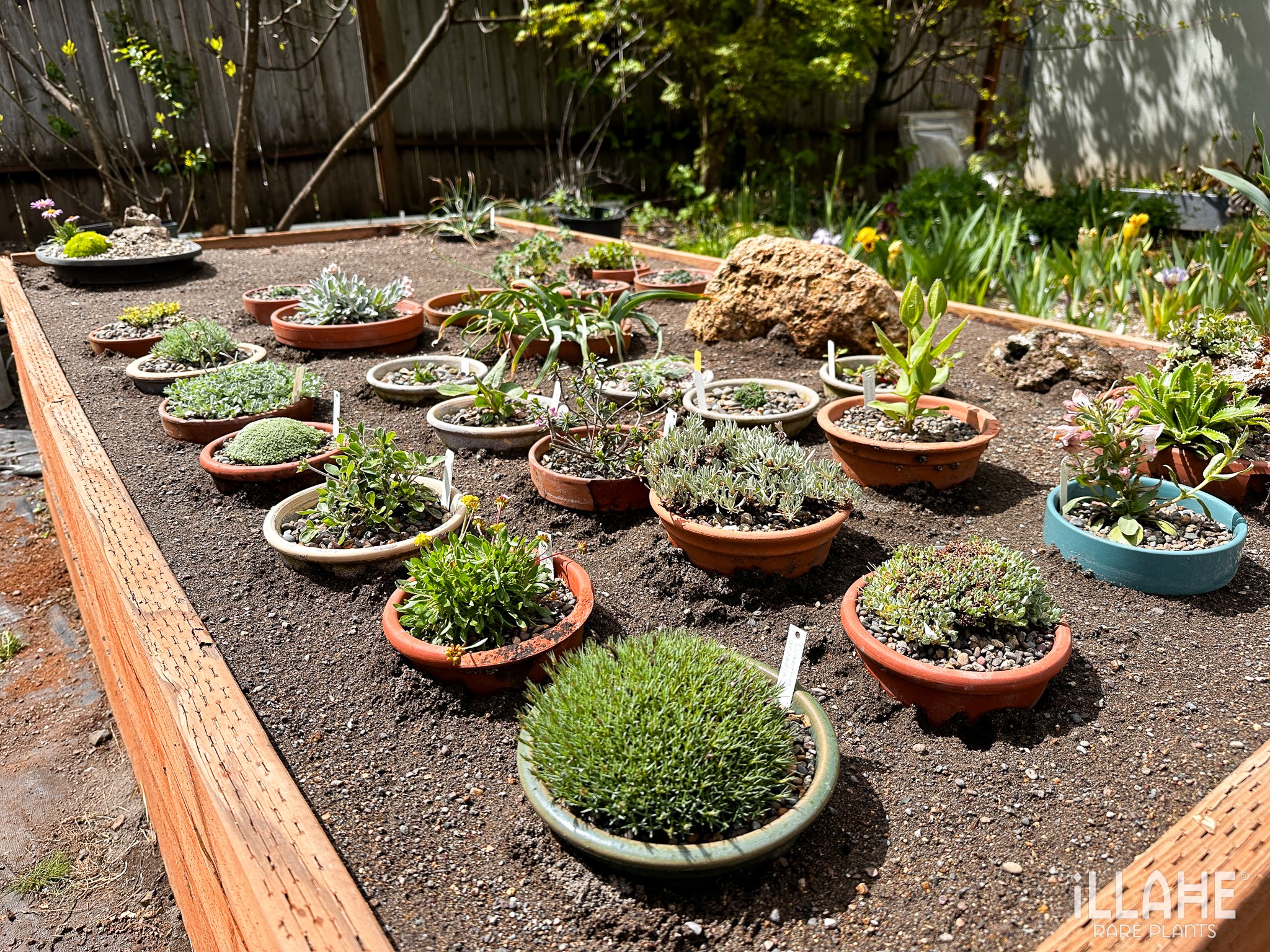
Native to the European Alps, Jura, and Balkan mountain ranges, it grows from the subalpine into the alpine zone, generally around 1,300–2,800 m (4,300–9,200 ft). It is particularly associated with species-rich alpine meadows, limestone screes, rocky slopes, and other open habitats over limestone or carbonate-rich schist. It has thrived here at illahe in the sand beds, or hell strips as we call them outside of the greenhouses.
A choice plant for the serious rock garden, Campanula thyrsoides is especially well suited to a limestone scree or alpine bed where its upright flower spikes can rise above lower-growing cushion plants. Give it full sun, excellent drainage, and a lean, preferably alkaline soil. This is a monocarpic species, meaning that individual plants flower only once before setting seed, although plants may persist for several years before flowering.
Campanula thyrsoides — Yellow Bellflower
One of the most distinctive of the alpine bellflowers, Campanula thyrsoides produces a strong, upright stem densely clothed in narrow, gray-green leaves and topped with a dense spike of unusual pale yellow, bell-shaped flowers. Unlike most Campanula, which are blue or violet, the soft yellow flowers make this species immediately recognizable.
Native to the European Alps, Jura, and Balkan mountain ranges, it grows from the subalpine into the alpine zone, generally around 1,300–2,800 m (4,300–9,200 ft). It is particularly associated with species-rich alpine meadows, limestone screes, rocky slopes, and other open habitats over limestone or carbonate-rich schist. It has thrived here at illahe in the sand beds, or hell strips as we call them outside of the greenhouses.
A choice plant for the serious rock garden, Campanula thyrsoides is especially well suited to a limestone scree or alpine bed where its upright flower spikes can rise above lower-growing cushion plants. Give it full sun, excellent drainage, and a lean, preferably alkaline soil. This is a monocarpic species, meaning that individual plants flower only once before setting seed, although plants may persist for several years before flowering.