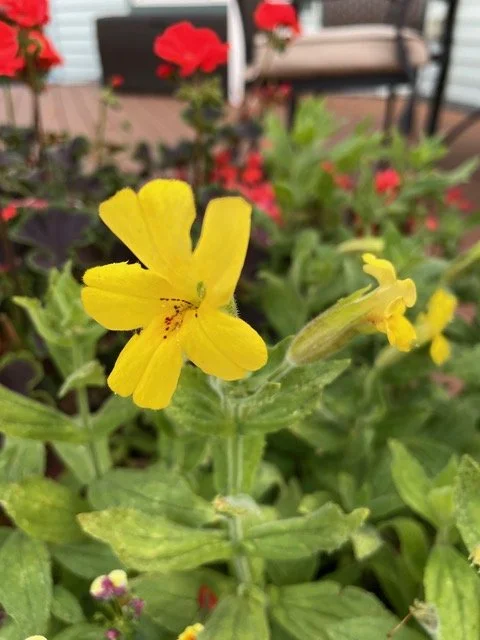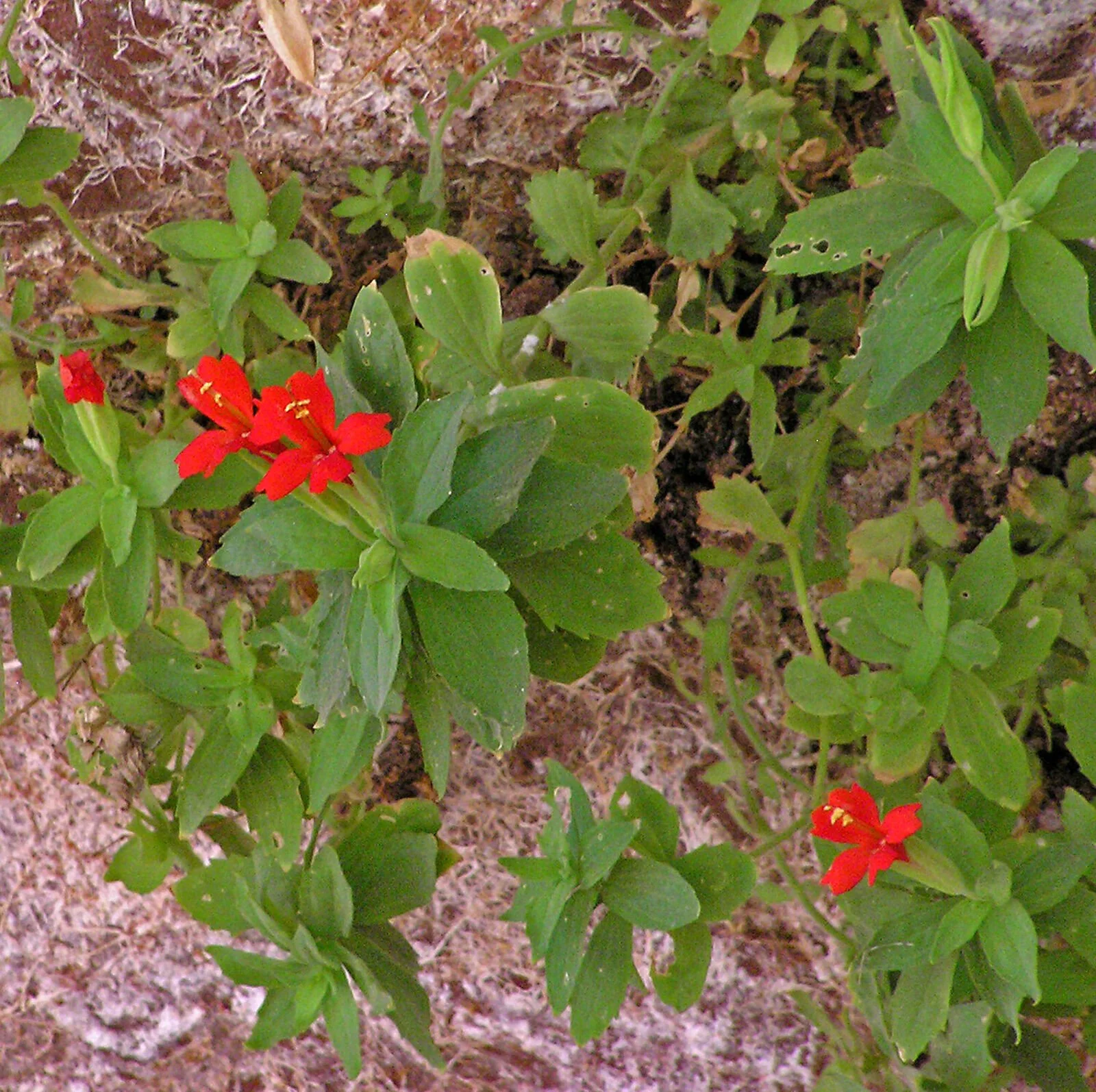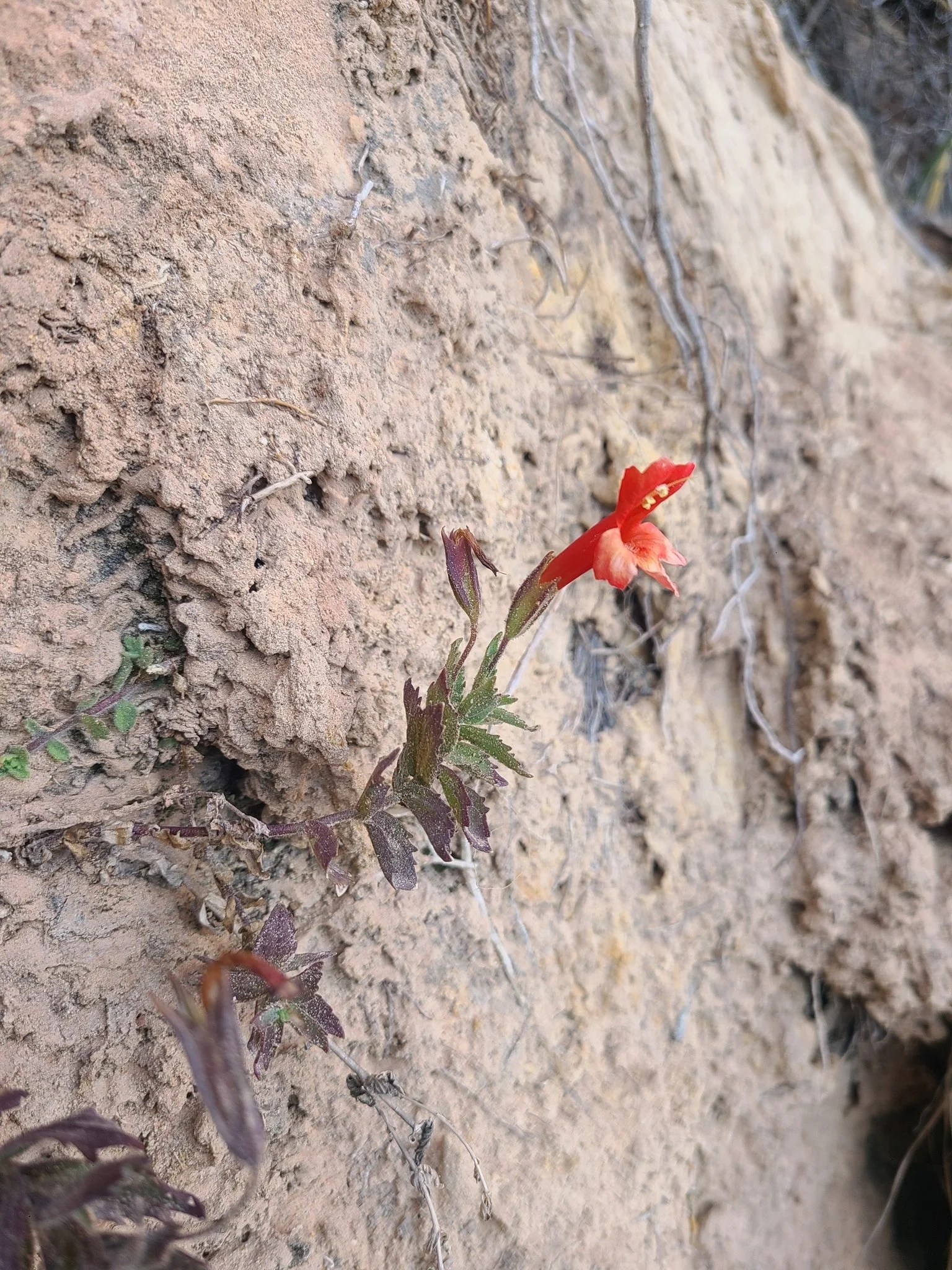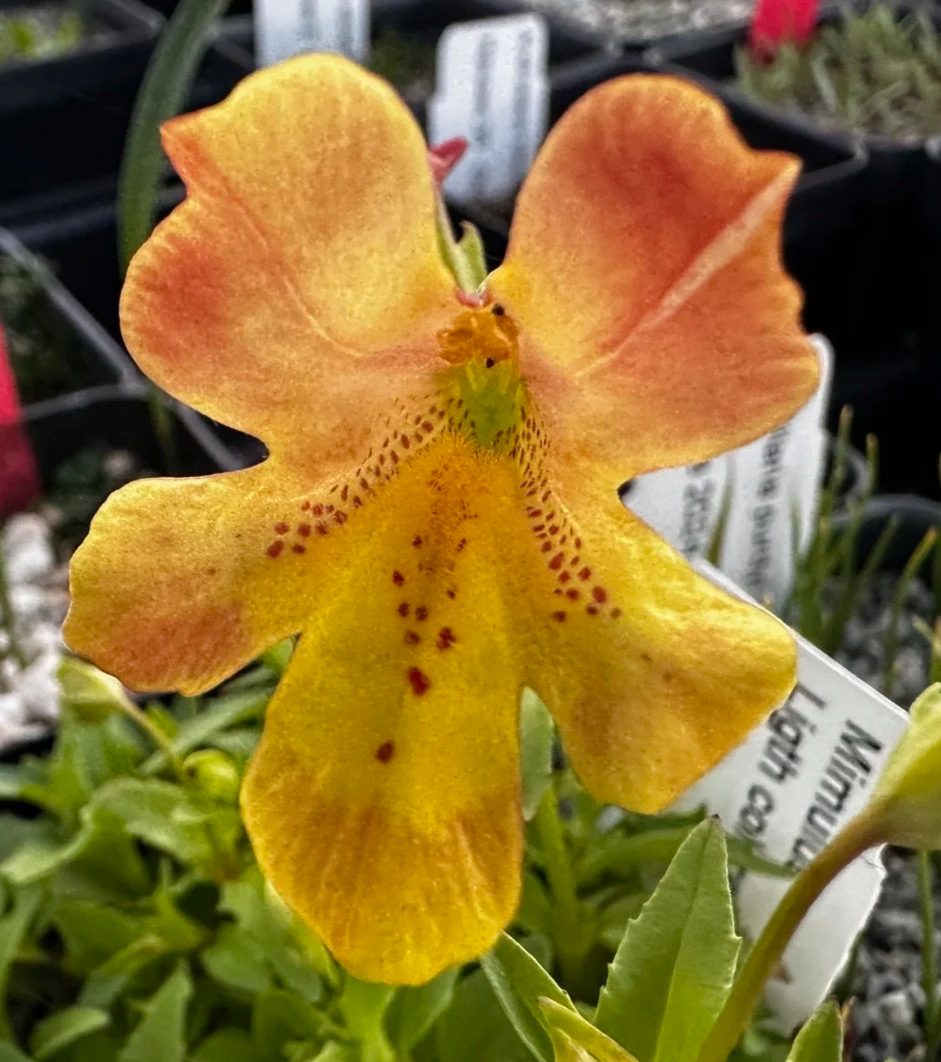
Diplacus ‘White’ is a pale-flowered selection of the shrubby monkeyflower, derived from western North American species such as Diplacus aurantiacus and its relatives, native to dry slopes, coastal bluffs, and open chaparral. Adapted to sun, drought, and lean soils, it brings a softer, more refined color palette to a genus typically known for vivid oranges and reds. I have an Aunt and Uncle that live above Bodega Bay, California and I used to love walking around the Poison Oak thicketed, Pepperwood tree woodlands where I would often run across the shrubby monkeyflowers where they would grow on the edge of clearings.
It forms a low, spreading to loosely mounded subshrub with slender, somewhat woody stems and narrow, slightly sticky green leaves that release a resinous fragrance in warm weather. The foliage remains evergreen to semi-evergreen in mild climates, maintaining structure year-round.
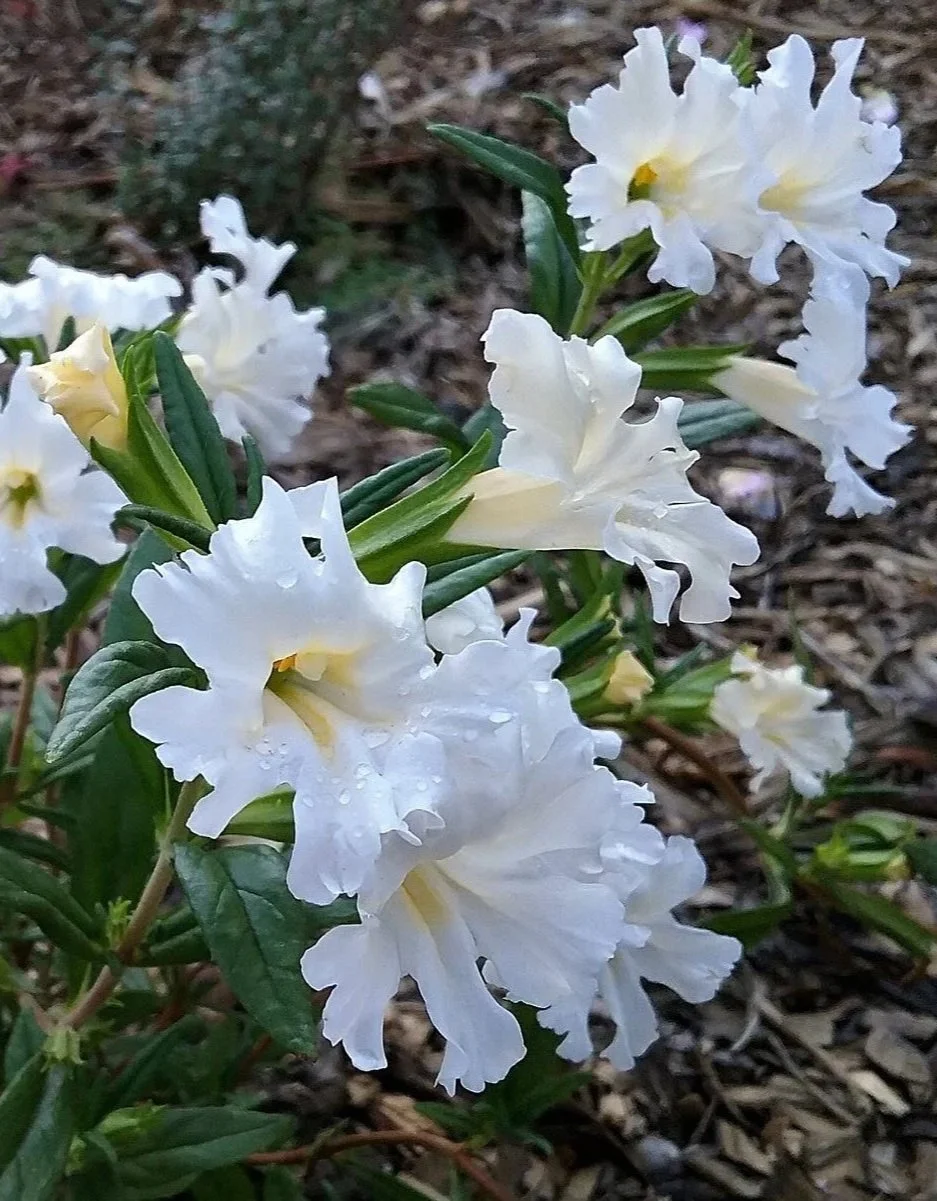
From late spring through summer, the plant produces a succession of tubular, open-faced flowers in soft creamy white to pale ivory, sometimes with a faint yellow throat. The blooms are lightly luminous and stand out particularly well against the green foliage, offering a quieter, more understated display compared to the brighter forms of the genus.
In cultivation, Diplacus ‘White’ thrives in full sun and sharply drained soils, performing best in dry gardens, rock gardens, and Mediterranean-style plantings. It is highly drought-tolerant once established but benefits from occasional deep watering in prolonged dry periods. Excellent drainage is essential, particularly in winter.
Hardy in USDA Zones 8–10, with some tolerance to brief colder conditions if kept dry, this selection is valued for its soft coloration, long flowering season, and adaptability to dry, exposed garden situations.
Diplacus ‘White’ is a pale-flowered selection of the shrubby monkeyflower, derived from western North American species such as Diplacus aurantiacus and its relatives, native to dry slopes, coastal bluffs, and open chaparral. Adapted to sun, drought, and lean soils, it brings a softer, more refined color palette to a genus typically known for vivid oranges and reds. I have an Aunt and Uncle that live above Bodega Bay, California and I used to love walking around the Poison Oak thicketed, Pepperwood tree woodlands where I would often run across the shrubby monkeyflowers where they would grow on the edge of clearings.
It forms a low, spreading to loosely mounded subshrub with slender, somewhat woody stems and narrow, slightly sticky green leaves that release a resinous fragrance in warm weather. The foliage remains evergreen to semi-evergreen in mild climates, maintaining structure year-round.
From late spring through summer, the plant produces a succession of tubular, open-faced flowers in soft creamy white to pale ivory, sometimes with a faint yellow throat. The blooms are lightly luminous and stand out particularly well against the green foliage, offering a quieter, more understated display compared to the brighter forms of the genus.
In cultivation, Diplacus ‘White’ thrives in full sun and sharply drained soils, performing best in dry gardens, rock gardens, and Mediterranean-style plantings. It is highly drought-tolerant once established but benefits from occasional deep watering in prolonged dry periods. Excellent drainage is essential, particularly in winter.
Hardy in USDA Zones 8–10, with some tolerance to brief colder conditions if kept dry, this selection is valued for its soft coloration, long flowering season, and adaptability to dry, exposed garden situations.