Norwegian Whitlow Grass
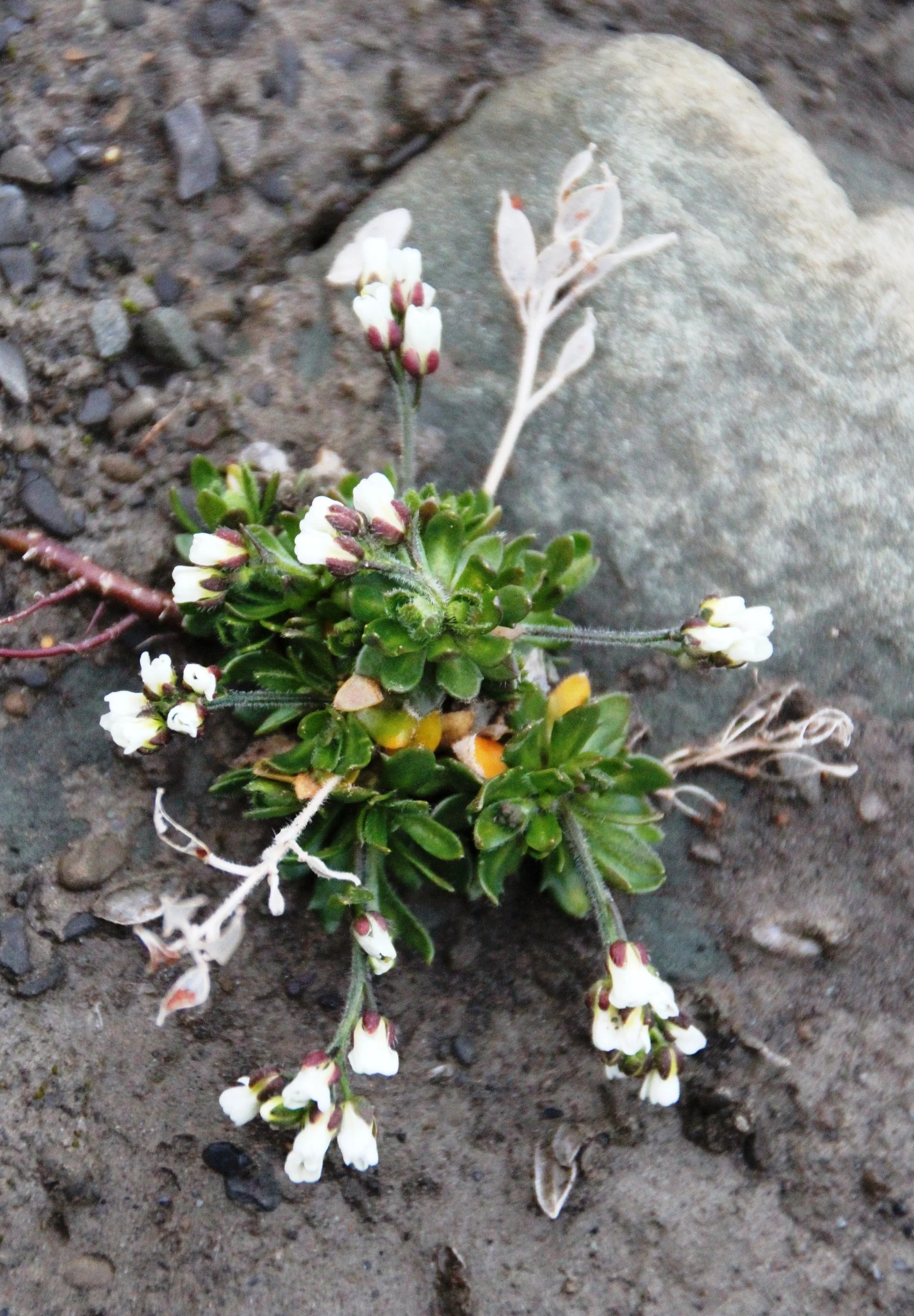
A choice little alpine for the rock garden, Draba norvegica forms compact tufts of small, dark green, hairy leaves topped in spring and early summer by delicate clusters of white flowers. Native across arctic and subarctic regions of Europe and northeastern North America, it is found in exposed habitats including gravelly shores, rocky ledges, cliffs, and narrow crevices in bedrock. Its naturally harsh habitat makes it particularly well suited to a trough, scree garden, or sharply drained rock garden where it can be kept cool and well drained.
The small white flowers are especially valuable in the early season, providing nectar and pollen for emerging bees and other small pollinators. Grow in full sun with gritty, sharply drained soil and avoid heavy, moisture-retentive conditions. I like to put the drabas in our short stone walls to grow vertically, I think this is one of the best ways to show off the little cushions. Hardy to approximately Zone 4–7.
Norwegian Whitlow Grass
A choice little alpine for the rock garden, Draba norvegica forms compact tufts of small, dark green, hairy leaves topped in spring and early summer by delicate clusters of white flowers. Native across arctic and subarctic regions of Europe and northeastern North America, it is found in exposed habitats including gravelly shores, rocky ledges, cliffs, and narrow crevices in bedrock. Its naturally harsh habitat makes it particularly well suited to a trough, scree garden, or sharply drained rock garden where it can be kept cool and well drained.
The small white flowers are especially valuable in the early season, providing nectar and pollen for emerging bees and other small pollinators. Grow in full sun with gritty, sharply drained soil and avoid heavy, moisture-retentive conditions. I like to put the drabas in our short stone walls to grow vertically, I think this is one of the best ways to show off the little cushions. Hardy to approximately Zone 4–7.