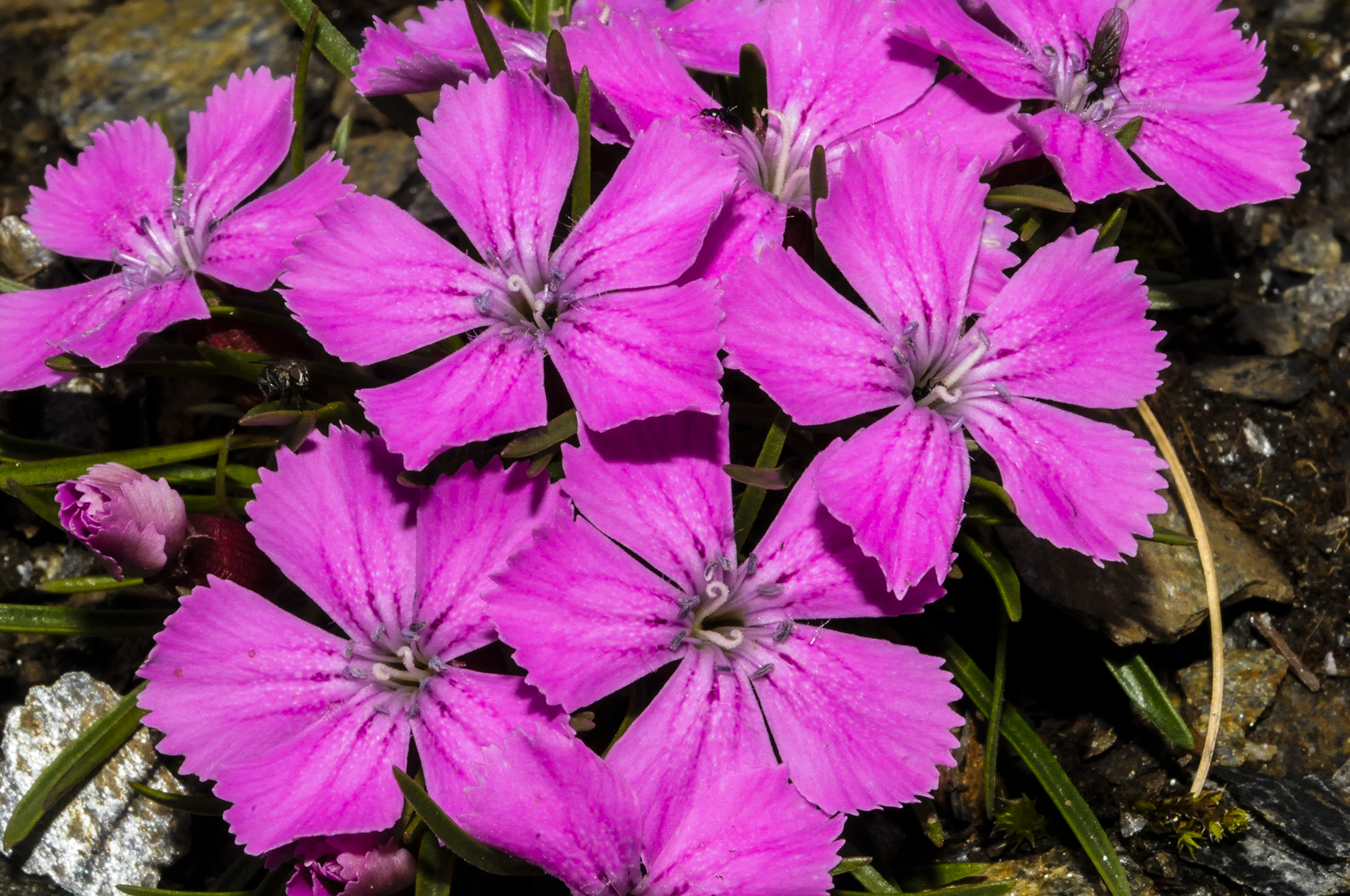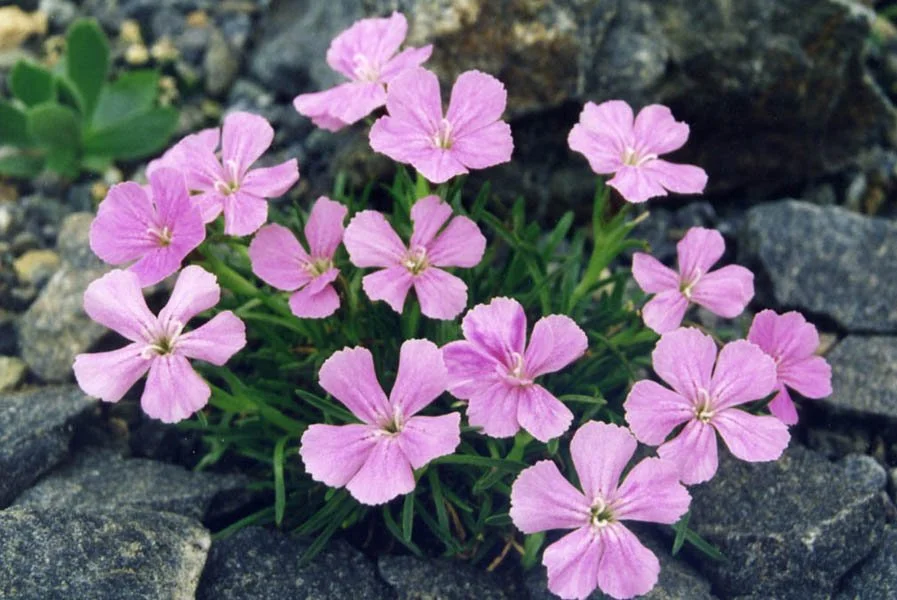

Erigeron vagus is a diminutive, mat-forming perennial fleabane native to high-elevation, rocky habitats of the western United States, where it inhabits scree slopes, alpine ridges, and windswept outcrops. It forms tight, creeping cushions of small, spatulate green leaves that hug the ground and weave into stone crevices, giving it a natural affinity for trough gardens and alpine plantings.
I have been growing so many Erigerons lately, because of the spectacular performance they offer, often blooming nonstop through spring and summer. There are many variations on a them and this one always reminds me a lot of E. compositus ‘Railroad Ridge’ for it’s compact size.
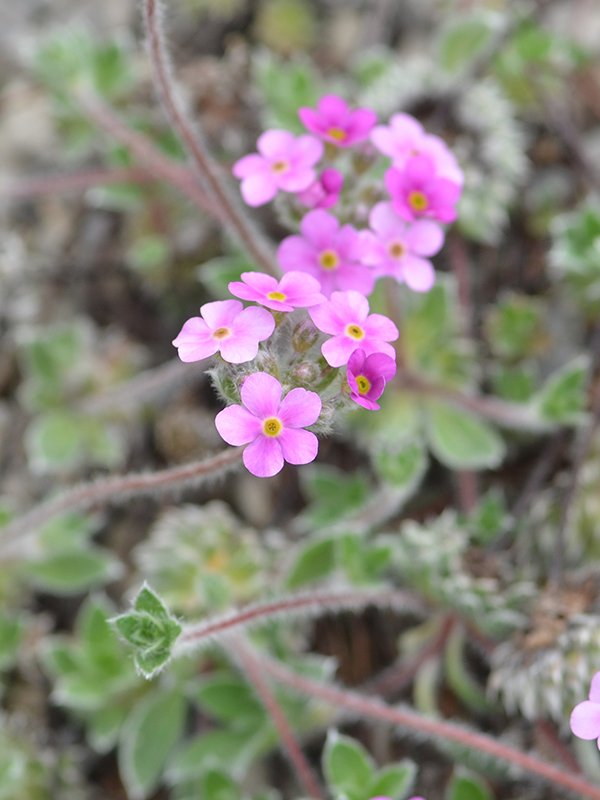
In late spring to early summer, it produces short stems bearing solitary, daisy-like flowers of soft lavender-pink to nearly white, often with a subtle yellow center that ages toward cream. Though modest in size, the blooms are held just above the foliage and are freely produced, creating a delicate scattering of color across the plant’s tight mat. Flowers are attractive to small native bees and other alpine-adapted pollinators that forage in cool, exposed habitats.
Best grown in full sun and sharply drained, gritty or gravelly soils, Erigeron vagus excels in conditions that mimic its native alpine environment. It is highly tolerant of cold and wind but requires excellent drainage to persist long term, especially in winter-wet climates. Plants typically remain under 3–5 inches tall, slowly expanding to form low, irregular mats that spill naturally over rocks.
Hardy in USDA Zones 4–7, this species is best appreciated in rock gardens, troughs, and crevice plantings where its subtle coloration and refined alpine character can be viewed up close.
Erigeron vagus is a diminutive, mat-forming perennial fleabane native to high-elevation, rocky habitats of the western United States, where it inhabits scree slopes, alpine ridges, and windswept outcrops. It forms tight, creeping cushions of small, spatulate green leaves that hug the ground and weave into stone crevices, giving it a natural affinity for trough gardens and alpine plantings.
I have been growing so many Erigerons lately, because of the spectacular performance they offer, often blooming nonstop through spring and summer. There are many variations on a them and this one always reminds me a lot of E. compositus ‘Railroad Ridge’ for it’s compact size.
In late spring to early summer, it produces short stems bearing solitary, daisy-like flowers of soft lavender-pink to nearly white, often with a subtle yellow center that ages toward cream. Though modest in size, the blooms are held just above the foliage and are freely produced, creating a delicate scattering of color across the plant’s tight mat. Flowers are attractive to small native bees and other alpine-adapted pollinators that forage in cool, exposed habitats.
Best grown in full sun and sharply drained, gritty or gravelly soils, Erigeron vagus excels in conditions that mimic its native alpine environment. It is highly tolerant of cold and wind but requires excellent drainage to persist long term, especially in winter-wet climates. Plants typically remain under 3–5 inches tall, slowly expanding to form low, irregular mats that spill naturally over rocks.
Hardy in USDA Zones 4–7, this species is best appreciated in rock gardens, troughs, and crevice plantings where its subtle coloration and refined alpine character can be viewed up close.