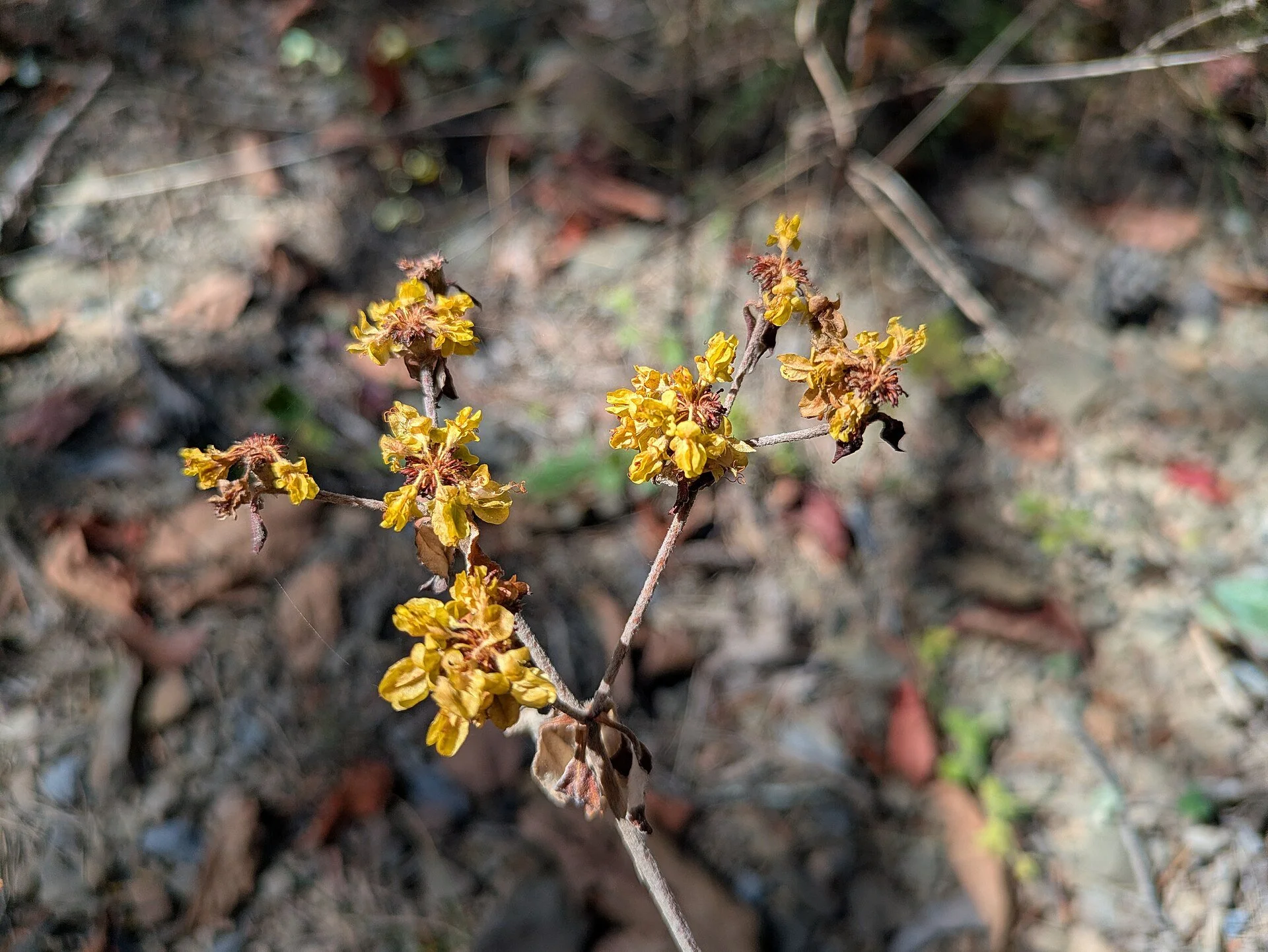
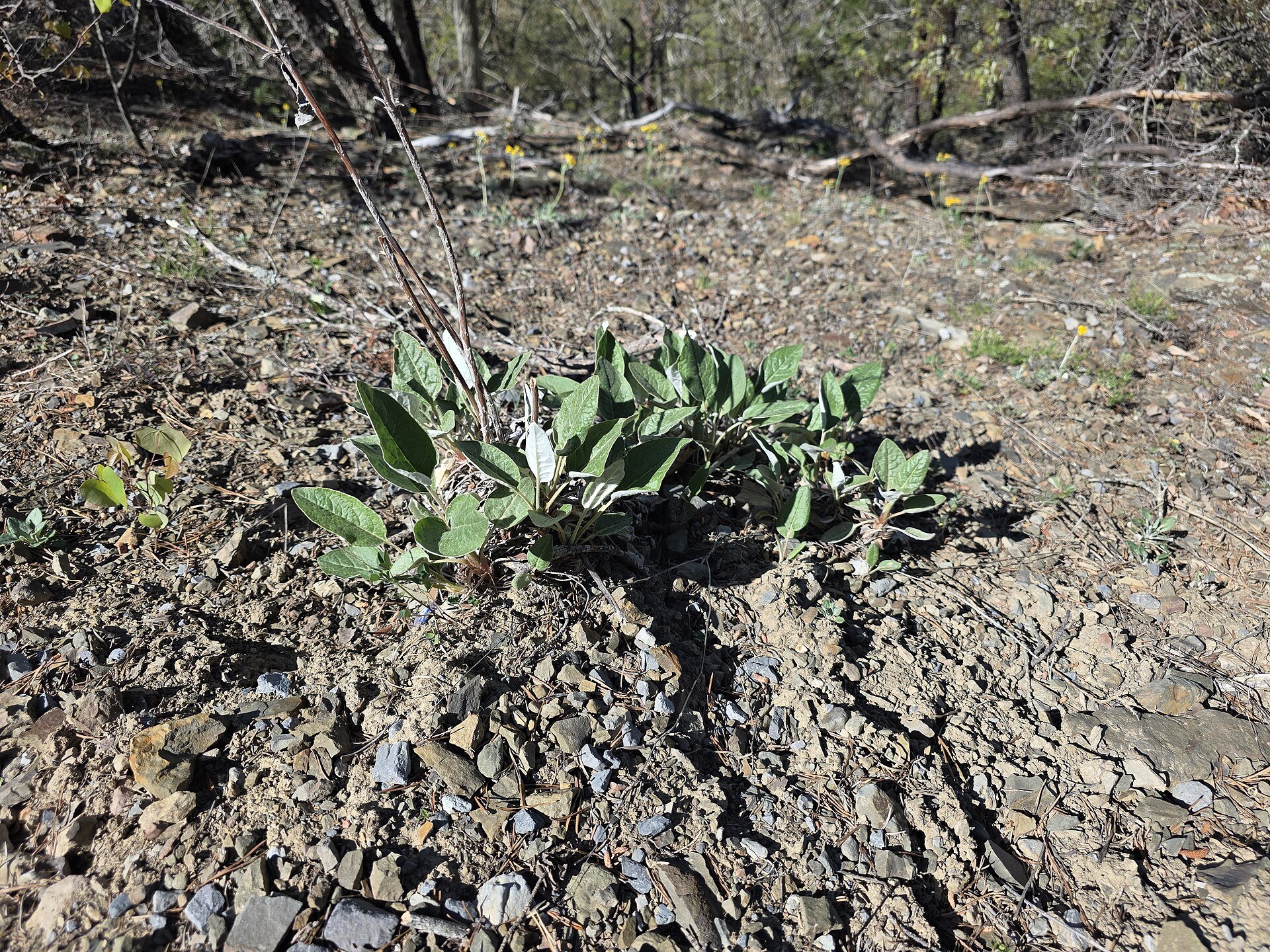
Eriogonum allenii is an unusual eastern North American buckwheat, quite unlike the familiar western species of the genus. Known as Shale Barren Wild Buckwheat, it is restricted to the Appalachian shale barrens of Virginia and West Virginia, where it grows on exposed, rocky shale slopes and in open oak and pine woodland. Its broad basal leaves are green above but densely felted with silvery-white hairs beneath, and in summer it produces branching clusters of bright yellow flowers.
A fascinating plant for the rock garden, particularly where a warm, sunny position and sharply drained, mineral soil can be provided. It is well suited to gravel gardens, screes, and rocky slopes, and the felted undersides of the large leaves become especially attractive as the season progresses. In autumn the foliage can develop striking red tones. An uncommon Eriogonum in cultivation and a wonderful choice for gardeners interested in unusual North American plants and specialized shale-barren flora. Pair it with the lovely shale barren endemic Clematis coactilis for an outstanding botanical display.
Eriogonum allenii is an unusual eastern North American buckwheat, quite unlike the familiar western species of the genus. Known as Shale Barren Wild Buckwheat, it is restricted to the Appalachian shale barrens of Virginia and West Virginia, where it grows on exposed, rocky shale slopes and in open oak and pine woodland. Its broad basal leaves are green above but densely felted with silvery-white hairs beneath, and in summer it produces branching clusters of bright yellow flowers.
A fascinating plant for the rock garden, particularly where a warm, sunny position and sharply drained, mineral soil can be provided. It is well suited to gravel gardens, screes, and rocky slopes, and the felted undersides of the large leaves become especially attractive as the season progresses. In autumn the foliage can develop striking red tones. An uncommon Eriogonum in cultivation and a wonderful choice for gardeners interested in unusual North American plants and specialized shale-barren flora. Pair it with the lovely shale barren endemic Clematis coactilis for an outstanding botanical display.