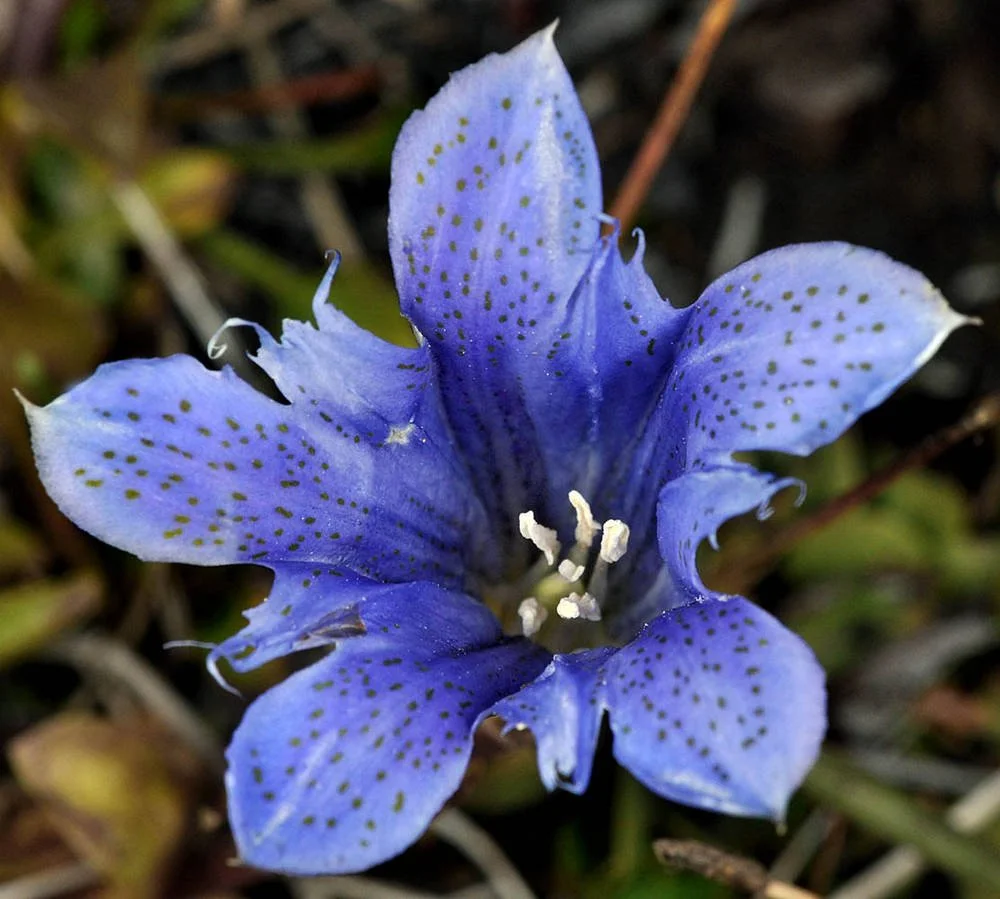
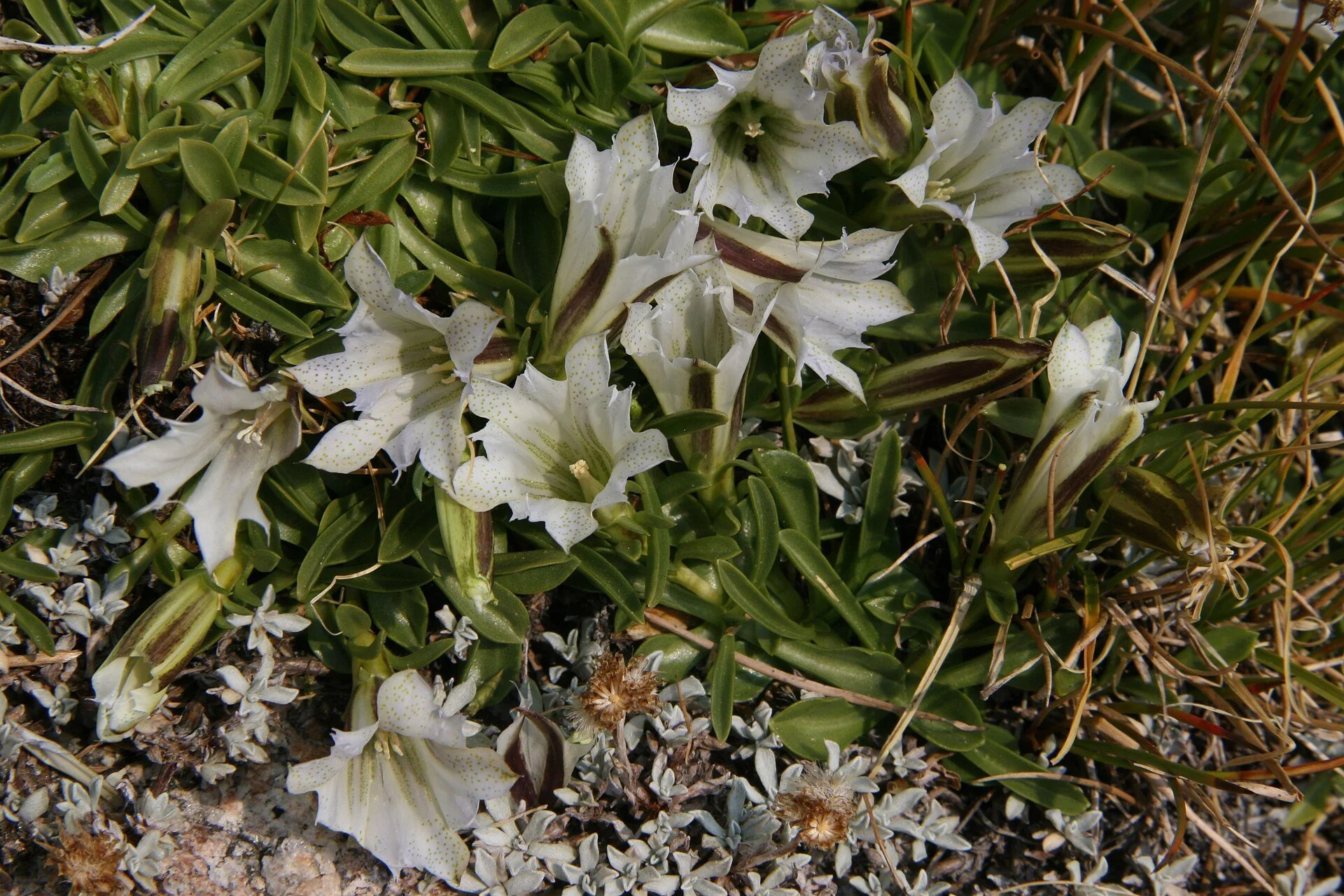
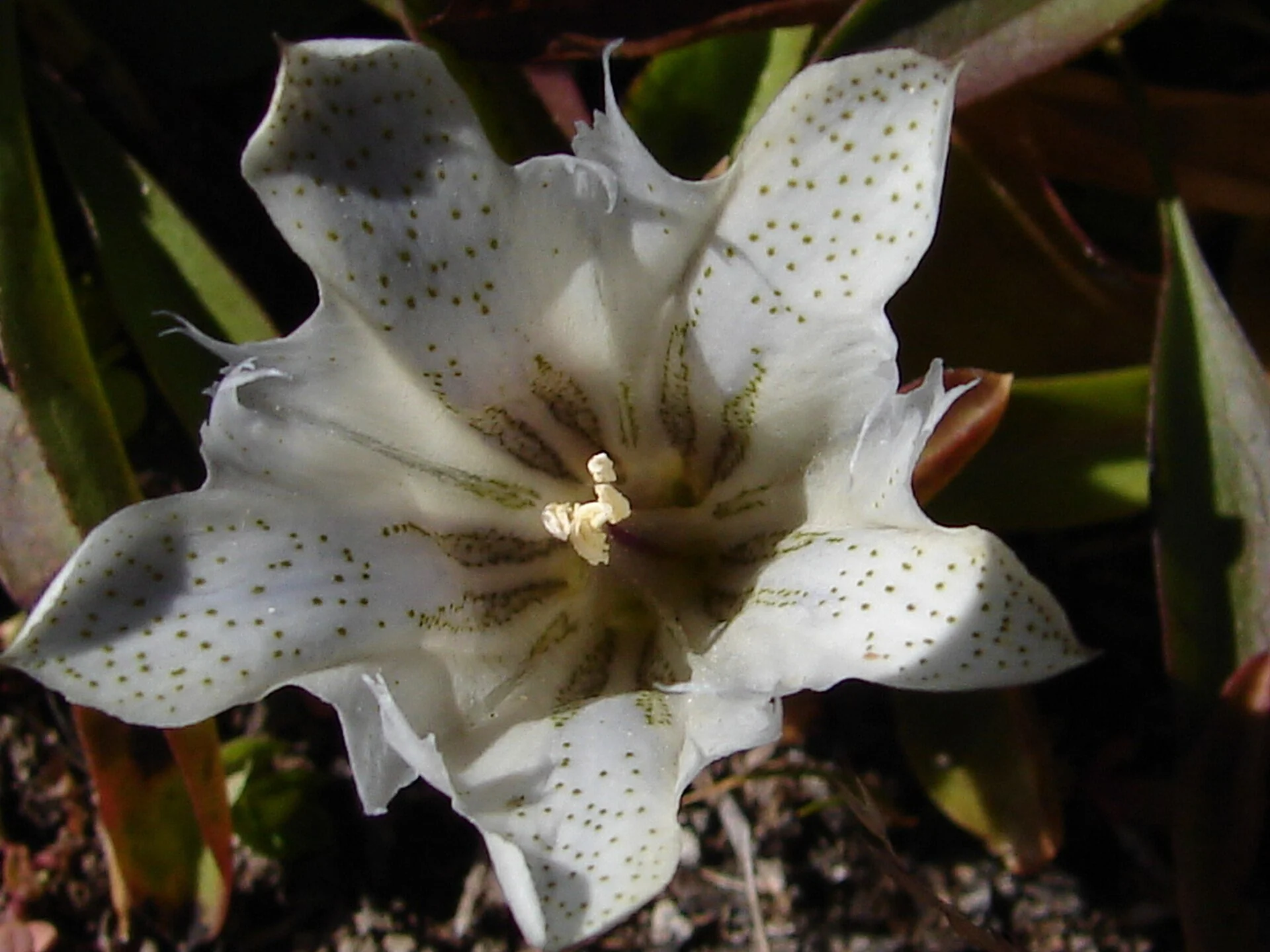
Gentiana newberryi (Newberry’s gentian) is a rarely seen and striking alpine perennial native to the western United States, including high-elevation meadows and rocky slopes. It forms compact clumps of deep green, lance-shaped leaves that hug the ground, producing a bold architectural presence even when not in bloom. In late summer to early fall, it bursts into stunning, large, trumpet-shaped flowers in a vivid cobalt to deep sapphire blue, and even light cream each adorned with delicate white throats and subtle veining, captivating pollinators and gardeners alike. This species thrives in sharply drained, rocky soils with full sun to part shade, making it ideal for rock gardens, alpine troughs, and naturalized stone plantings. Hardy to USDA Zones 4–7, it appreciates cold winters and a summer respite from excessive heat, reflecting its adaptation to mountain climates. With its extraordinary color and refined growth habit, Gentiana newberryi is a true gem for collectors and alpine enthusiasts seeking high-impact blooms in compact forms. This came to be by way of the fantastic Oregon plantsman Loren Russell, who found it near the quaint but tourist overun moutain town of Sisters, Oregon. If you know the area you know Newberry is a name seen around these here parts.
The gentian is named after John Strong Newberry (1822–1892), an American physician, geologist, and pioneering naturalist.
Newberry was part of the generation of 19th-century scientist-explorers who helped map and describe the western United States during major government surveys. He served as a geologist on several important expeditions, including those led by Lt. John C. Frémont and later the U.S. Geological Exploration of the Fortieth Parallel, one of the most significant scientific surveys of the American West.
He made major contributions to the understanding of western geology, paleobotany, and fossil floras, and was one of the early voices documenting the geological history of the Colorado Plateau and Great Basin regions. Beyond geology, he had a broad naturalist’s interest in plants, which is why several western species—including Gentiana newberryi—were named in his honor.
He later became a professor of geology and paleontology and served as president of the New York Academy of Sciences. His legacy sits at the intersection of exploration science and early American natural history, the kind of figure whose name often persists in botanical nomenclature long after the expeditions themselves have faded into the background.
Seed grown so expect variable flowers.
Gentiana newberryi (Newberry’s gentian) is a rarely seen and striking alpine perennial native to the western United States, including high-elevation meadows and rocky slopes. It forms compact clumps of deep green, lance-shaped leaves that hug the ground, producing a bold architectural presence even when not in bloom. In late summer to early fall, it bursts into stunning, large, trumpet-shaped flowers in a vivid cobalt to deep sapphire blue, and even light cream each adorned with delicate white throats and subtle veining, captivating pollinators and gardeners alike. This species thrives in sharply drained, rocky soils with full sun to part shade, making it ideal for rock gardens, alpine troughs, and naturalized stone plantings. Hardy to USDA Zones 4–7, it appreciates cold winters and a summer respite from excessive heat, reflecting its adaptation to mountain climates. With its extraordinary color and refined growth habit, Gentiana newberryi is a true gem for collectors and alpine enthusiasts seeking high-impact blooms in compact forms. This came to be by way of the fantastic Oregon plantsman Loren Russell, who found it near the quaint but tourist overun moutain town of Sisters, Oregon. If you know the area you know Newberry is a name seen around these here parts.
The gentian is named after John Strong Newberry (1822–1892), an American physician, geologist, and pioneering naturalist.
Newberry was part of the generation of 19th-century scientist-explorers who helped map and describe the western United States during major government surveys. He served as a geologist on several important expeditions, including those led by Lt. John C. Frémont and later the U.S. Geological Exploration of the Fortieth Parallel, one of the most significant scientific surveys of the American West.
He made major contributions to the understanding of western geology, paleobotany, and fossil floras, and was one of the early voices documenting the geological history of the Colorado Plateau and Great Basin regions. Beyond geology, he had a broad naturalist’s interest in plants, which is why several western species—including Gentiana newberryi—were named in his honor.
He later became a professor of geology and paleontology and served as president of the New York Academy of Sciences. His legacy sits at the intersection of exploration science and early American natural history, the kind of figure whose name often persists in botanical nomenclature long after the expeditions themselves have faded into the background.
Seed grown so expect variable flowers.