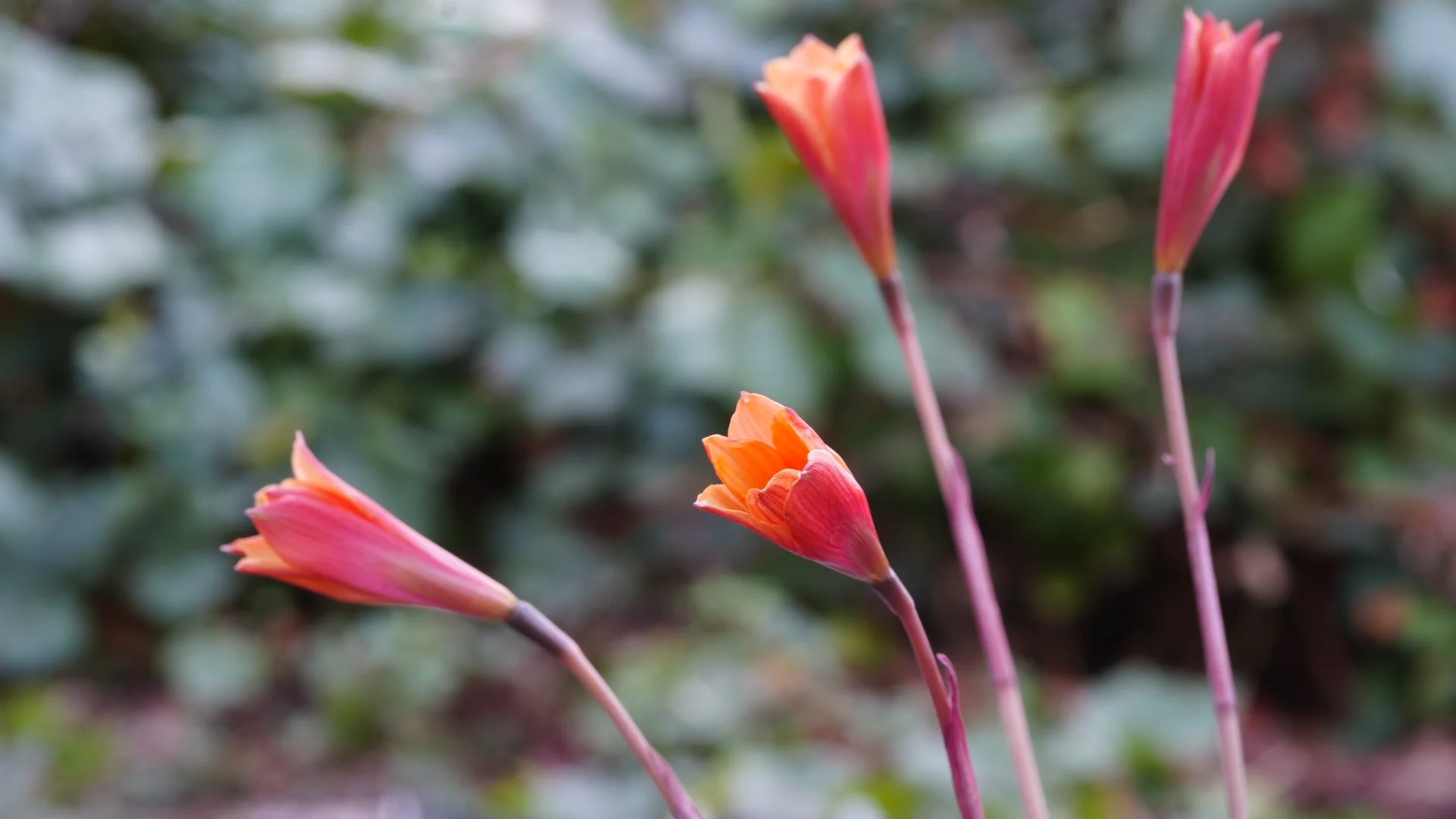
A charming and unusual member of the rain lily family, Habranthus tubispathus is a diminutive geophyte from the grasslands and seasonally dry regions of South America. This delightful species produces elegant, upward-facing flowers in shades of warm golden yellow to coppery bronze, often with deeper tones on the outer petals and a subtle sheen that gives the blossoms a jewel-like appearance. I occasionally catch the hummingbirds darting out of the bulb house as they find this color too much to resist. The narrow, trumpet-shaped flowers emerge on slender stems, often appearing suddenly after summer rains or seasonal changes in moisture.
Unlike many of the more familiar pink-flowered rain lilies, H. tubispathus brings a rare palette of autumnal colors to the garden. The flowers are followed or accompanied by fine, grassy foliage that persists during the cooler growing season before retreating into dormancy during dry periods.
Perfect for the rock garden, bulb frame, alpine house, or a sunny container, this species appreciates a warm, well-drained position with regular moisture during active growth and a pronounced dry rest. Once established, it can form charming clumps that reward the gardener with unexpected flushes of golden blooms after favorable conditions.
A superb choice for collectors of unusual bulbs, Habranthus tubispathus combines the delicate charm of a rain lily with the rare coloration and adaptability that make South American geophytes so fascinating.
Height: 4–8 in. (10–20 cm)
Bloom Season: Summer to autumn, often after rainfall
Hardiness: USDA Zones 8–10 (protect from prolonged freezing)
Culture: Full sun; sharply drained soil; water during active growth with a dry winter or summer dormancy depending on climate.
A charming and unusual member of the rain lily family, Habranthus tubispathus is a diminutive geophyte from the grasslands and seasonally dry regions of South America. This delightful species produces elegant, upward-facing flowers in shades of warm golden yellow to coppery bronze, often with deeper tones on the outer petals and a subtle sheen that gives the blossoms a jewel-like appearance. I occasionally catch the hummingbirds darting out of the bulb house as they find this color too much to resist. The narrow, trumpet-shaped flowers emerge on slender stems, often appearing suddenly after summer rains or seasonal changes in moisture.
Unlike many of the more familiar pink-flowered rain lilies, H. tubispathus brings a rare palette of autumnal colors to the garden. The flowers are followed or accompanied by fine, grassy foliage that persists during the cooler growing season before retreating into dormancy during dry periods.
Perfect for the rock garden, bulb frame, alpine house, or a sunny container, this species appreciates a warm, well-drained position with regular moisture during active growth and a pronounced dry rest. Once established, it can form charming clumps that reward the gardener with unexpected flushes of golden blooms after favorable conditions.
A superb choice for collectors of unusual bulbs, Habranthus tubispathus combines the delicate charm of a rain lily with the rare coloration and adaptability that make South American geophytes so fascinating.
Height: 4–8 in. (10–20 cm)
Bloom Season: Summer to autumn, often after rainfall
Hardiness: USDA Zones 8–10 (protect from prolonged freezing)
Culture: Full sun; sharply drained soil; water during active growth with a dry winter or summer dormancy depending on climate.