
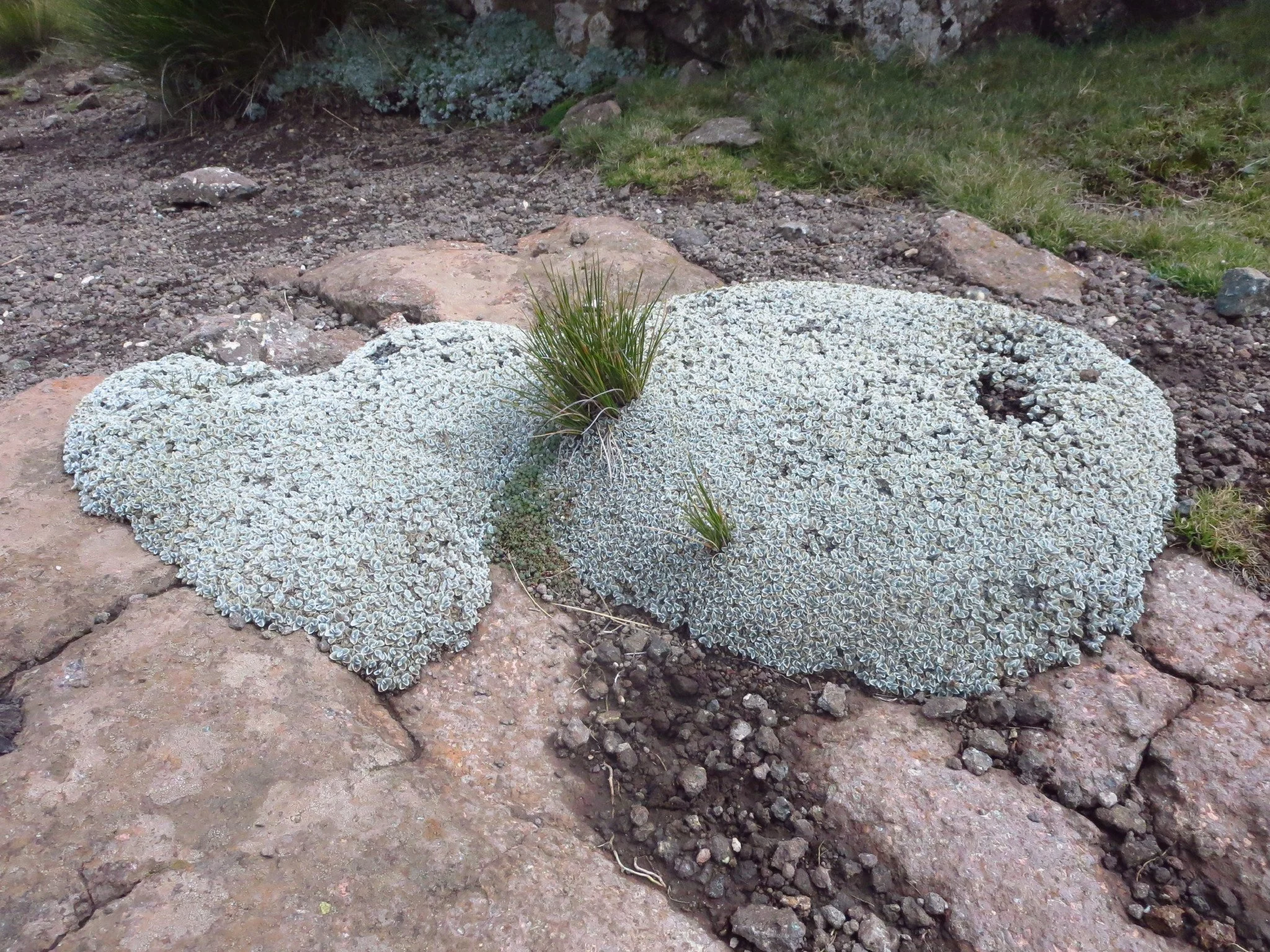
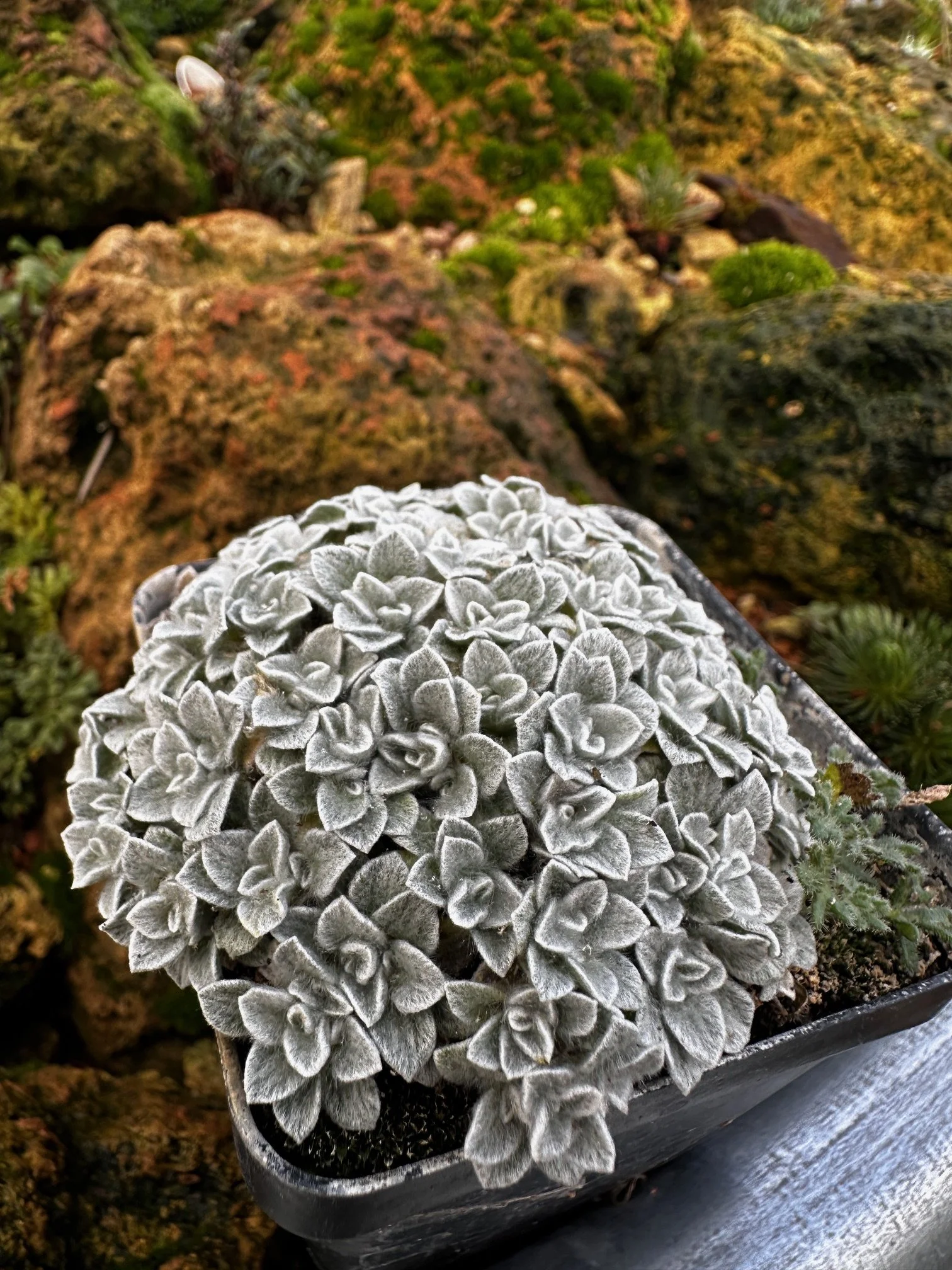
A remarkable high-alpine introduction from the South African Drakensberg, this exceptional selection collected by Czech plantsman Josef Halda forms dense, remarkably compact cushions of overlapping, silvery-grey foliage. The tiny leaves are tightly packed and covered in silky hairs, giving the plant the appearance of a soft silver dome pressed against the surface of the rock. In summer, small, bright yellow everlasting flowers appear almost stemless, sitting directly on the cushion. Much like a New Zealand “vegetable sheep” this is an outstanding cushion plant.
Closely resembling the true Helichrysum pagophilum, this collection is particularly appealing for its compact habit and outstanding foliage. I don’t know that anyone has bloomed it outside of the native range, so I’m guessing that is why it has retained the aff. I tried to figure out exactly when Halda collected this, but the record may be lost to antiquity. He was active and collecting in South Africa in the late 90’s based on some old rock garden quarterly’s but if anyone knows please chime in?
An exceptional subject for the alpine trough, crevice garden or raised mineral bed. Provide full sun, excellent drainage and a gritty, mineral-rich growing medium. Particularly important is protection from prolonged winter moisture.