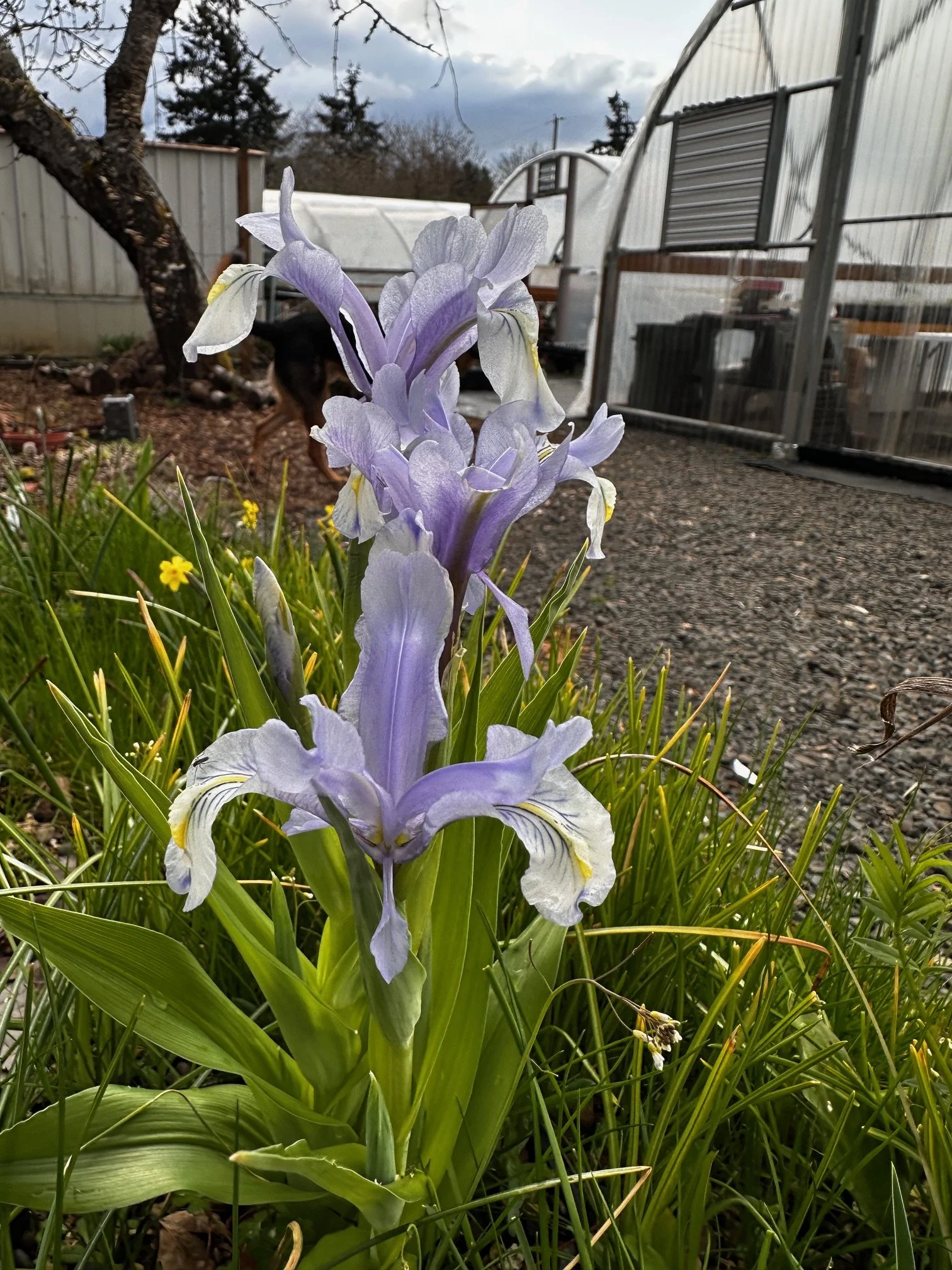
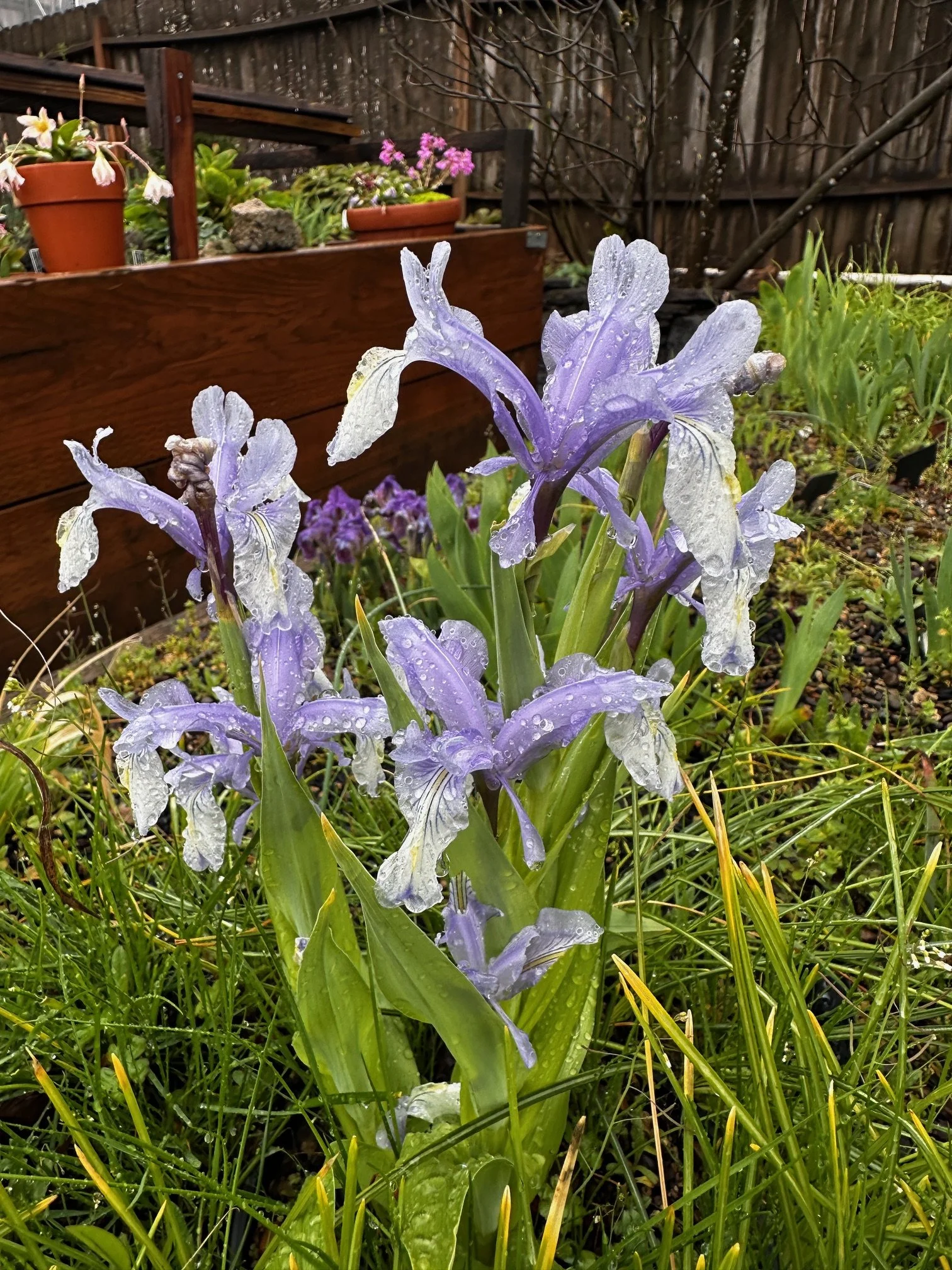
A spectacular and highly sought-after Juno iris from the mountains of Central Asia, Iris graeberiana is one of the true treasures of the Juno group. This exquisite species is prized for its large, intricately patterned flowers held above short, sturdy stems in early spring. The white-falled form is an especially elegant selection, with pristine white falls beautifully contrasted by delicate yellow signals and subtle veining that highlights the intricate structure of the bloom.
Emerging in late winter, the thick, glaucous leaves form a neat fan before the flowers appear, creating a refined architectural display. The flowers are large in proportion to the plant, often reaching several inches across, with the characteristic crystalline beauty that makes Juno irises so prized among collectors. After flowering, the foliage remains attractive before drying down during the summer dormancy typical of its high mountain origins.
Native to rocky slopes and open alpine habitats of Central Asia, Iris graeberiana prefers a sunny, sharply drained position where the bulbs remain dry during summer. A raised bed, alpine house, or well-drained rock garden is ideal. Provide moisture during its autumn-to-spring growth period and allow a warm, dry rest after the foliage dies back.
Be sure to be careful with the storage roots when planting, even if they are not absolutely necessary to regeneration, they help to get the bulb growing faster when the autumn rains come.
Height: 6–10 in. (15–25 cm)
Bloom Season: Early to mid-spring
Hardiness: USDA Zones 5–8 (excellent drainage essential)
Culture: Full sun; gritty, mineral soil; moist during autumn through spring growth; dry summer dormancy.
A spectacular and highly sought-after Juno iris from the mountains of Central Asia, Iris graeberiana is one of the true treasures of the Juno group. This exquisite species is prized for its large, intricately patterned flowers held above short, sturdy stems in early spring. The white-falled form is an especially elegant selection, with pristine white falls beautifully contrasted by delicate yellow signals and subtle veining that highlights the intricate structure of the bloom.
Emerging in late winter, the thick, glaucous leaves form a neat fan before the flowers appear, creating a refined architectural display. The flowers are large in proportion to the plant, often reaching several inches across, with the characteristic crystalline beauty that makes Juno irises so prized among collectors. After flowering, the foliage remains attractive before drying down during the summer dormancy typical of its high mountain origins.
Native to rocky slopes and open alpine habitats of Central Asia, Iris graeberiana prefers a sunny, sharply drained position where the bulbs remain dry during summer. A raised bed, alpine house, or well-drained rock garden is ideal. Provide moisture during its autumn-to-spring growth period and allow a warm, dry rest after the foliage dies back.
Be sure to be careful with the storage roots when planting, even if they are not absolutely necessary to regeneration, they help to get the bulb growing faster when the autumn rains come.
Height: 6–10 in. (15–25 cm)
Bloom Season: Early to mid-spring
Hardiness: USDA Zones 5–8 (excellent drainage essential)
Culture: Full sun; gritty, mineral soil; moist during autumn through spring growth; dry summer dormancy.