Iris suaveolens is a diminutive, rhizomatous iris native to the Balkan Peninsula, where it inhabits dry, rocky slopes and open grasslands on limestone soils. It forms low clumps of narrow, gray-green leaves that remain compact, making it especially suitable for small-scale plantings and alpine settings. This wonderful form came from the late Kathy Allens wonderful Southern Oregon.
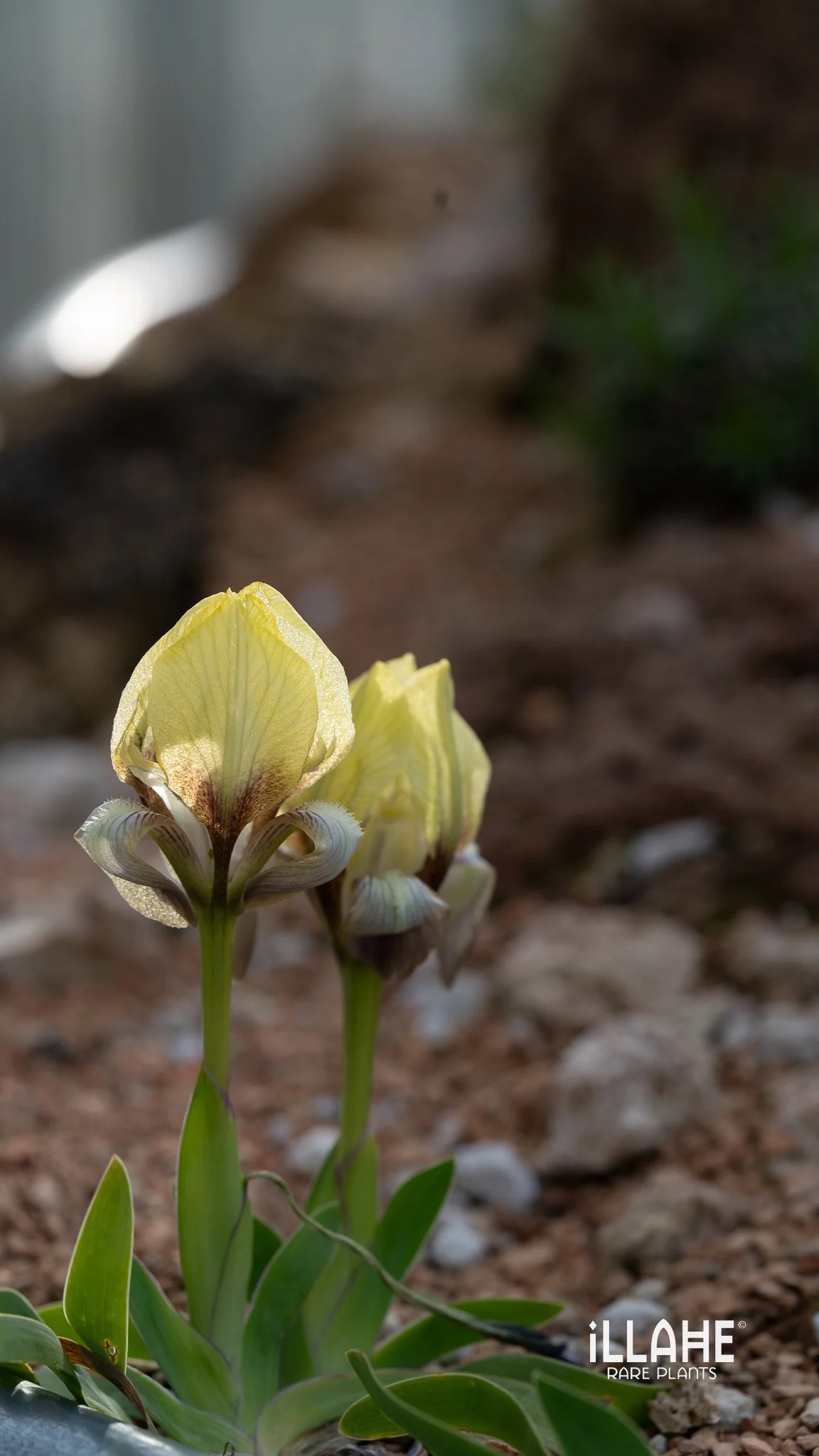
In early to mid-spring, it produces relatively large flowers for its size, most often in soft yellow, with brownish or purplish markings on the falls. True to its name, the blooms are sweetly fragrant, adding an extra dimension of appeal beyond their cheerful color and refined form.
Iris suaveolens thrives in full sun and sharply drained soils, excelling in rock gardens, troughs, and dry borders where it can bake in summer and remain relatively dry in winter. Hardy in USDA Zones approximately 5–8, it is a resilient and rewarding miniature iris that combines fragrance, early bloom, and adaptability to lean, sunlit conditions
Iris suaveolens is a diminutive, rhizomatous iris native to the Balkan Peninsula, where it inhabits dry, rocky slopes and open grasslands on limestone soils. It forms low clumps of narrow, gray-green leaves that remain compact, making it especially suitable for small-scale plantings and alpine settings. This wonderful form came from the late Kathy Allens wonderful Southern Oregon.
In early to mid-spring, it produces relatively large flowers for its size, most often in soft yellow, with brownish or purplish markings on the falls. True to its name, the blooms are sweetly fragrant, adding an extra dimension of appeal beyond their cheerful color and refined form.
Iris suaveolens thrives in full sun and sharply drained soils, excelling in rock gardens, troughs, and dry borders where it can bake in summer and remain relatively dry in winter. Hardy in USDA Zones approximately 5–8, it is a resilient and rewarding miniature iris that combines fragrance, early bloom, and adaptability to lean, sunlit conditions