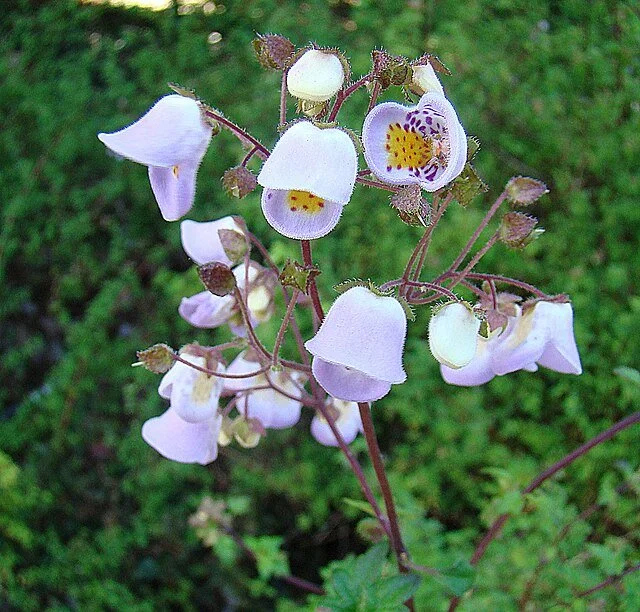
Jovellana is a small genus of Chilean and Argentine subshrubs and herbaceous perennials in the Calceolariaceae. Best known in cultivation for their airy sprays of small, pouch-like flowers dotted or speckled in purple, lilac, or creamy white tones. In nature they are found in the cool-temperate to Mediterranean-climate regions of southern South America, often growing on open slopes, forest margins, rocky banks, and disturbed ground where soils are sharply drained but seasonally moist. The finely textured foliage and profuse, dangling flowers give the plants a light, almost fuchsia-like appearance, though they are more delicate in both structure and hardiness. I got this unidentified species from a super cool guy up in BC at one of the Alpine Garden Club meetings, he probably told me the species and I forgot it. The mother plant is going to bloom soon, so I’ll update here when I figure it out. But I had some well rooted cuttings and I figured I would send them out the door.
In cultivation, Jovellana is best treated as a cool-climate rock garden or woodland-edge plant in sharply drained but moisture-retentive soil with regular summer water. It performs well in full sun in cooler maritime climates, but benefits from light afternoon shade in hotter inland regions. Most species are only marginally hardy, generally USDA Zones 8–10, with some forms tolerating brief light frost but suffering in prolonged freezing conditions. It excels in raised beds, sheltered crevice gardens, or containers where its fine branching habit and pendant, spotted flowers can be appreciated up close. Where climate permits, it brings an unusual, almost orchid-like delicacy to late spring and summer plantings, especially when paired with other South American or southern hemisphere taxa.
Jovellana is a small genus of Chilean and Argentine subshrubs and herbaceous perennials in the Calceolariaceae. Best known in cultivation for their airy sprays of small, pouch-like flowers dotted or speckled in purple, lilac, or creamy white tones. In nature they are found in the cool-temperate to Mediterranean-climate regions of southern South America, often growing on open slopes, forest margins, rocky banks, and disturbed ground where soils are sharply drained but seasonally moist. The finely textured foliage and profuse, dangling flowers give the plants a light, almost fuchsia-like appearance, though they are more delicate in both structure and hardiness. I got this unidentified species from a super cool guy up in BC at one of the Alpine Garden Club meetings, he probably told me the species and I forgot it. The mother plant is going to bloom soon, so I’ll update here when I figure it out. But I had some well rooted cuttings and I figured I would send them out the door.
In cultivation, Jovellana is best treated as a cool-climate rock garden or woodland-edge plant in sharply drained but moisture-retentive soil with regular summer water. It performs well in full sun in cooler maritime climates, but benefits from light afternoon shade in hotter inland regions. Most species are only marginally hardy, generally USDA Zones 8–10, with some forms tolerating brief light frost but suffering in prolonged freezing conditions. It excels in raised beds, sheltered crevice gardens, or containers where its fine branching habit and pendant, spotted flowers can be appreciated up close. Where climate permits, it brings an unusual, almost orchid-like delicacy to late spring and summer plantings, especially when paired with other South American or southern hemisphere taxa.