A diminutive and surprisingly resilient sea lavender, Limonium humile comes from the windswept salt marshes and coastal flats of western Europe, where it grows low to the ground in silty, mineral soils periodically influenced by salt and tidal moisture. In these exposed habitats it endures wind, drought, and poor nutrition with ease, forming compact rosettes that hug the surface and avoid desiccation.
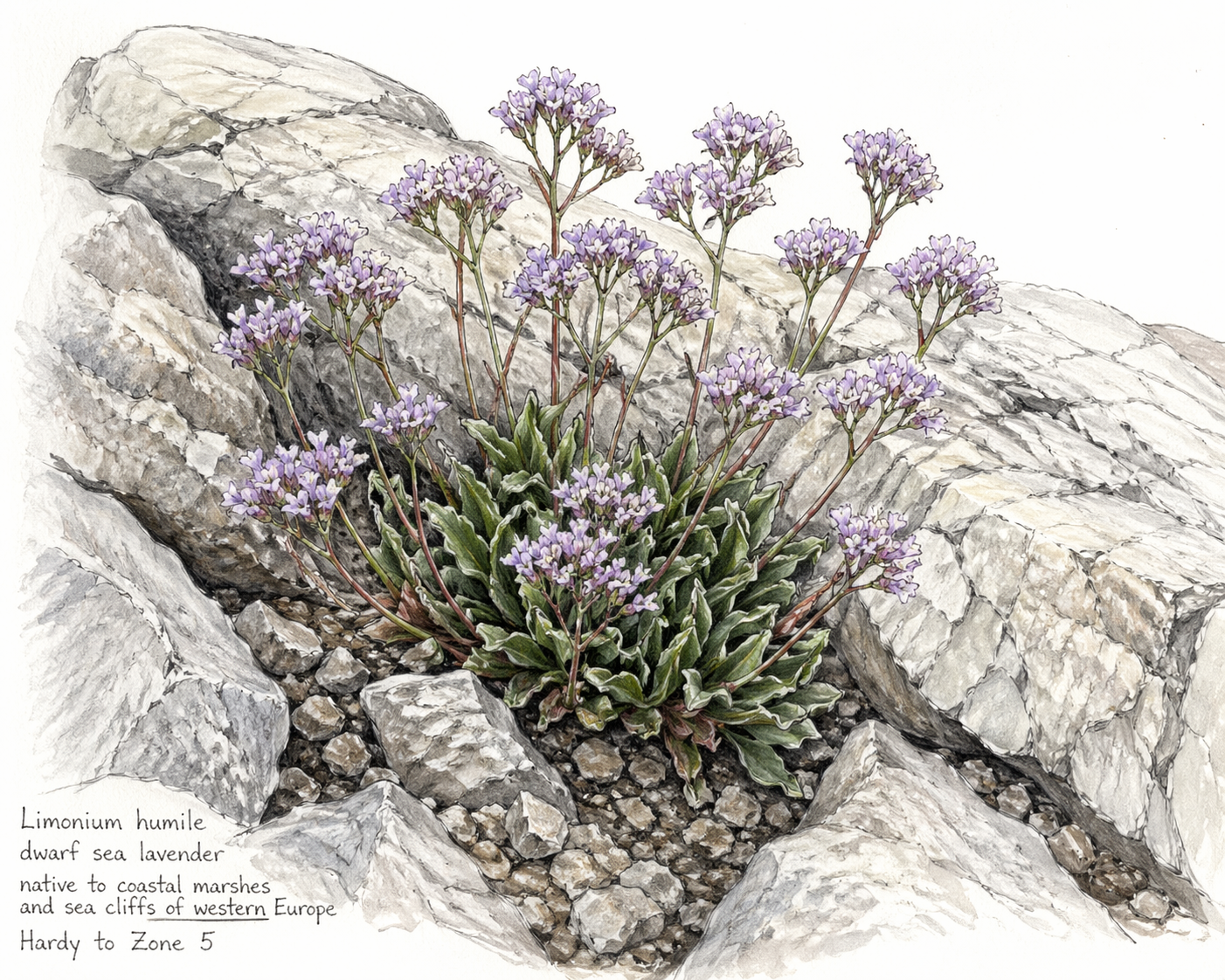
I love the way the wiry little stems float up above the rosettes of foliage. This is a fantastic plant for the crevice garden, or a large trough.
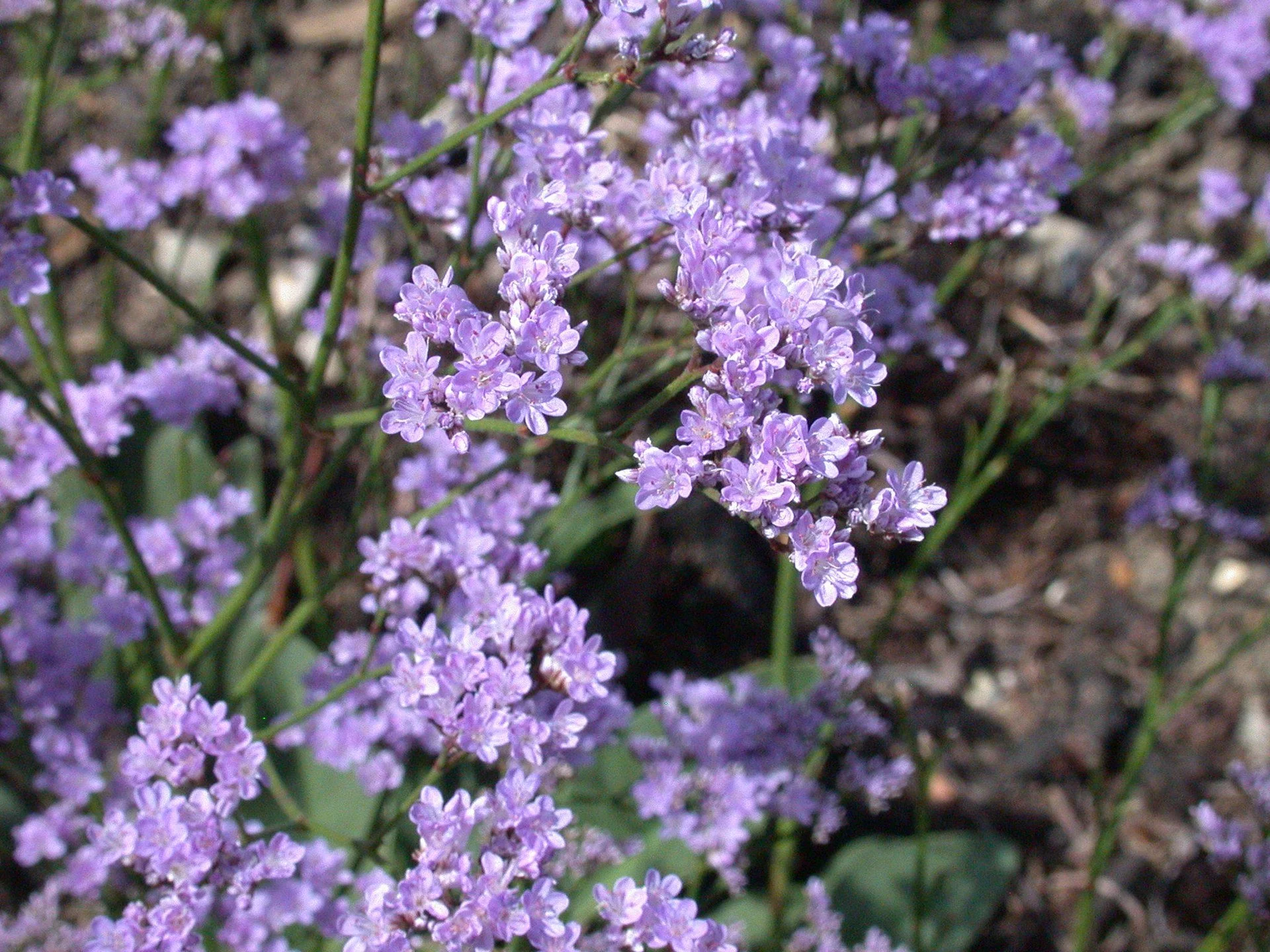
In the rock garden it proves an excellent subject for well-drained, gritty mixes with a slightly alkaline character, particularly where conditions mimic its native austerity. Short, wiry stems rise in summer carrying delicate sprays of pale lavender to lilac flowers that have the papery, long-lasting quality typical of sea lavenders. Its restrained size and tolerance for lean soils make it especially well suited to crevice gardens or coastal-themed plantings.
Hardy to approximately USDA Zone 5, it benefits from full sun, excellent drainage, and modest watering—too much fertility or moisture quickly diminishes its character. A subtle but durable plant, it brings a touch of maritime ecology to inland rock gardens while asking very little in return
A diminutive and surprisingly resilient sea lavender, Limonium humile comes from the windswept salt marshes and coastal flats of western Europe, where it grows low to the ground in silty, mineral soils periodically influenced by salt and tidal moisture. In these exposed habitats it endures wind, drought, and poor nutrition with ease, forming compact rosettes that hug the surface and avoid desiccation.
I love the way the wiry little stems float up above the rosettes of foliage. This is a fantastic plant for the crevice garden, or a large trough.
In the rock garden it proves an excellent subject for well-drained, gritty mixes with a slightly alkaline character, particularly where conditions mimic its native austerity. Short, wiry stems rise in summer carrying delicate sprays of pale lavender to lilac flowers that have the papery, long-lasting quality typical of sea lavenders. Its restrained size and tolerance for lean soils make it especially well suited to crevice gardens or coastal-themed plantings.
Hardy to approximately USDA Zone 5, it benefits from full sun, excellent drainage, and modest watering—too much fertility or moisture quickly diminishes its character. A subtle but durable plant, it brings a touch of maritime ecology to inland rock gardens while asking very little in return