This is one of those hallmark plants for me, much like monekyflowers this was one of the first of the natives I noticed in our woodlands when I was a kid and it stuck with me all these years. Which is weird because it’s so delicate and dainty, it’s not an in your face plant by any means. It’s also not that easy to propagate for some reason, but I spent the last few years trying to unlock the secrets so you can share our little woodland ‘soldanella’ clone in your garden.
Linnaea borealis is a delicate, creeping evergreen subshrub native to the boreal forests of the Northern Hemisphere, occurring across northern Europe, Asia, and North America. It is typically found in cool, shaded coniferous woodlands, often carpeting the forest floor among mosses, fallen needles, and acidic humus, where it forms extensive, threadlike colonies through slender, trailing stems that root as they spread.
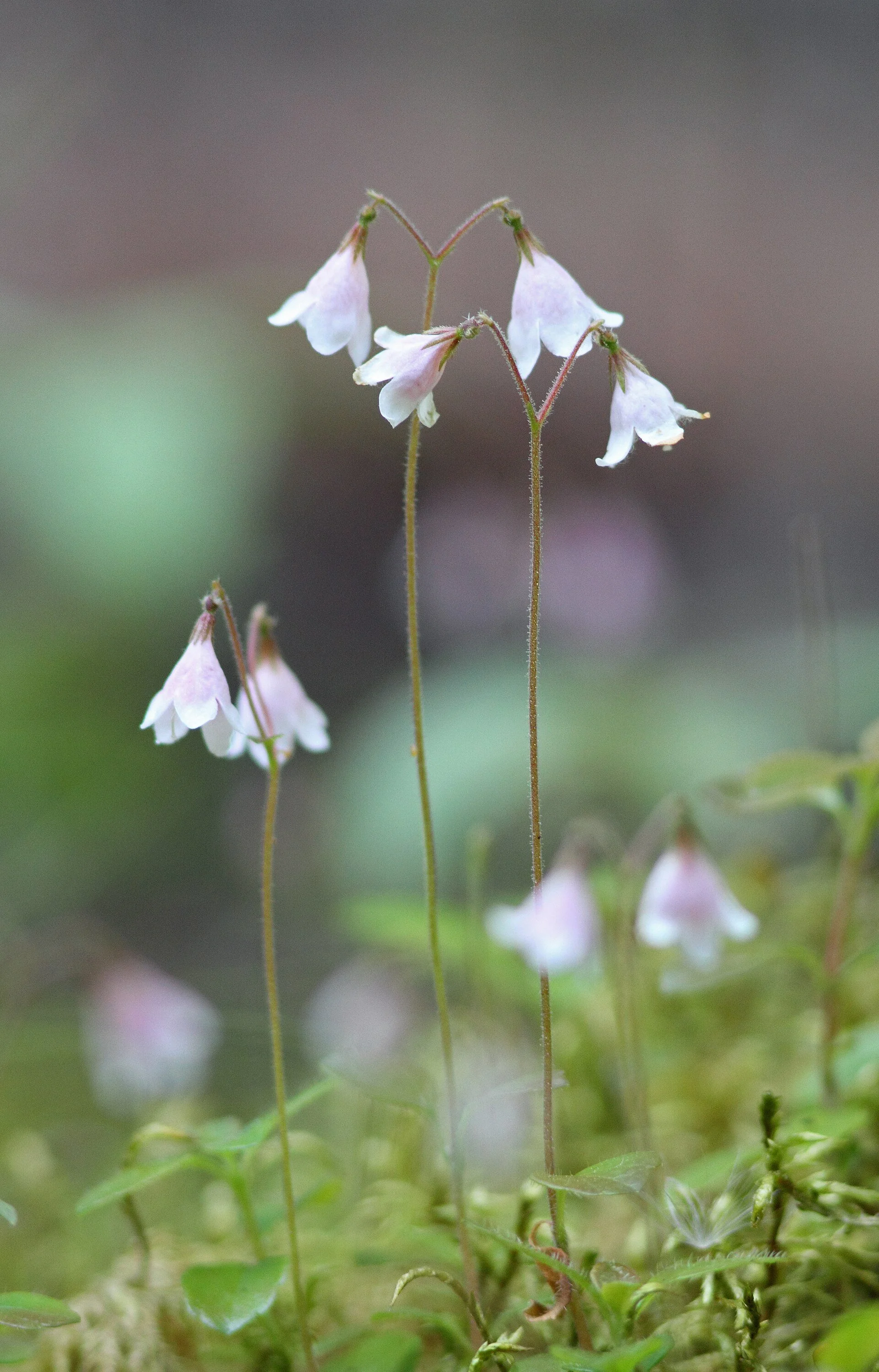
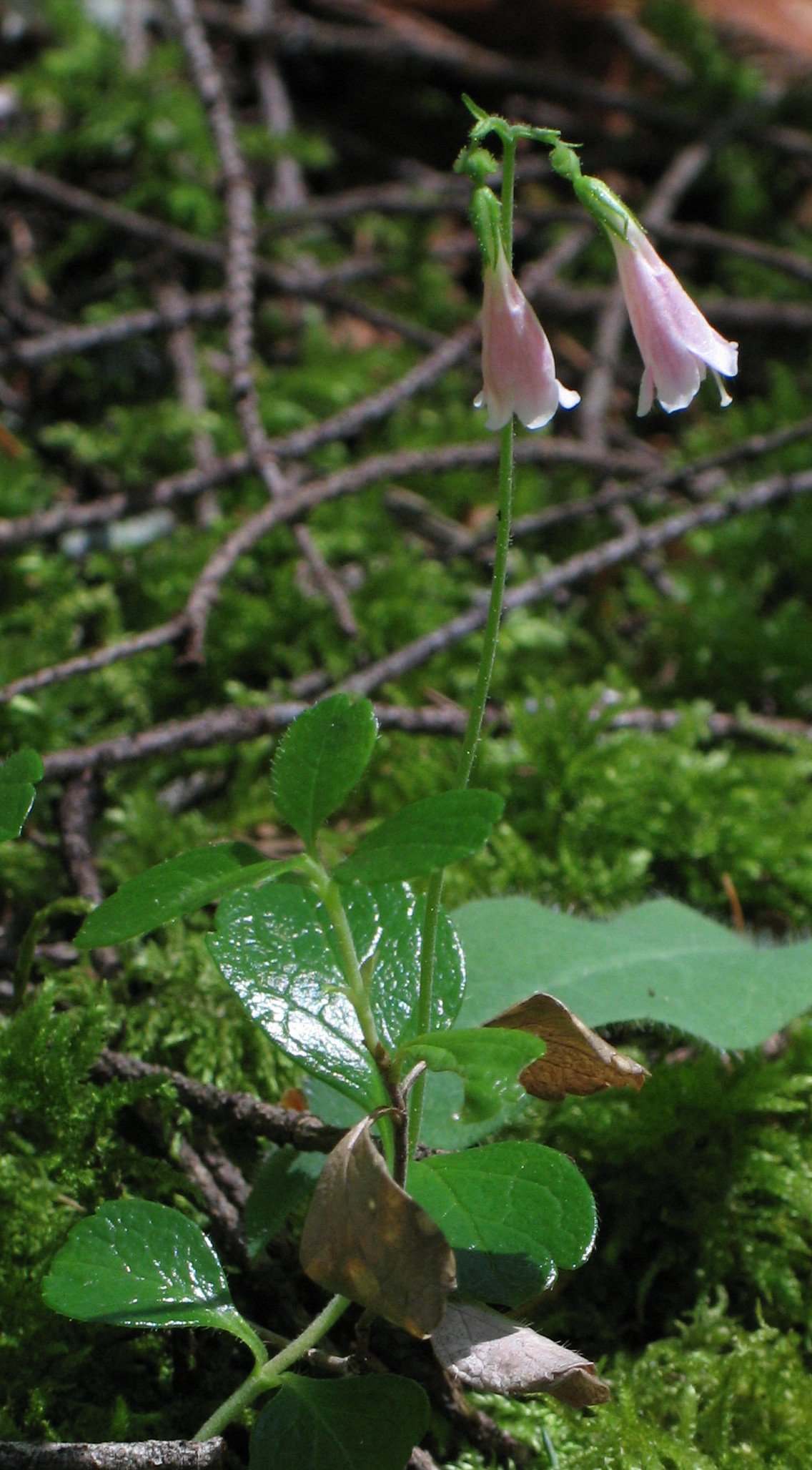
The leaves are small, opposite, rounded to oval, and softly textured, arranged along wiry stems that weave through the substrate in a fine, ground-hugging network. In early summer, slender upright stalks rise just above the foliage bearing paired, nodding, bell-shaped flowers. These are pale pink to soft white, lightly fragrant, and exquisitely refined, giving the plant a subtle charm best appreciated at close range.
In cultivation, Linnaea borealis requires cool, shaded conditions with consistently moist, acidic, and humus-rich soils. It performs best in woodland gardens, moss gardens, and shaded rock settings where temperatures remain moderate and soil does not dry out. It is highly sensitive to heat and drought, reflecting its strict adaptation to northern forest climates.
Hardy in USDA Zones 2–6, this species is valued for its understated elegance, fine creeping habit, and deep cultural resonance in northern botanical tradition, where it has long been admired as a symbol of quiet woodland beauty.
This is one of those hallmark plants for me, much like monekyflowers this was one of the first of the natives I noticed in our woodlands when I was a kid and it stuck with me all these years. Which is weird because it’s so delicate and dainty, it’s not an in your face plant by any means. It’s also not that easy to propagate for some reason, but I spent the last few years trying to unlock the secrets so you can share our little woodland ‘soldanella’ clone in your garden.
Linnaea borealis is a delicate, creeping evergreen subshrub native to the boreal forests of the Northern Hemisphere, occurring across northern Europe, Asia, and North America. It is typically found in cool, shaded coniferous woodlands, often carpeting the forest floor among mosses, fallen needles, and acidic humus, where it forms extensive, threadlike colonies through slender, trailing stems that root as they spread.
The leaves are small, opposite, rounded to oval, and softly textured, arranged along wiry stems that weave through the substrate in a fine, ground-hugging network. In early summer, slender upright stalks rise just above the foliage bearing paired, nodding, bell-shaped flowers. These are pale pink to soft white, lightly fragrant, and exquisitely refined, giving the plant a subtle charm best appreciated at close range.
In cultivation, Linnaea borealis requires cool, shaded conditions with consistently moist, acidic, and humus-rich soils. It performs best in woodland gardens, moss gardens, and shaded rock settings where temperatures remain moderate and soil does not dry out. It is highly sensitive to heat and drought, reflecting its strict adaptation to northern forest climates.
Hardy in USDA Zones 2–6, this species is valued for its understated elegance, fine creeping habit, and deep cultural resonance in northern botanical tradition, where it has long been admired as a symbol of quiet woodland beauty.