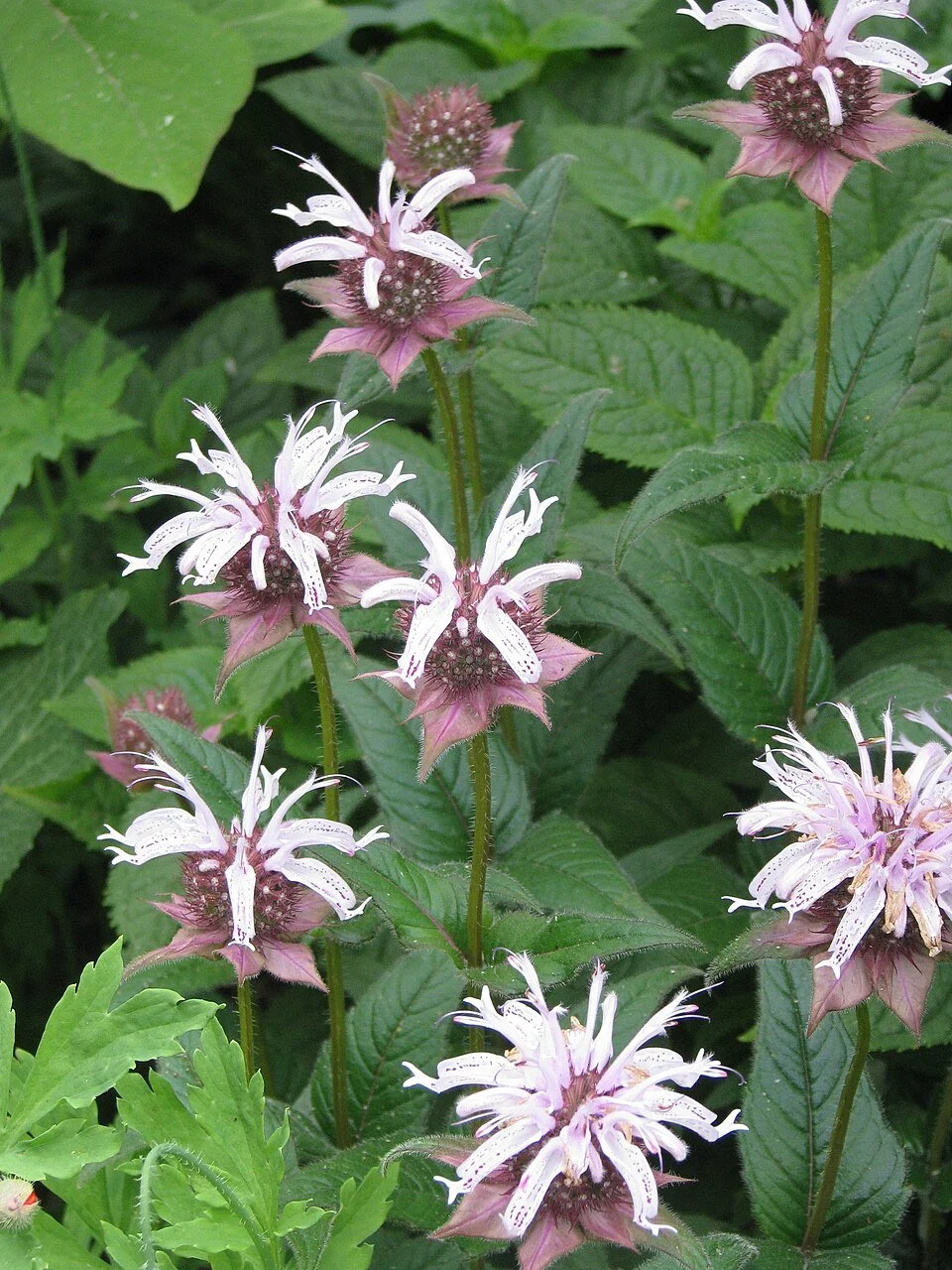
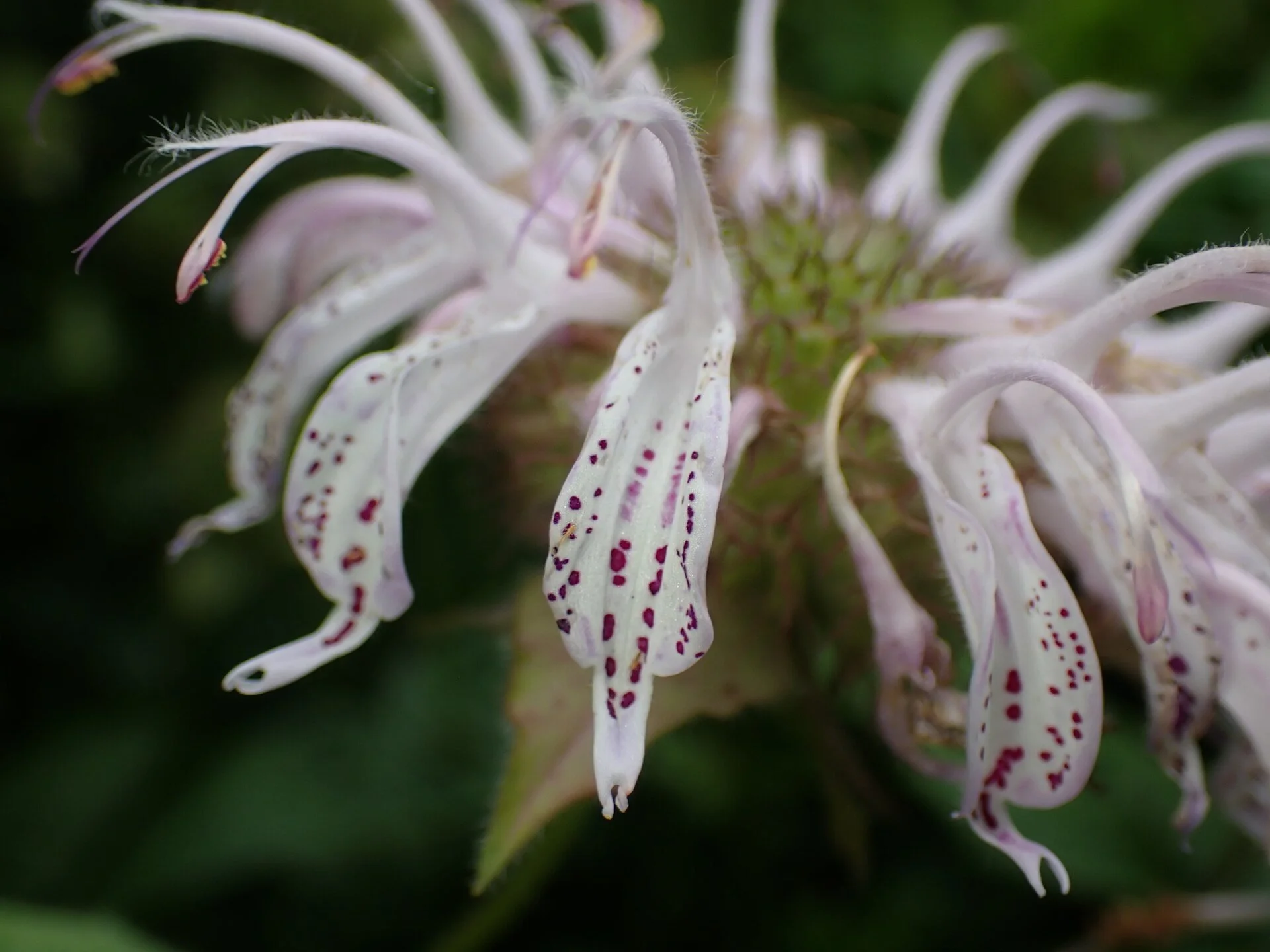
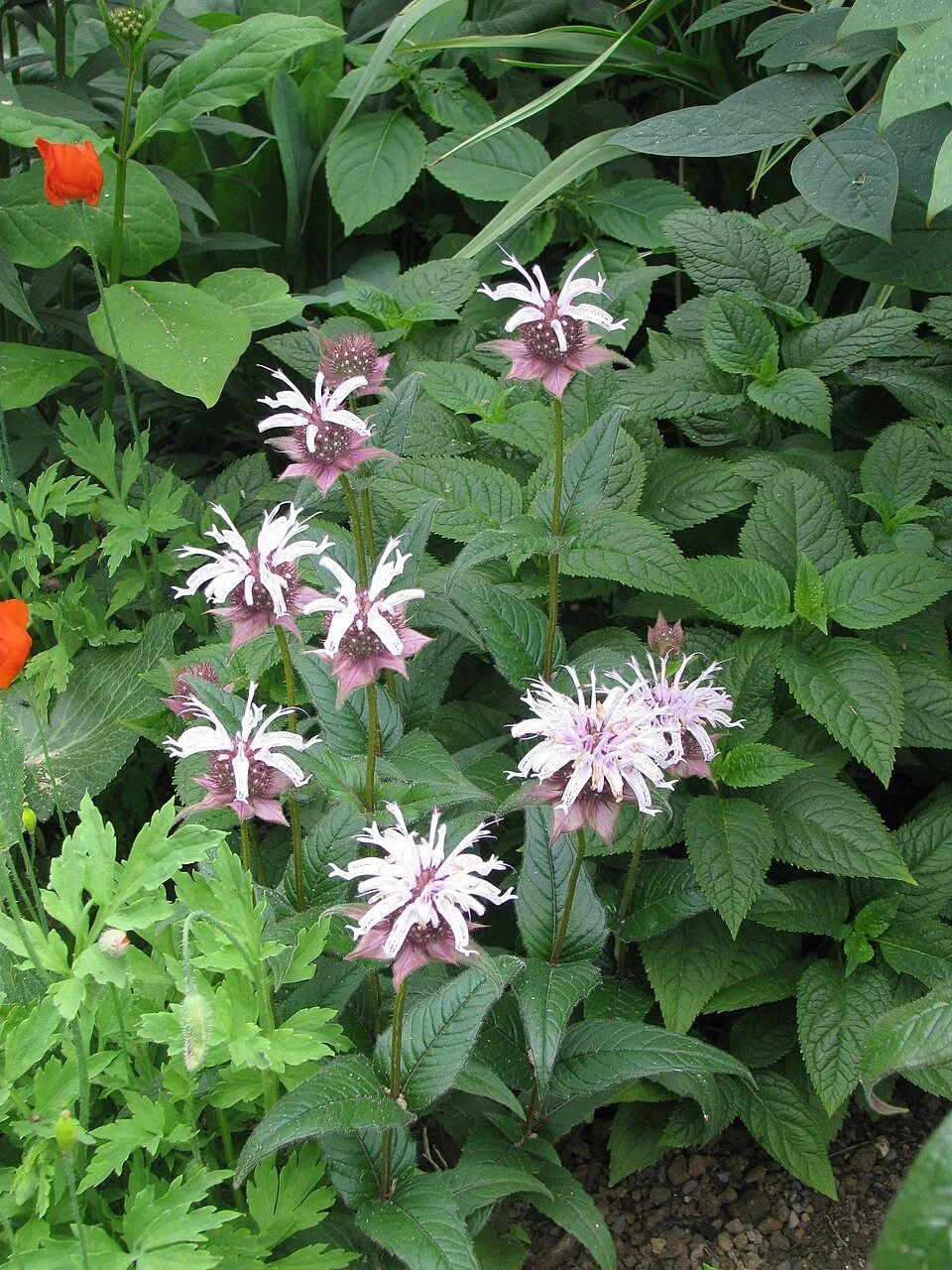
Monarda bradburiana (Bradbury’s beebalm) is a slender, early-blooming perennial native to the central and eastern United States, most often found in open woodlands, limestone glades, rocky prairies, and well-drained slopes where soils are lean, alkaline, and seasonally dry. It forms loose clumps of aromatic, lightly toothed foliage and produces soft pink to lavender, tubular flowers in tiered whorls along the stems, often marked with subtle purple spotting and strongly attractive to native bees, butterflies, and other pollinators.
In cultivation, it is a valuable plant for naturalistic rock gardens, dry meadows, and sunny, well-drained perennial borders, especially in alkaline or calcareous soils where many garden perennials struggle. It prefers full sun to light shade and performs best in sharply drained conditions, tolerating summer drought once established while resenting prolonged winter wet in heavy soils. Hardy across a wide range of climates, typically USDA Zones 4–8, it is especially useful as a mid-height accent in prairie-style plantings or as a soft, airy companion to small grasses and drought-tolerant perennials, where its early summer bloom bridges spring ephemerals and peak summer color. Thanks to Mike Kintgen at the DBG for the seed of this wonderful species, we have really enjoyed the beauty and buzz as the pollinators absolutely swarm this one when it’s doing its thing.
Monarda bradburiana (Bradbury’s beebalm) is a slender, early-blooming perennial native to the central and eastern United States, most often found in open woodlands, limestone glades, rocky prairies, and well-drained slopes where soils are lean, alkaline, and seasonally dry. It forms loose clumps of aromatic, lightly toothed foliage and produces soft pink to lavender, tubular flowers in tiered whorls along the stems, often marked with subtle purple spotting and strongly attractive to native bees, butterflies, and other pollinators.
In cultivation, it is a valuable plant for naturalistic rock gardens, dry meadows, and sunny, well-drained perennial borders, especially in alkaline or calcareous soils where many garden perennials struggle. It prefers full sun to light shade and performs best in sharply drained conditions, tolerating summer drought once established while resenting prolonged winter wet in heavy soils. Hardy across a wide range of climates, typically USDA Zones 4–8, it is especially useful as a mid-height accent in prairie-style plantings or as a soft, airy companion to small grasses and drought-tolerant perennials, where its early summer bloom bridges spring ephemerals and peak summer color. Thanks to Mike Kintgen at the DBG for the seed of this wonderful species, we have really enjoyed the beauty and buzz as the pollinators absolutely swarm this one when it’s doing its thing.