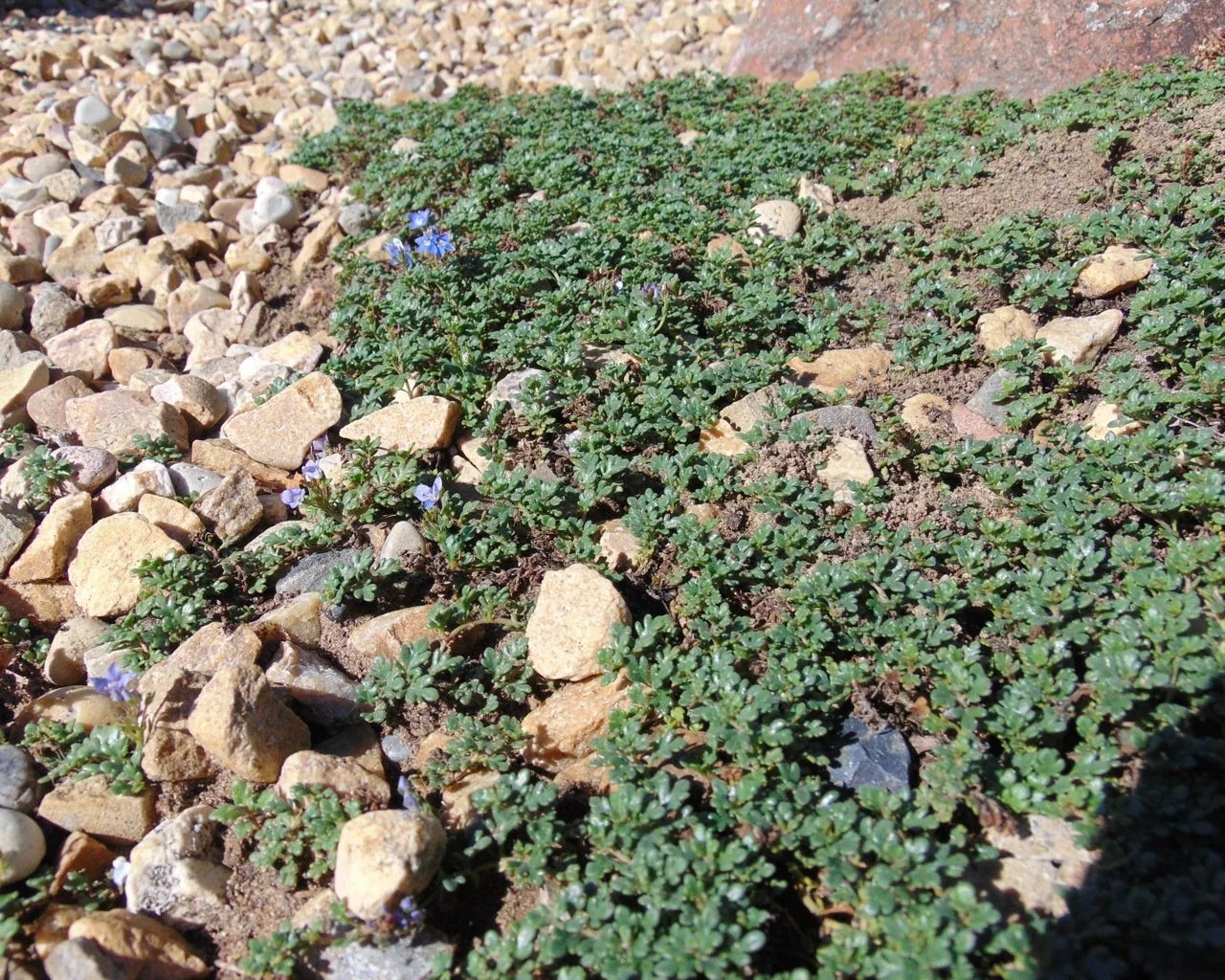
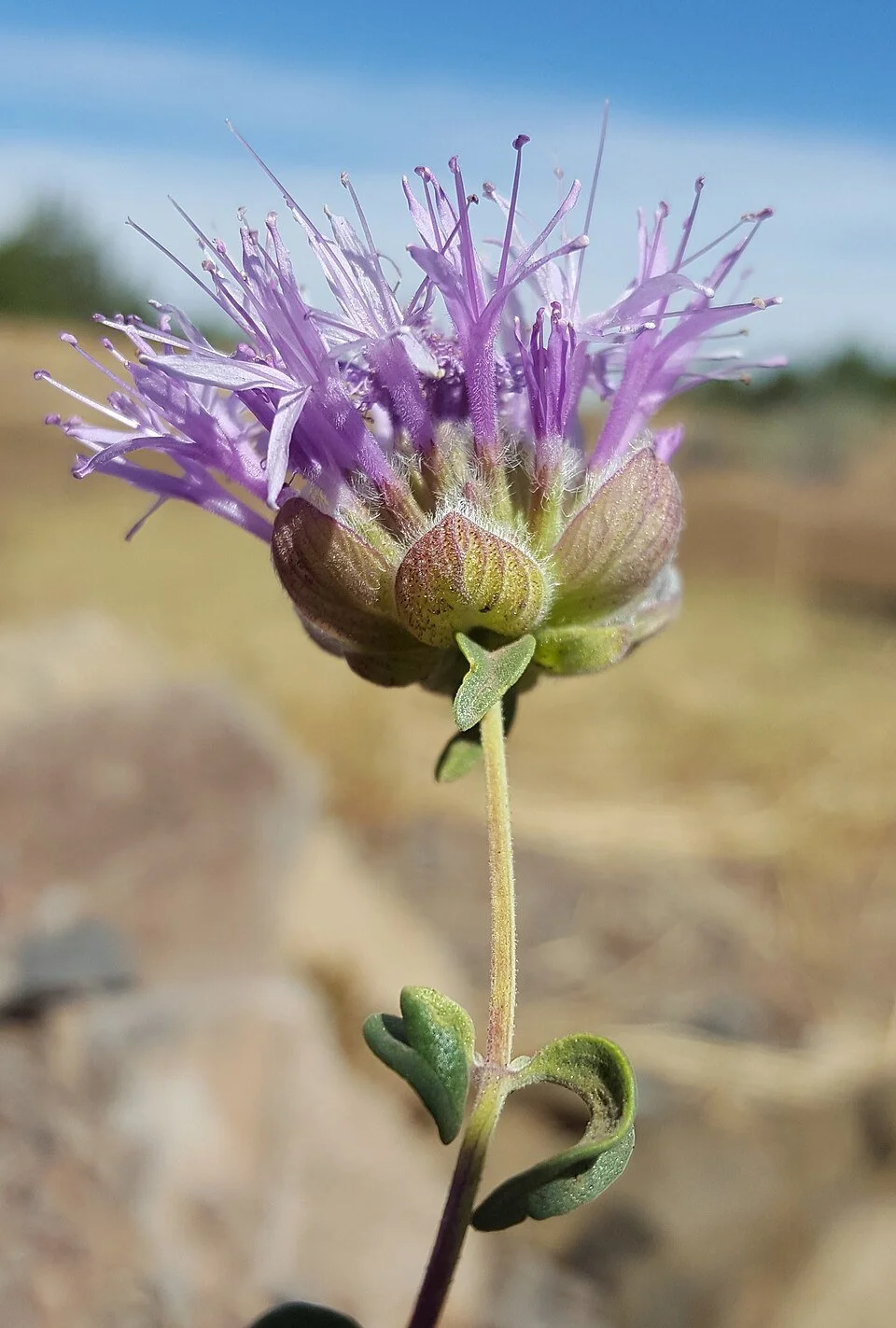
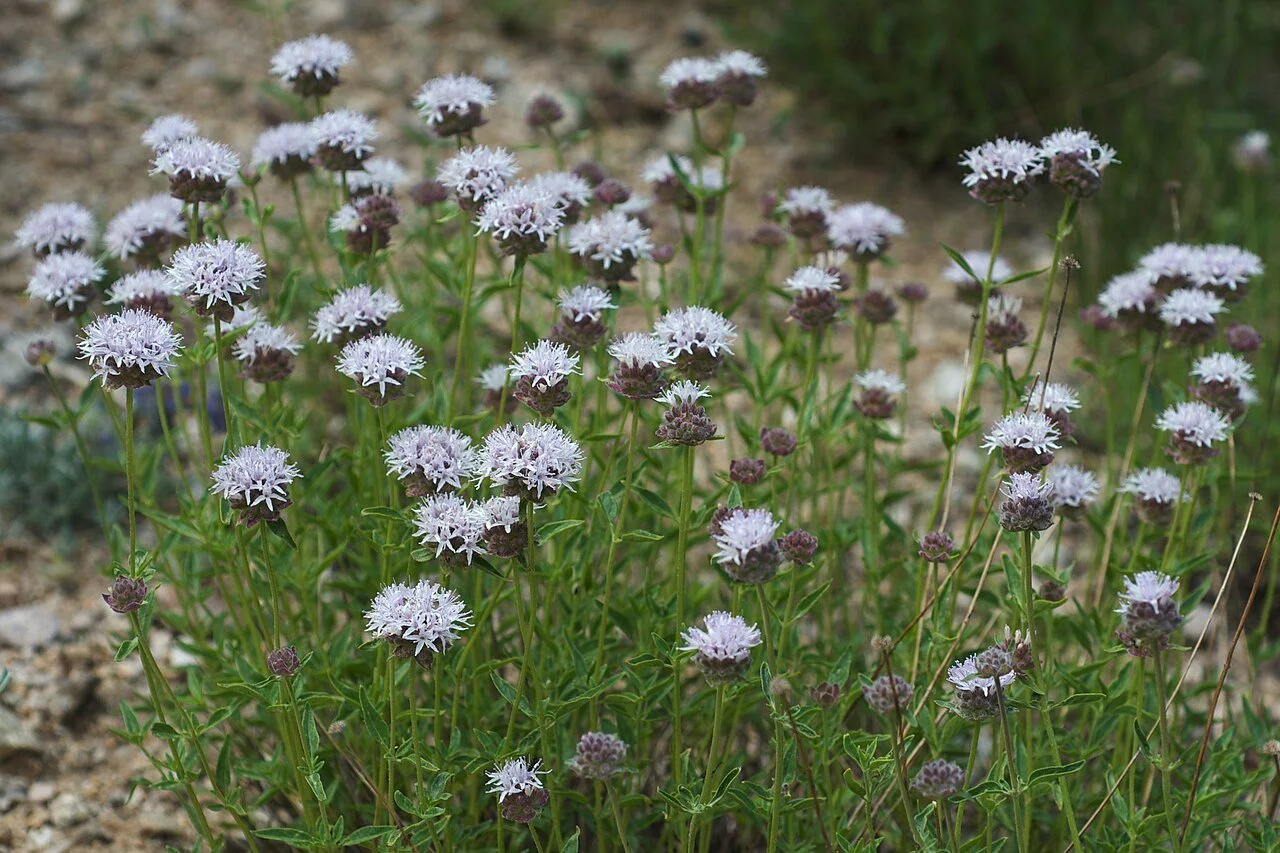
Aromatic and sun-loving, Monardella odoratissima is somewhat ubiqitous through the Western mountains. This collection is from the gravel sandbars along the Illinois River country of southern Oregon is a superb native for the dry rock garden, where heat, lean soils, and sharp drainage suit it perfectly. In the wild it inhabits open, serpentine-influenced slopes and rocky outcrops, rooting into gravelly, mineral soils where competition is low and light is abundant—conditions easily echoed in a trough or crevice planting.
Low, mat-forming stems carry small, gray-green leaves that release a remarkably sweet, minty fragrance when brushed, especially on warm afternoons. In summer, tight clusters of lavender to soft pink flowers appear, each head surrounded by tinted bracts that enhance the display. These blooms are a magnet for native pollinators—visited constantly by small bees, butterflies, and other beneficial insects—making it as ecologically valuable as it is ornamental.
Best grown in full sun with excellent drainage and minimal summer water once established, it is well adapted to drought and poor soils. Hardy to around USDA Zone 6, it is an ideal choice for dryland plantings, gravel gardens, and alpine troughs where its scent, texture, and pollinator activity can be appreciated up close
Aromatic and sun-loving, Monardella odoratissima is somewhat ubiqitous through the Western mountains. This collection is from the gravel sandbars along the Illinois River country of southern Oregon is a superb native for the dry rock garden, where heat, lean soils, and sharp drainage suit it perfectly. In the wild it inhabits open, serpentine-influenced slopes and rocky outcrops, rooting into gravelly, mineral soils where competition is low and light is abundant—conditions easily echoed in a trough or crevice planting.
Low, mat-forming stems carry small, gray-green leaves that release a remarkably sweet, minty fragrance when brushed, especially on warm afternoons. In summer, tight clusters of lavender to soft pink flowers appear, each head surrounded by tinted bracts that enhance the display. These blooms are a magnet for native pollinators—visited constantly by small bees, butterflies, and other beneficial insects—making it as ecologically valuable as it is ornamental.
Best grown in full sun with excellent drainage and minimal summer water once established, it is well adapted to drought and poor soils. Hardy to around USDA Zone 6, it is an ideal choice for dryland plantings, gravel gardens, and alpine troughs where its scent, texture, and pollinator activity can be appreciated up close