Some years ago now, Jane McGary and I traveled to Chile and I was lucky to see a few of the amazing Nassauvia species that grow up in the high Andes. I have been trying to get them and Junellia, the rosulate violets and some of the Alstromeria species from the high mountains into cultivation ever since. So when I found seed of this from Del Maule, Chile I was thrilled.
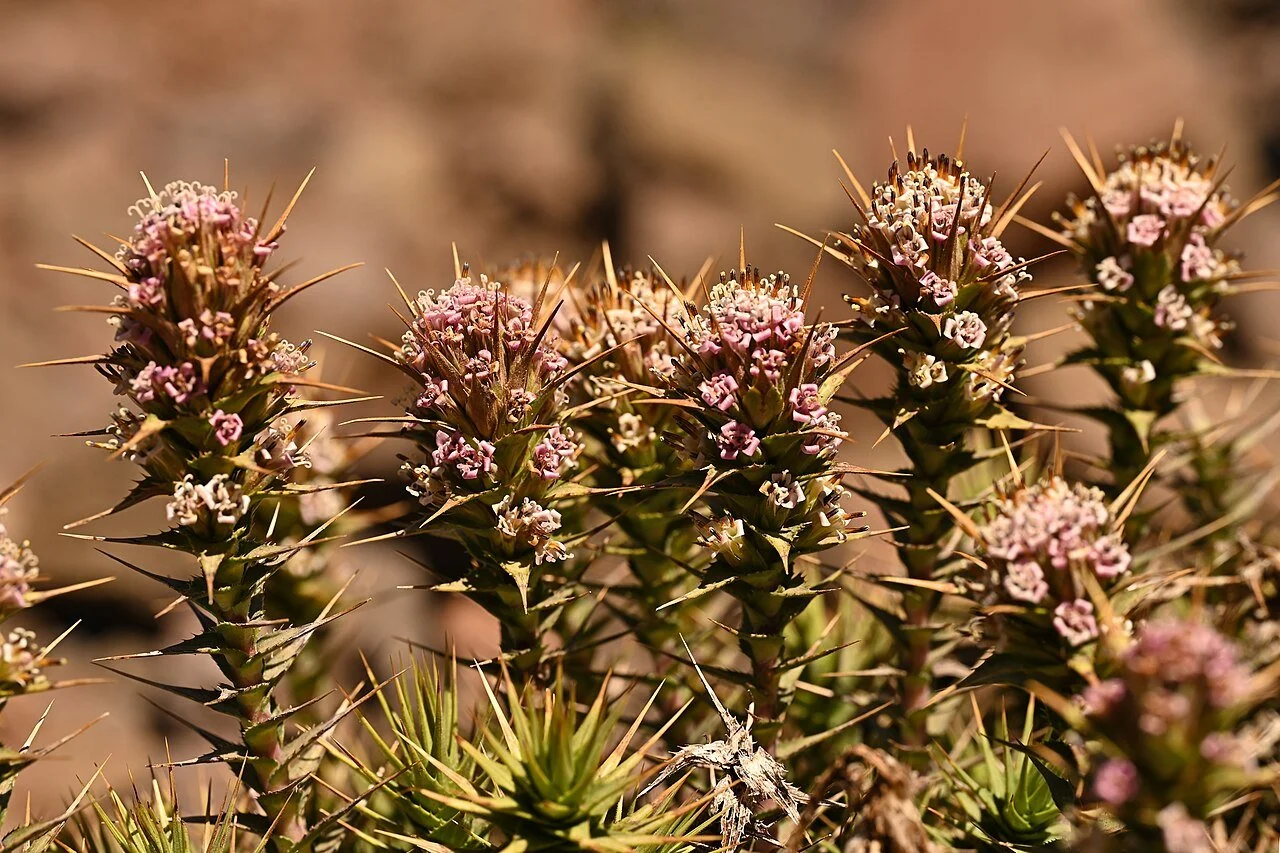
A distinctive cushion-forming member of the high Andean flora, Nassauvia pyramidalis develops into tight, domed mounds of rigid, spine-tipped foliage that give the plant a sculptural, almost thistle-like appearance at ground level. The leaves are small, deeply divided, and densely arranged, creating a hard-textured surface adapted to extreme exposure. In summer, short stems rise only slightly above the cushion, carrying small, pale yellow to whitish composite flowers that are understated but well suited to its harsh environment.
In cultivation, Nassauvia pyramidalis is a specialist plant requiring sharp drainage, full sun, and a very lean, mineral substrate. It is best grown in alpine troughs or crevice gardens where excess moisture can be strictly controlled. It is intolerant of rich soils and prolonged winter wet, and performs best in climates with cold, dry winters and cool summers. Hardiness is estimated around USDA Zone 6–7, though success is highly dependent on drainage and exposure.
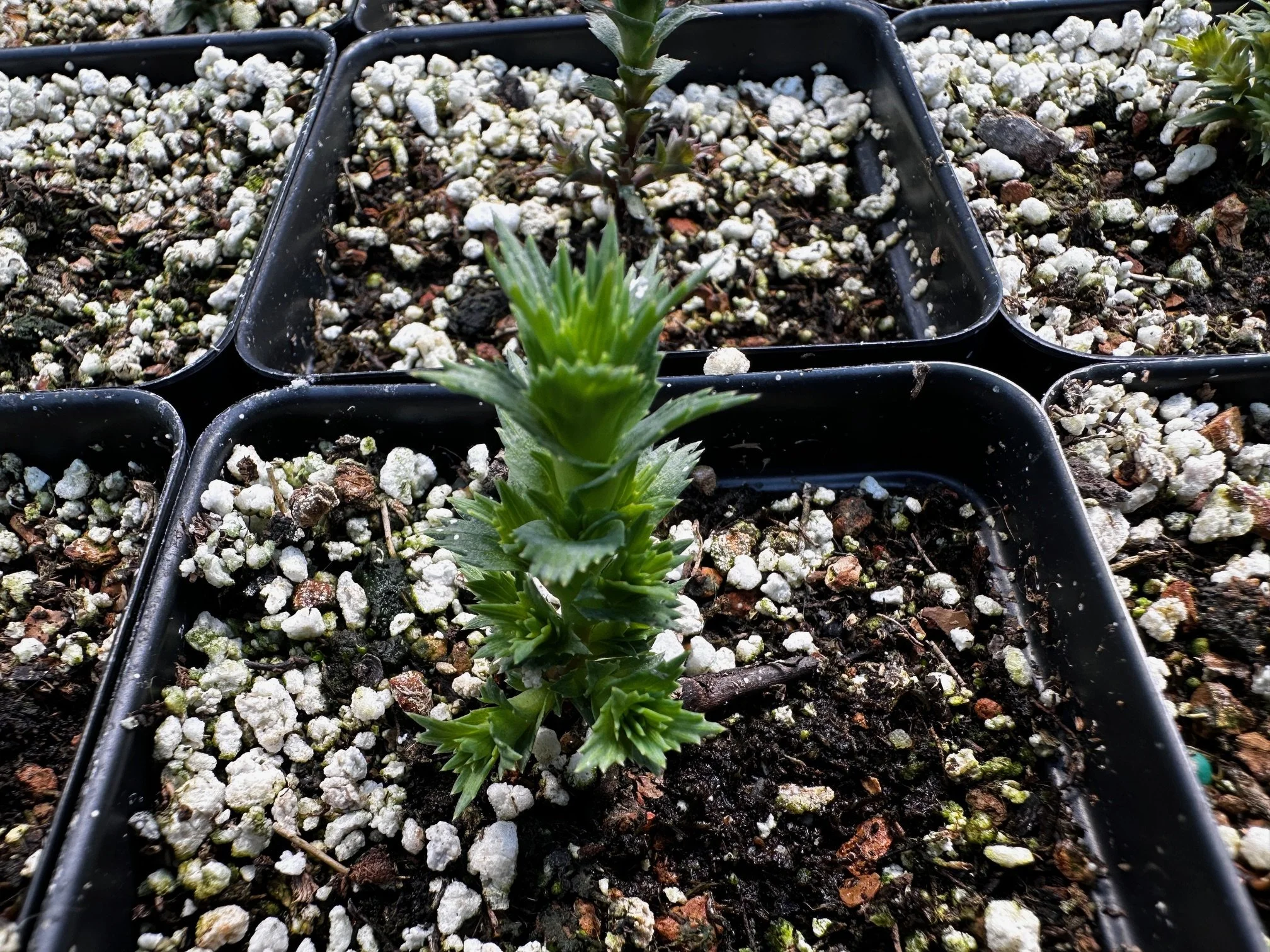
These are first year seedlings but growing really well and I want to spread them around since it’s a wild collection I’m letting a few out the door
Some years ago now, Jane McGary and I traveled to Chile and I was lucky to see a few of the amazing Nassauvia species that grow up in the high Andes. I have been trying to get them and Junellia, the rosulate violets and some of the Alstromeria species from the high mountains into cultivation ever since. So when I found seed of this from Del Maule, Chile I was thrilled.
A distinctive cushion-forming member of the high Andean flora, Nassauvia pyramidalis develops into tight, domed mounds of rigid, spine-tipped foliage that give the plant a sculptural, almost thistle-like appearance at ground level. The leaves are small, deeply divided, and densely arranged, creating a hard-textured surface adapted to extreme exposure. In summer, short stems rise only slightly above the cushion, carrying small, pale yellow to whitish composite flowers that are understated but well suited to its harsh environment.
In cultivation, Nassauvia pyramidalis is a specialist plant requiring sharp drainage, full sun, and a very lean, mineral substrate. It is best grown in alpine troughs or crevice gardens where excess moisture can be strictly controlled. It is intolerant of rich soils and prolonged winter wet, and performs best in climates with cold, dry winters and cool summers. Hardiness is estimated around USDA Zone 6–7, though success is highly dependent on drainage and exposure.
These are first year seedlings but growing really well and I want to spread them around since it’s a wild collection I’m letting a few out the door