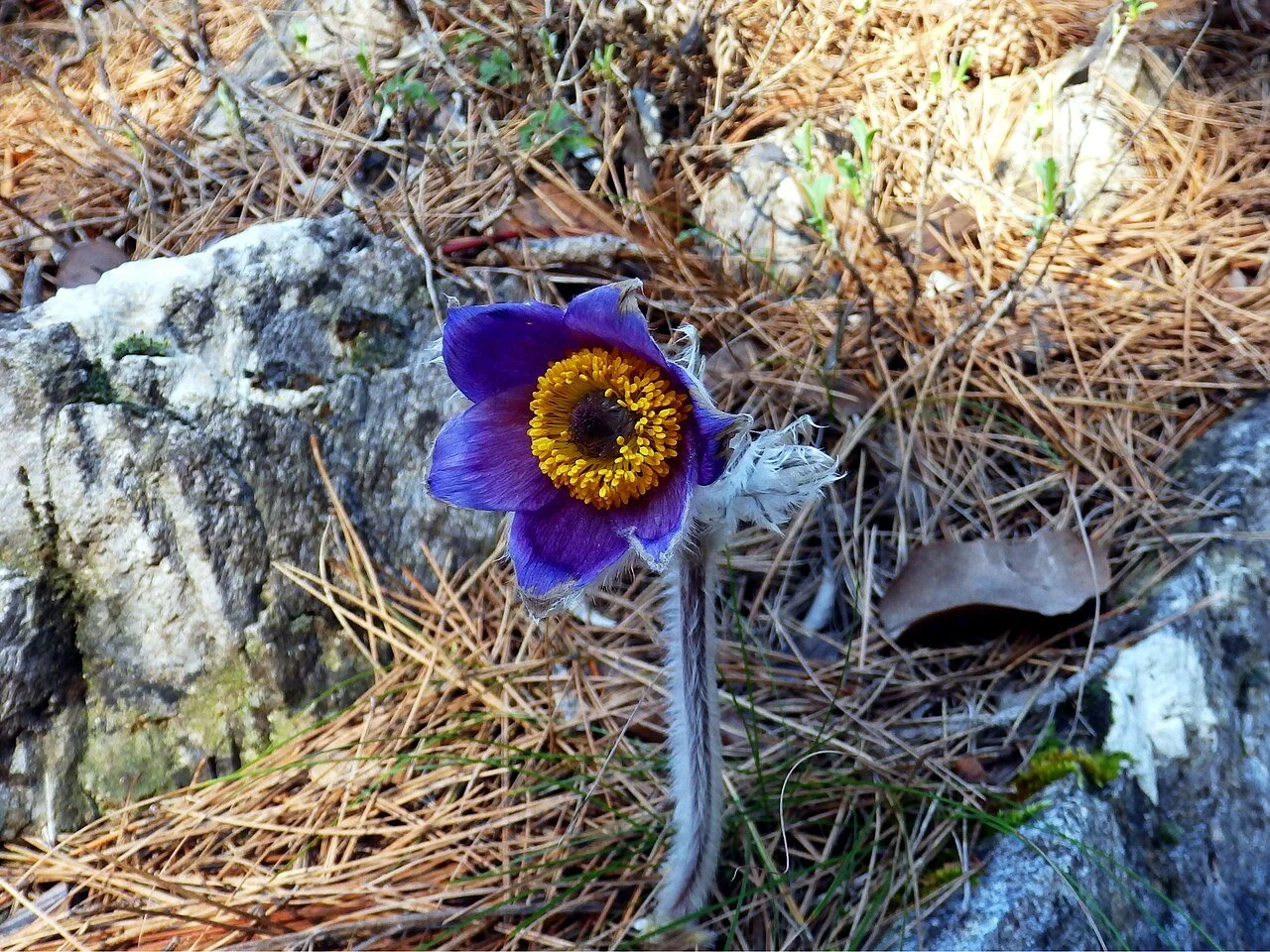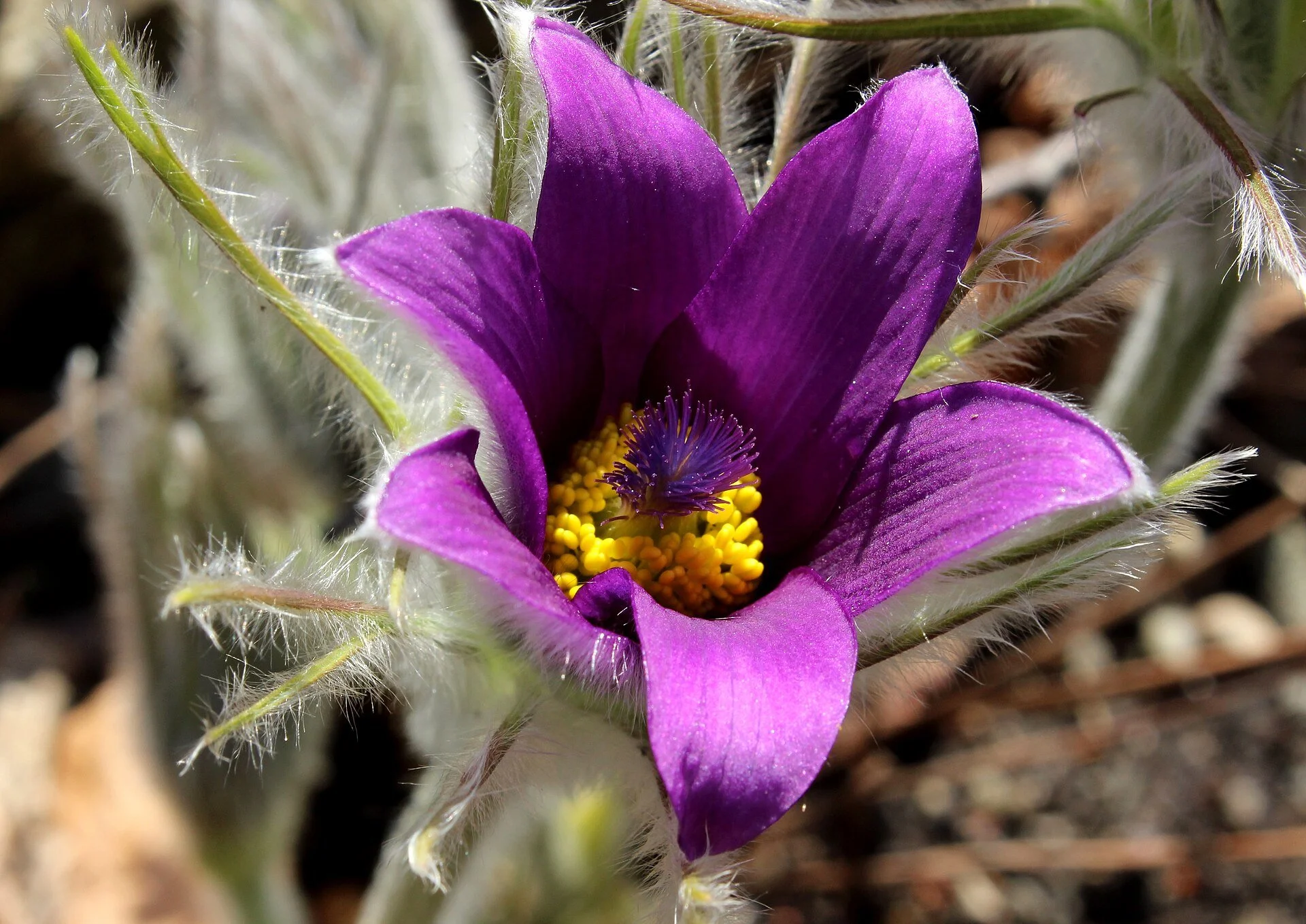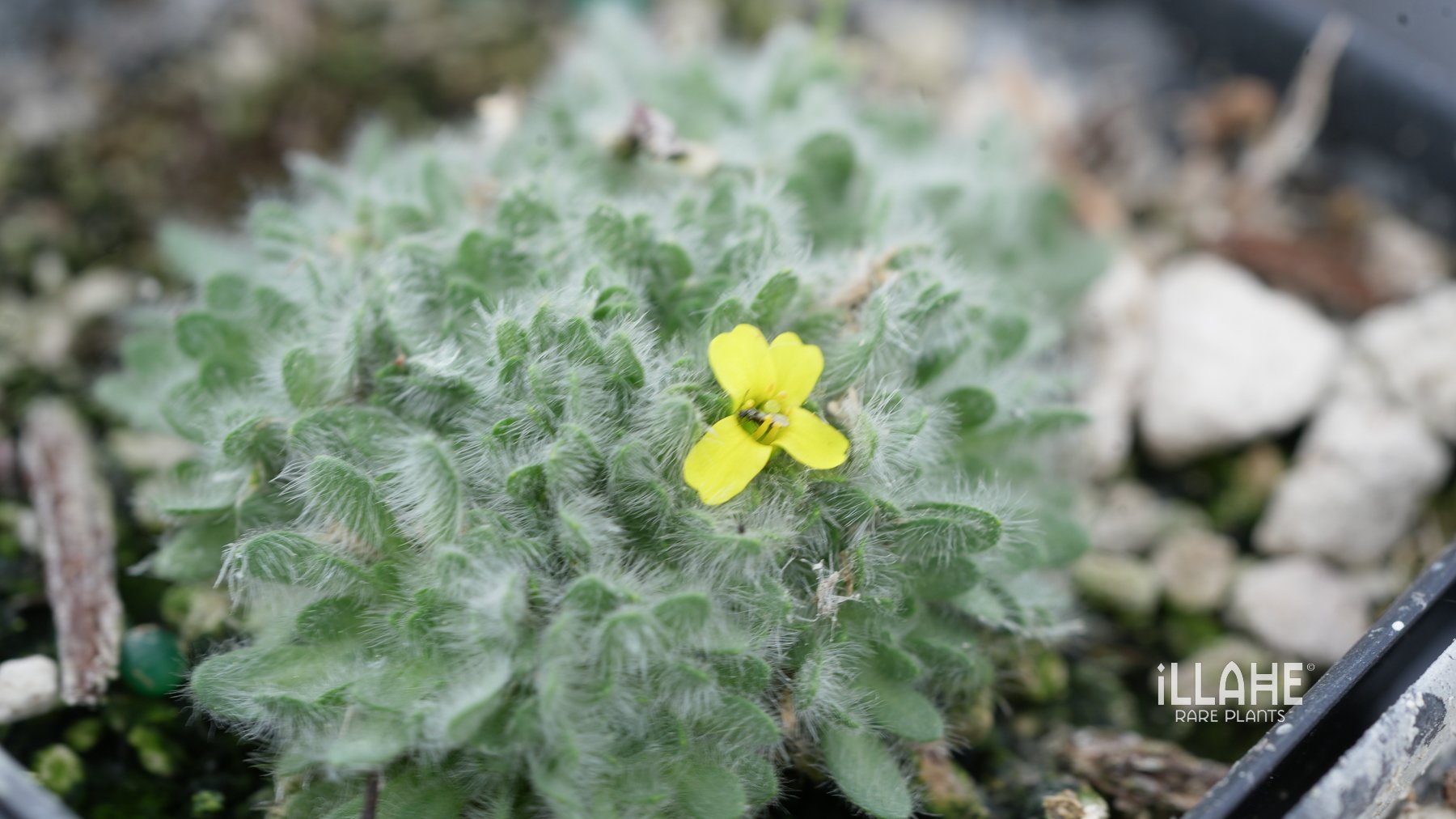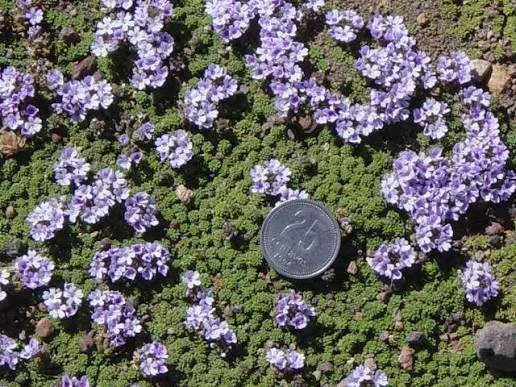
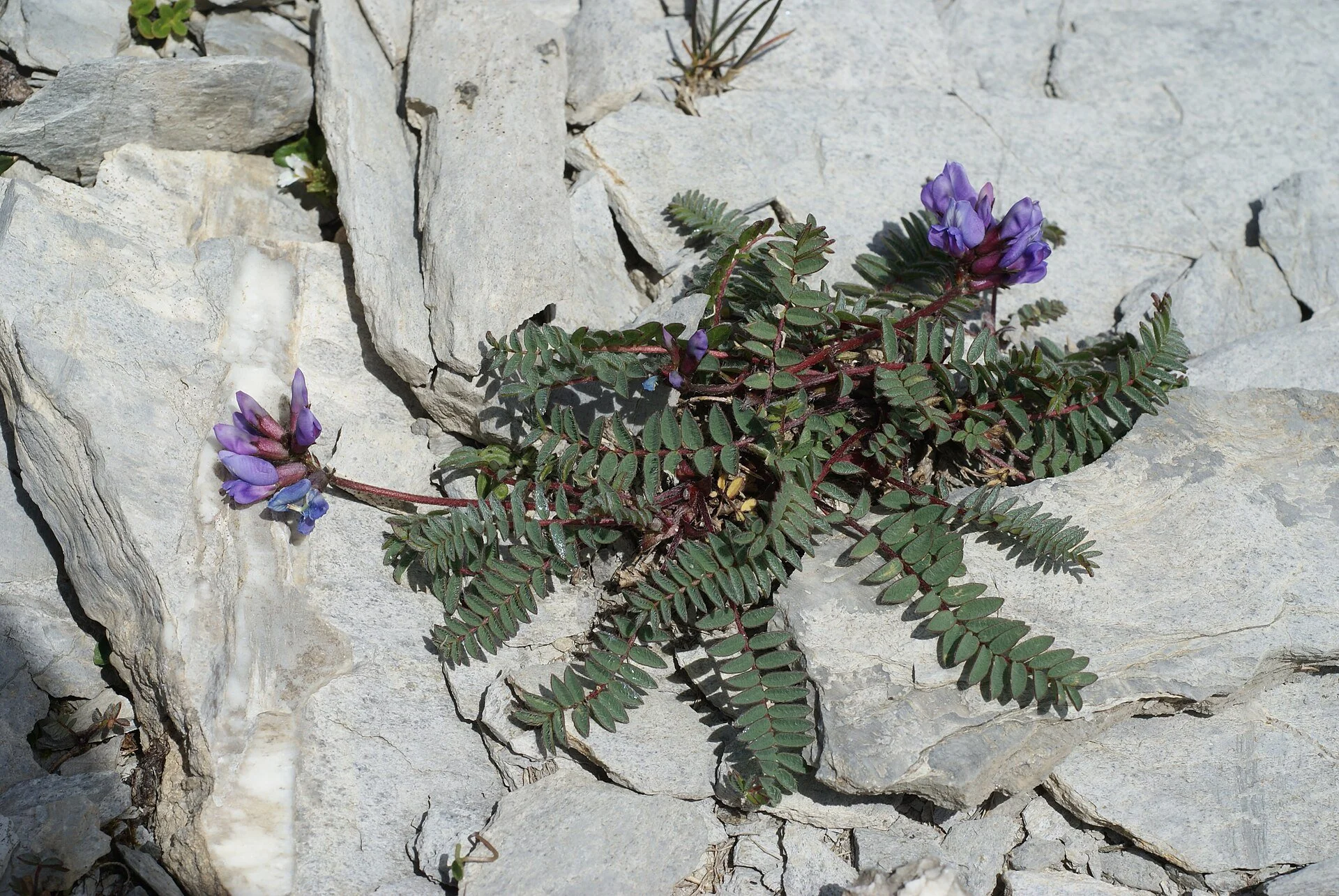
A beautiful European alpine legume forming compact tufts of finely divided, silvery-green foliage, with short stems bearing upright clusters of rich violet to reddish-violet flowers. The plants remain low, generally only a few inches tall, making this a particularly attractive subject for the alpine trough or dry rock garden. Oxytropis jacquinii is an older name now generally treated as a synonym of Oxytropis montana.
In the wild it grows in dry, stony alpine and subalpine grasslands, particularly on calcareous soils. Its native range includes the Alps and Jura of France, Switzerland, Italy, Germany and Austria, where it is found in exposed mountain habitats. In Switzerland it is recorded from dry, rocky calcareous grasslands in the subalpine to alpine zones.
This is an excellent choice for the rock garden, alpine house or limestone trough. Give it full sun and exceptionally sharp drainage, preferably in a lean, gritty soil with plenty of mineral content. The combination of silvery foliage and rich violet flowers makes it especially effective among limestone and other pale-colored rocks. Like many alpine Oxytropis, it appreciates cool conditions and excellent drainage rather than rich soil.
The name jacquinii honors the great Austrian botanist Nikolaus Joseph Jacquin (1727–1817), whose extensive botanical work included important studies of the flora of the Alps and Central Europe. The name was published for this plant by Alexander von Bunge in 1847, although modern taxonomic treatments place it within Oxytropis montana.
A beautiful European alpine legume forming compact tufts of finely divided, silvery-green foliage, with short stems bearing upright clusters of rich violet to reddish-violet flowers. The plants remain low, generally only a few inches tall, making this a particularly attractive subject for the alpine trough or dry rock garden. Oxytropis jacquinii is an older name now generally treated as a synonym of Oxytropis montana.
In the wild it grows in dry, stony alpine and subalpine grasslands, particularly on calcareous soils. Its native range includes the Alps and Jura of France, Switzerland, Italy, Germany and Austria, where it is found in exposed mountain habitats. In Switzerland it is recorded from dry, rocky calcareous grasslands in the subalpine to alpine zones.
This is an excellent choice for the rock garden, alpine house or limestone trough. Give it full sun and exceptionally sharp drainage, preferably in a lean, gritty soil with plenty of mineral content. The combination of silvery foliage and rich violet flowers makes it especially effective among limestone and other pale-colored rocks. Like many alpine Oxytropis, it appreciates cool conditions and excellent drainage rather than rich soil.
The name jacquinii honors the great Austrian botanist Nikolaus Joseph Jacquin (1727–1817), whose extensive botanical work included important studies of the flora of the Alps and Central Europe. The name was published for this plant by Alexander von Bunge in 1847, although modern taxonomic treatments place it within Oxytropis montana.