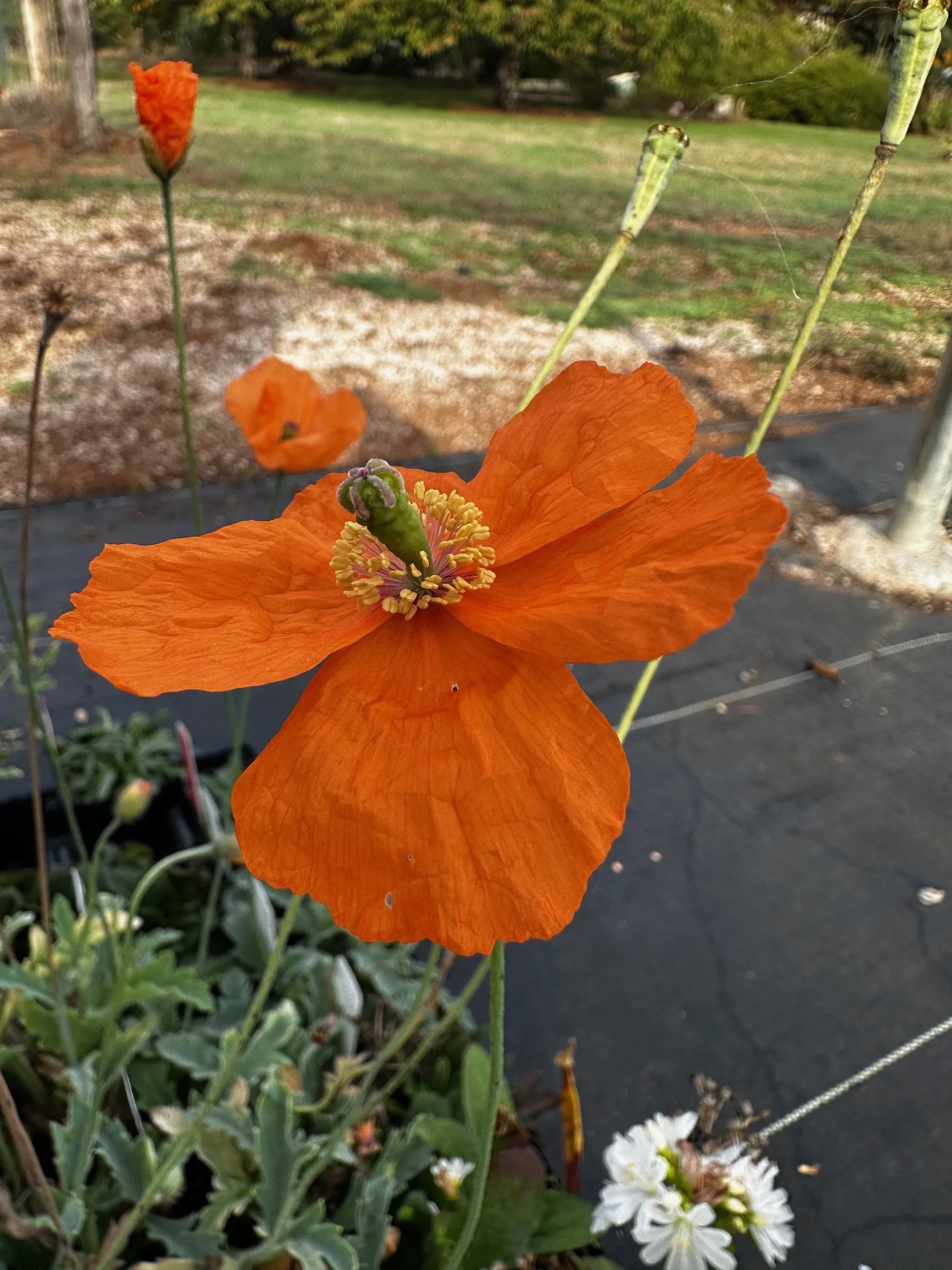
A rare and little-known poppy from the Baikal region of Siberia, Papaver popovii is a particularly intriguing species for the specialist rock garden. It forms a loose tuft of finely divided, somewhat hairy foliage, with numerous slender flowering stems rising above the plant. The flowers can range from white through deep orange, with apricot and peach in between, making this an unusually variable and attractive alpine poppy. Mine have been mostly in the tangerine/orange spectrum.
Papaver popovii is a narrow endemic of the Baikal region and is considered a glacial relict. Its naturally restricted distribution and unusual alpine character make it a choice plant for collectors of rare Papaver species. The finely divided foliage and relatively compact habit lend themselves particularly well to a trough, scree garden, or sunny rock garden. Give it full sun and very sharp drainage, particularly through the winter. Probaly would love areas with consistent snow cover, but that is pretty rare these days even in areas where it used to be common.
Like other poppies, the flowers offer pollen rather than nectar and are visited by pollen-collecting insects, especially bees. This makes Papaver popovii an interesting addition to a pollinator-friendly alpine garden while also providing the distinctive floral architecture characteristic of the genus.
A rare and little-known poppy from the Baikal region of Siberia, Papaver popovii is a particularly intriguing species for the specialist rock garden. It forms a loose tuft of finely divided, somewhat hairy foliage, with numerous slender flowering stems rising above the plant. The flowers can range from white through deep orange, with apricot and peach in between, making this an unusually variable and attractive alpine poppy. Mine have been mostly in the tangerine/orange spectrum.
Papaver popovii is a narrow endemic of the Baikal region and is considered a glacial relict. Its naturally restricted distribution and unusual alpine character make it a choice plant for collectors of rare Papaver species. The finely divided foliage and relatively compact habit lend themselves particularly well to a trough, scree garden, or sunny rock garden. Give it full sun and very sharp drainage, particularly through the winter. Probaly would love areas with consistent snow cover, but that is pretty rare these days even in areas where it used to be common.
Like other poppies, the flowers offer pollen rather than nectar and are visited by pollen-collecting insects, especially bees. This makes Papaver popovii an interesting addition to a pollinator-friendly alpine garden while also providing the distinctive floral architecture characteristic of the genus.