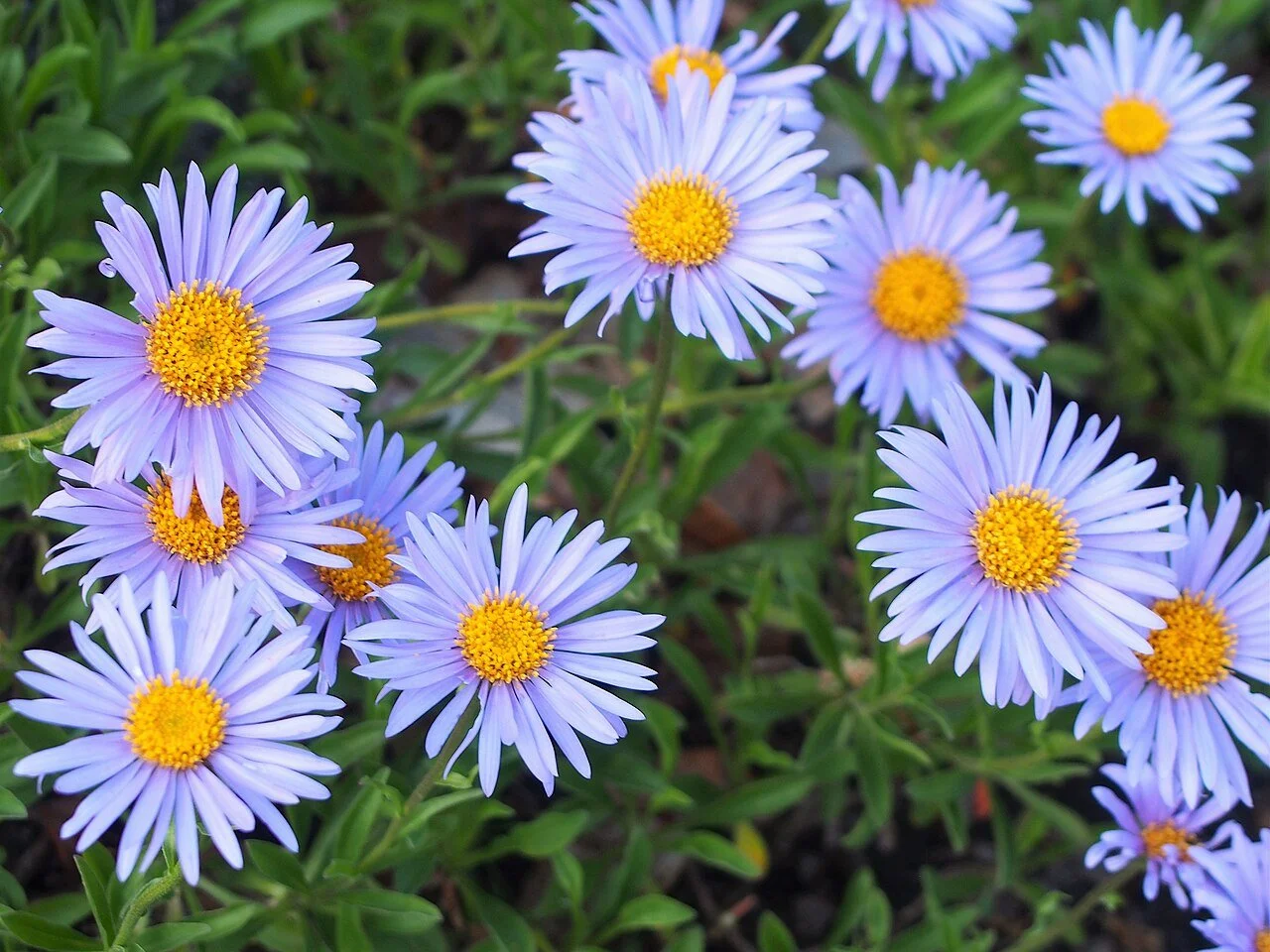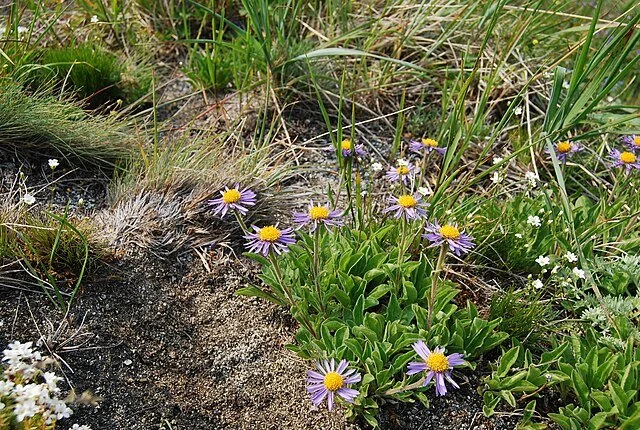
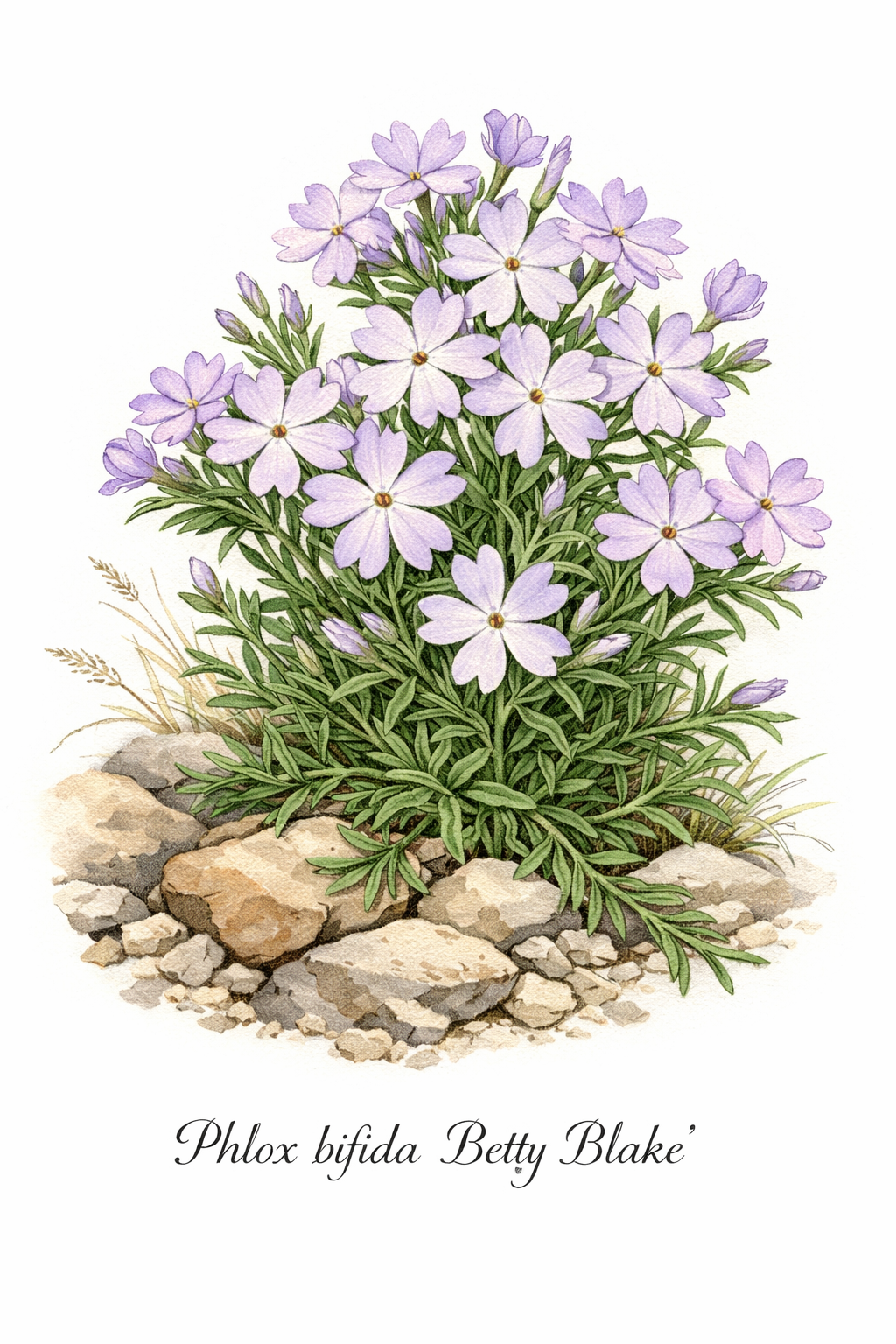
Phlox bifida ‘Betty Blake’ is a selected form of the native cleft phlox, Phlox bifida, a species indigenous to the central United States, where it occurs on dry, sandy to rocky soils, sandstone glades, open woodlands, and prairie edges—often in full sun and sharply drained, nutrient-poor conditions. The species is naturally a low, mat-forming perennial with finely cut (bifid) petals in soft lavender to pale violet tones, adapted to life in exposed, drought-prone habitats of the Midwest and Upper South.
In cultivation, it is best suited to rock gardens, dry slopes, scree beds, and gravel gardens where sharp drainage is assured and competition is minimal. It thrives in full sun and lean soils, and once established is notably drought tolerant. Hardy in USDA Zones 4–8, it is an excellent early-season groundcover for alpine and steppe-style plantings, where its fine texture and luminous spring flowers echo its native sandstone habitats
Phlox bifida ‘Betty Blake’ is a selected form of the native cleft phlox, Phlox bifida, a species indigenous to the central United States, where it occurs on dry, sandy to rocky soils, sandstone glades, open woodlands, and prairie edges—often in full sun and sharply drained, nutrient-poor conditions. The species is naturally a low, mat-forming perennial with finely cut (bifid) petals in soft lavender to pale violet tones, adapted to life in exposed, drought-prone habitats of the Midwest and Upper South.
In cultivation, it is best suited to rock gardens, dry slopes, scree beds, and gravel gardens where sharp drainage is assured and competition is minimal. It thrives in full sun and lean soils, and once established is notably drought tolerant. Hardy in USDA Zones 4–8, it is an excellent early-season groundcover for alpine and steppe-style plantings, where its fine texture and luminous spring flowers echo its native sandstone habitats