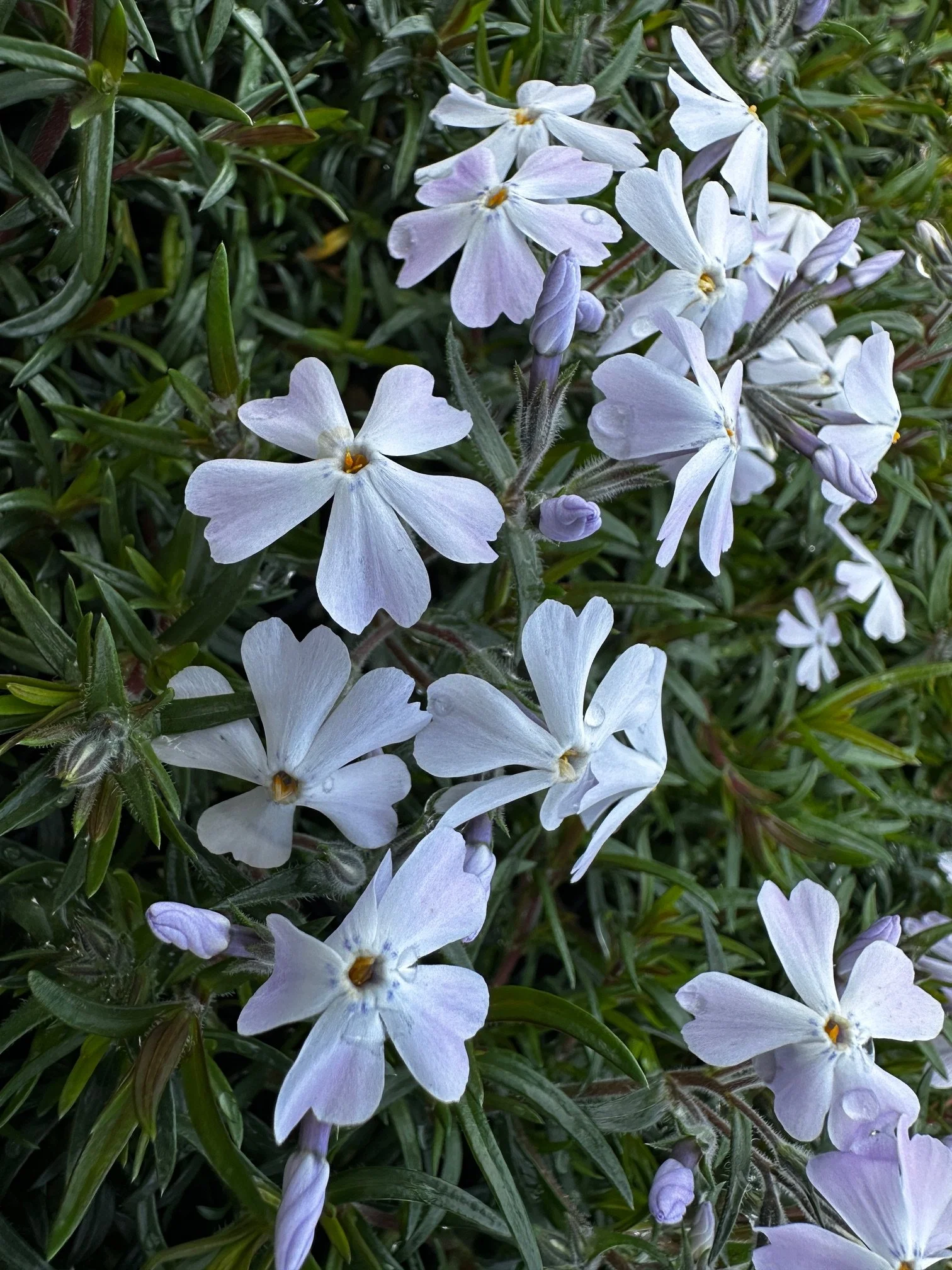
Phlox ‘Spring Blue’ is a compact, mat-forming selection within the creeping phlox group,
It forms a tight, evergreen cushion of fine, needle-like foliage on densely interwoven, creeping stems that create a low, durable carpet. The plant maintains a neat, compact habit throughout the year, making it especially effective in small-scale rock garden settings.
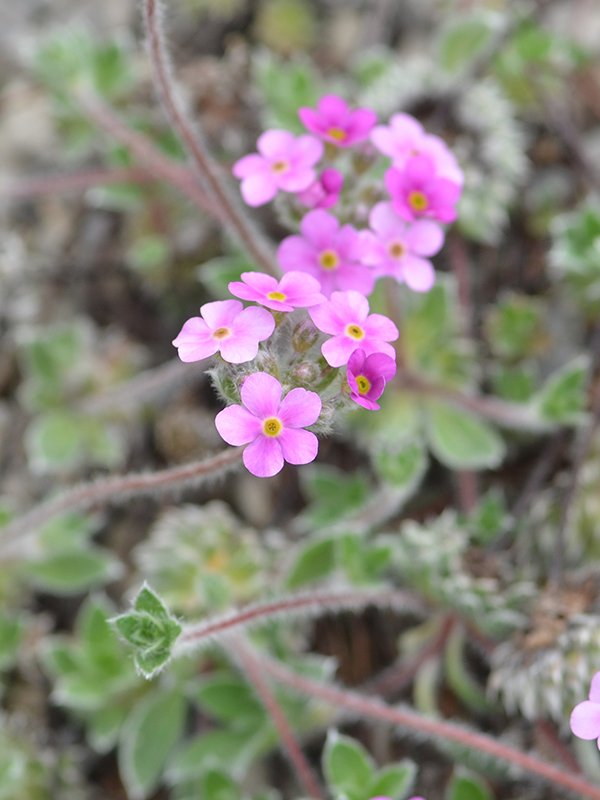
In early to mid-spring, it produces an abundance of relatively large, five-petaled flowers in clear, cool blue to lavender-blue tones—one of the truer blue shades among creeping phlox selections. The bloom is typically heavy enough to nearly cover the foliage, creating a vivid sheet of color at a time when many alpine plants are just beginning to awaken.
In cultivation, Phlox ‘Spring Blue’ thrives in full sun and sharply drained, lean soils, excelling in rock gardens, alpine troughs, crevice plantings, and dry slopes. Like most creeping phlox, it requires excellent drainage and good air circulation and is intolerant of winter wet or heavy soils.
Hardy in USDA Zones 3–7, this selection is valued for its compact habit, early flowering, and distinctive blue coloration, making it a standout among spring-blooming alpine groundcovers.
Phlox ‘Spring Blue’ is a compact, mat-forming selection within the creeping phlox group,
It forms a tight, evergreen cushion of fine, needle-like foliage on densely interwoven, creeping stems that create a low, durable carpet. The plant maintains a neat, compact habit throughout the year, making it especially effective in small-scale rock garden settings.
In early to mid-spring, it produces an abundance of relatively large, five-petaled flowers in clear, cool blue to lavender-blue tones—one of the truer blue shades among creeping phlox selections. The bloom is typically heavy enough to nearly cover the foliage, creating a vivid sheet of color at a time when many alpine plants are just beginning to awaken.
In cultivation, Phlox ‘Spring Blue’ thrives in full sun and sharply drained, lean soils, excelling in rock gardens, alpine troughs, crevice plantings, and dry slopes. Like most creeping phlox, it requires excellent drainage and good air circulation and is intolerant of winter wet or heavy soils.
Hardy in USDA Zones 3–7, this selection is valued for its compact habit, early flowering, and distinctive blue coloration, making it a standout among spring-blooming alpine groundcovers.