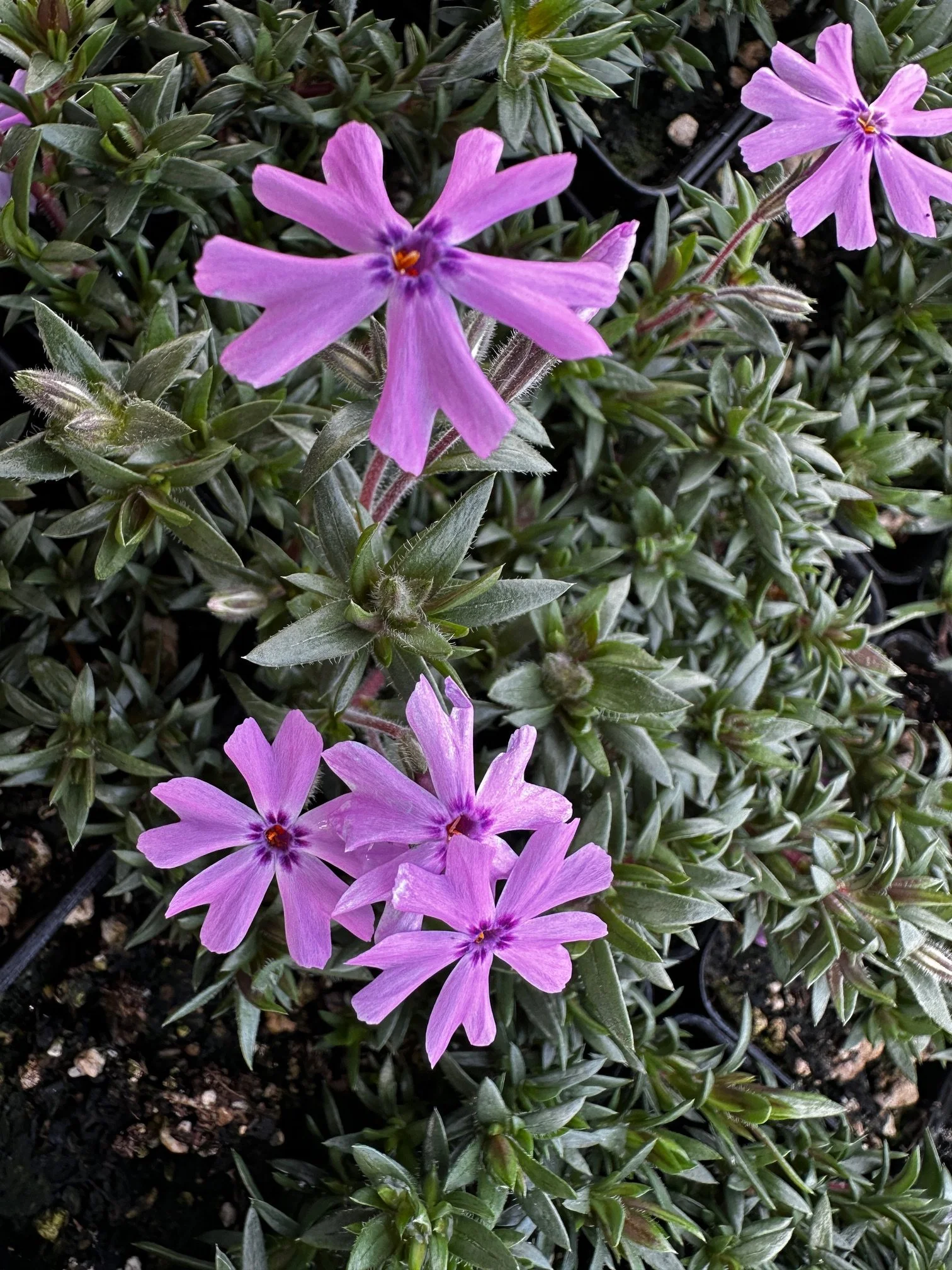
Phlox ‘Fort Hill’ is a low, mat-forming selection of creeping phlox.
It forms a dense, evergreen to semi-evergreen carpet of fine, needle-like foliage on tightly interlaced, creeping stems that root as they spread. The growth is low and even, creating a durable mat that weaves into stonework and stabilizes sharply drained soils in exposed sites.
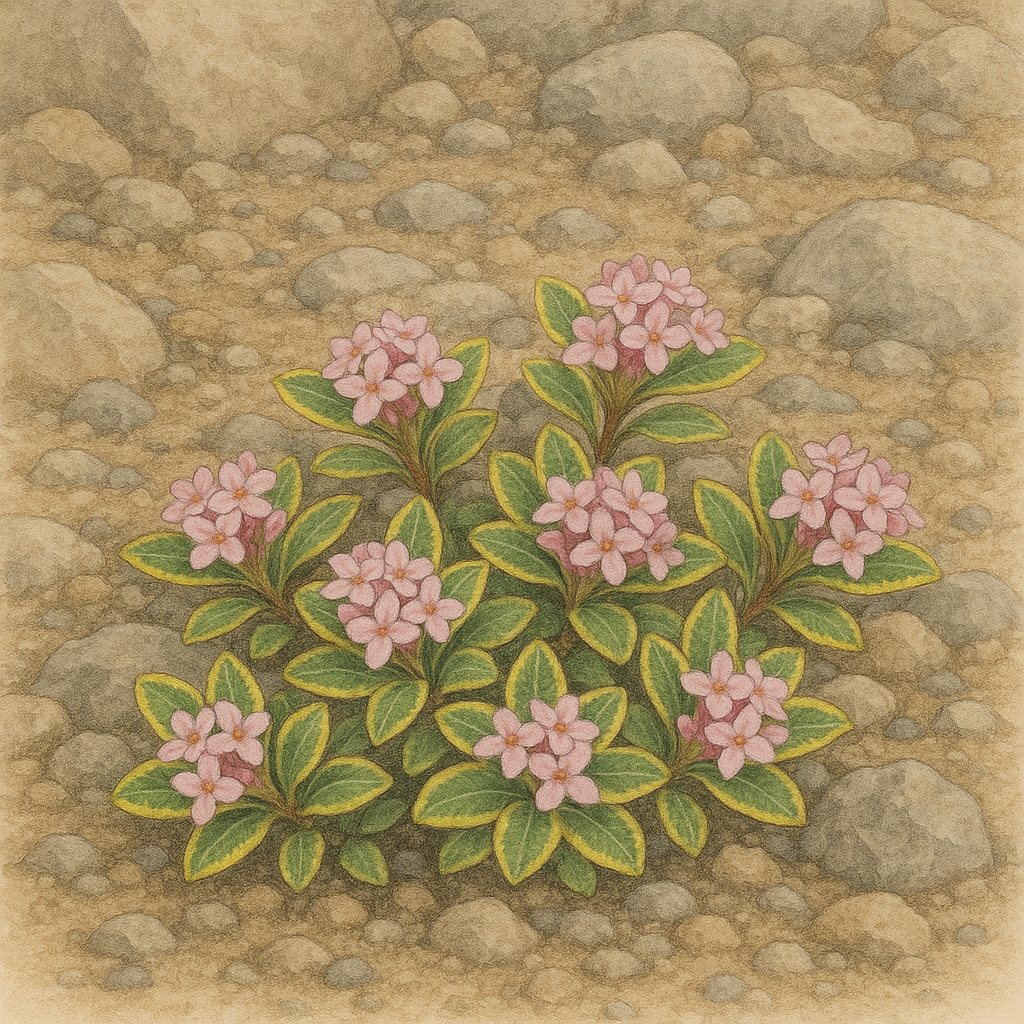
In spring, it produces a generous covering of small, star-shaped flowers in soft lavender-pink to lilac tones, often with a faint eye and a subtle glow in bright light. The bloom is typically abundant enough to cloak the foliage, creating a vivid, low spring display across the plant’s surface.
In cultivation, Phlox ‘Fort Hill’ thrives in full sun and sharply drained, lean soils, excelling in rock gardens, crevice plantings, and dry slopes. It requires excellent drainage and good air movement and performs best in climates with cool winters and relatively dry conditions outside the growing season.
Hardy in USDA Zones 4–7, this selection is valued for its reliable vigor, tight mat-forming habit, and dependable floral display, making it a useful and attractive groundcover for alpine and rock garden settings.
Phlox ‘Fort Hill’ is a low, mat-forming selection of creeping phlox.
It forms a dense, evergreen to semi-evergreen carpet of fine, needle-like foliage on tightly interlaced, creeping stems that root as they spread. The growth is low and even, creating a durable mat that weaves into stonework and stabilizes sharply drained soils in exposed sites.
In spring, it produces a generous covering of small, star-shaped flowers in soft lavender-pink to lilac tones, often with a faint eye and a subtle glow in bright light. The bloom is typically abundant enough to cloak the foliage, creating a vivid, low spring display across the plant’s surface.
In cultivation, Phlox ‘Fort Hill’ thrives in full sun and sharply drained, lean soils, excelling in rock gardens, crevice plantings, and dry slopes. It requires excellent drainage and good air movement and performs best in climates with cool winters and relatively dry conditions outside the growing season.
Hardy in USDA Zones 4–7, this selection is valued for its reliable vigor, tight mat-forming habit, and dependable floral display, making it a useful and attractive groundcover for alpine and rock garden settings.