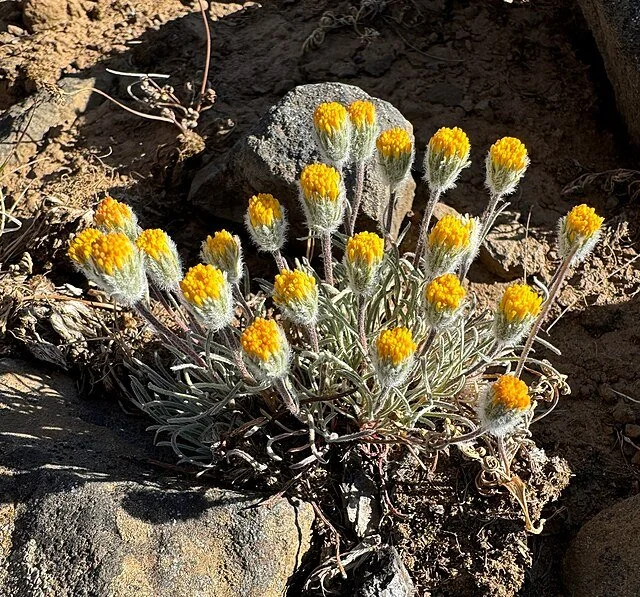
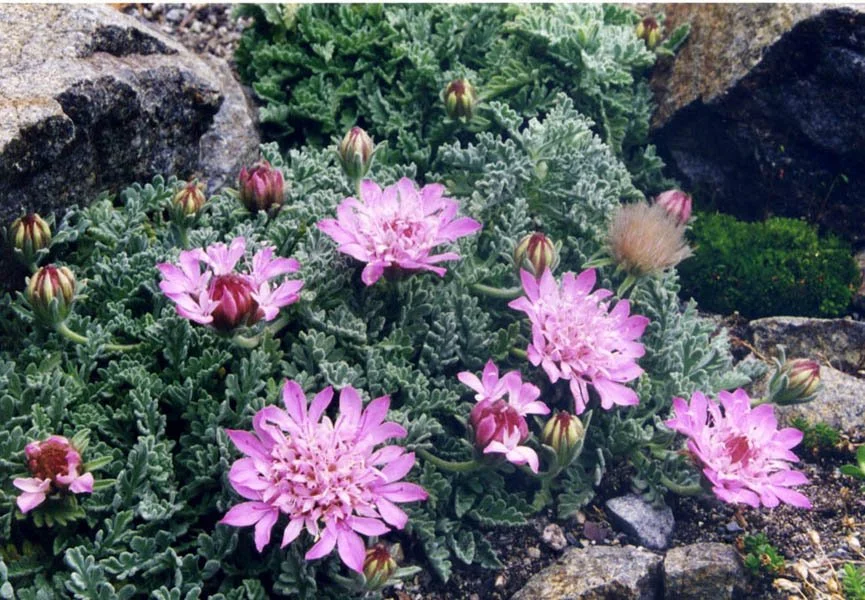
Pterocephalus pinardii is a compact, cushion-forming perennial native to the high mountains of Turkey and adjacent regions, where it grows in open alpine grasslands, rocky slopes, and limestone screes. Adapted to cold, windswept environments with intense sun and sharply drained soils, it forms low, densely branched mats of finely textured, gray-green foliage that hug the ground in tight, hemispherical cushions.
The leaves are small, softly hairy, and tightly arranged along the stems, giving the plant a subdued, silvery cast and excellent drought resistance. In late spring to midsummer, it produces slender, upright stems bearing rounded flower heads composed of many small florets, typically soft lilac to pale lavender-pink, sometimes fading to nearly white with age. The blooms rise just above the foliage, creating a delicate contrast with the compact cushion below.
In cultivation, Pterocephalus pinardii requires full sun and extremely well-drained, mineral soils, performing best in alpine troughs, crevice gardens, and rock gardens where winter moisture is minimal. It is intolerant of heavy, wet soils but long-lived and reliable when given sharp drainage and a cool root run.
Kathy Allen had a wonderful huge specimen in her garden so it’s long lived in Oregon. But this selection is actually from Holubec collection in Bolkar, Turkey.
Hardy in USDA Zones 5–8, this species is valued for its refined cushion habit, subtle flower heads, and authentic alpine character, bringing a quiet but distinctive texture to specialist rock garden plantings.
Pterocephalus pinardii is a compact, cushion-forming perennial native to the high mountains of Turkey and adjacent regions, where it grows in open alpine grasslands, rocky slopes, and limestone screes. Adapted to cold, windswept environments with intense sun and sharply drained soils, it forms low, densely branched mats of finely textured, gray-green foliage that hug the ground in tight, hemispherical cushions.
The leaves are small, softly hairy, and tightly arranged along the stems, giving the plant a subdued, silvery cast and excellent drought resistance. In late spring to midsummer, it produces slender, upright stems bearing rounded flower heads composed of many small florets, typically soft lilac to pale lavender-pink, sometimes fading to nearly white with age. The blooms rise just above the foliage, creating a delicate contrast with the compact cushion below.
In cultivation, Pterocephalus pinardii requires full sun and extremely well-drained, mineral soils, performing best in alpine troughs, crevice gardens, and rock gardens where winter moisture is minimal. It is intolerant of heavy, wet soils but long-lived and reliable when given sharp drainage and a cool root run.
Kathy Allen had a wonderful huge specimen in her garden so it’s long lived in Oregon. But this selection is actually from Holubec collection in Bolkar, Turkey.
Hardy in USDA Zones 5–8, this species is valued for its refined cushion habit, subtle flower heads, and authentic alpine character, bringing a quiet but distinctive texture to specialist rock garden plantings.