Pulsatilla halleri subsp. taurica — Crimean Pasque Flower
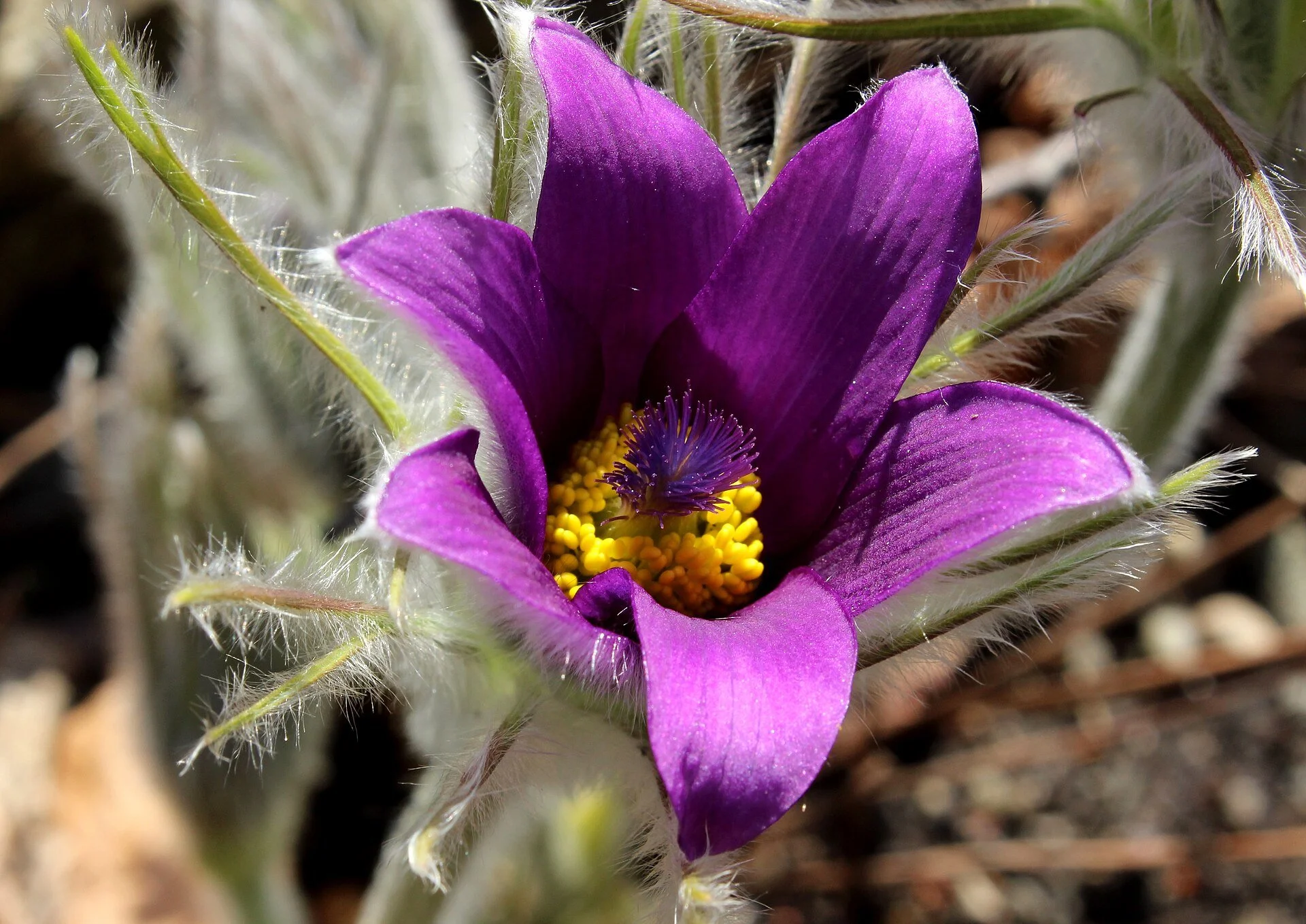
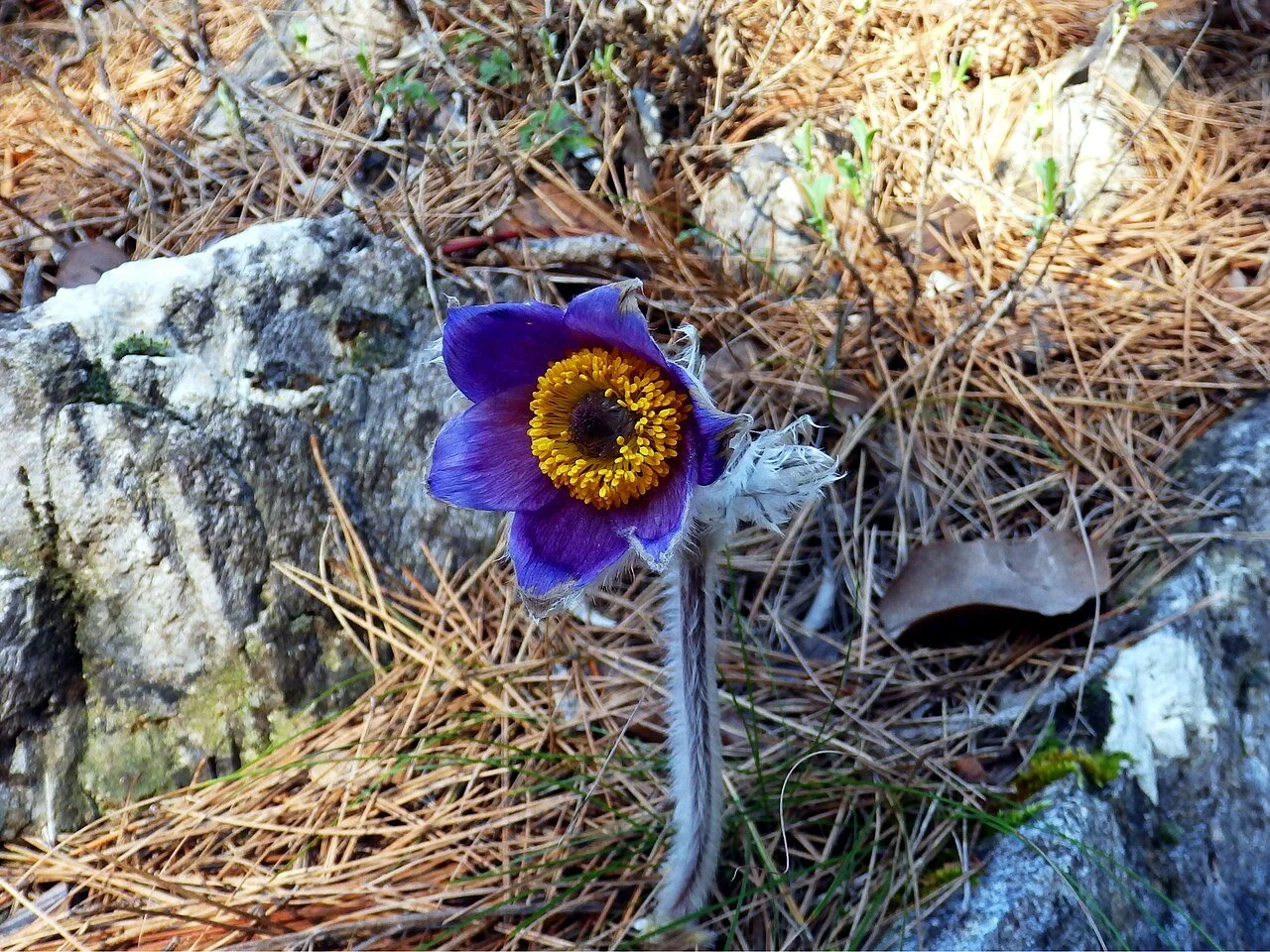
A choice and unusual pasque flower endemic to the mountains of Crimea. This diminutive form produces finely divided, softly hairy foliage and solitary, upright flowers in rich violet to reddish-violet, with the outer surfaces covered in silky hairs. The flowers appear in early spring, followed by the characteristic silky seedheads for which Pulsatilla is so admired. Plants are generally only 8–12 inches tall when flowering, with the flowering stems elongating considerably as the seeds develop.
In the wild it grows in the middle and upper mountain zones of Crimea, particularly in rocky mountain grasslands, steppe vegetation, open woodland, and rocky sites on skeletal, often carbonate-rich soils. Herbarium collections document it growing in stony steppe on the Crimean yaylas. This is a sun-loving, relatively dry-site plant with a deep root system, making its natural habitat remarkably well suited to the conditions of a carefully constructed rock garden.
An exceptional plant for the specialist rock garden, limestone scree, or sunny alpine meadow. Give it full sun, excellent drainage, and a lean, gritty soil, preferably with plenty of limestone or other mineral material. Once established, avoid disturbing the deep root system. Its combination of early flowers, silky foliage and extraordinary seedheads makes it one of the more memorable Pulsatilla for the serious rock gardener.
Pulsatilla halleri subsp. taurica — Crimean Pasque Flower
A choice and unusual pasque flower endemic to the mountains of Crimea. This diminutive form produces finely divided, softly hairy foliage and solitary, upright flowers in rich violet to reddish-violet, with the outer surfaces covered in silky hairs. The flowers appear in early spring, followed by the characteristic silky seedheads for which Pulsatilla is so admired. Plants are generally only 8–12 inches tall when flowering, with the flowering stems elongating considerably as the seeds develop.
In the wild it grows in the middle and upper mountain zones of Crimea, particularly in rocky mountain grasslands, steppe vegetation, open woodland, and rocky sites on skeletal, often carbonate-rich soils. Herbarium collections document it growing in stony steppe on the Crimean yaylas. This is a sun-loving, relatively dry-site plant with a deep root system, making its natural habitat remarkably well suited to the conditions of a carefully constructed rock garden.
An exceptional plant for the specialist rock garden, limestone scree, or sunny alpine meadow. Give it full sun, excellent drainage, and a lean, gritty soil, preferably with plenty of limestone or other mineral material. Once established, avoid disturbing the deep root system. Its combination of early flowers, silky foliage and extraordinary seedheads makes it one of the more memorable Pulsatilla for the serious rock gardener.