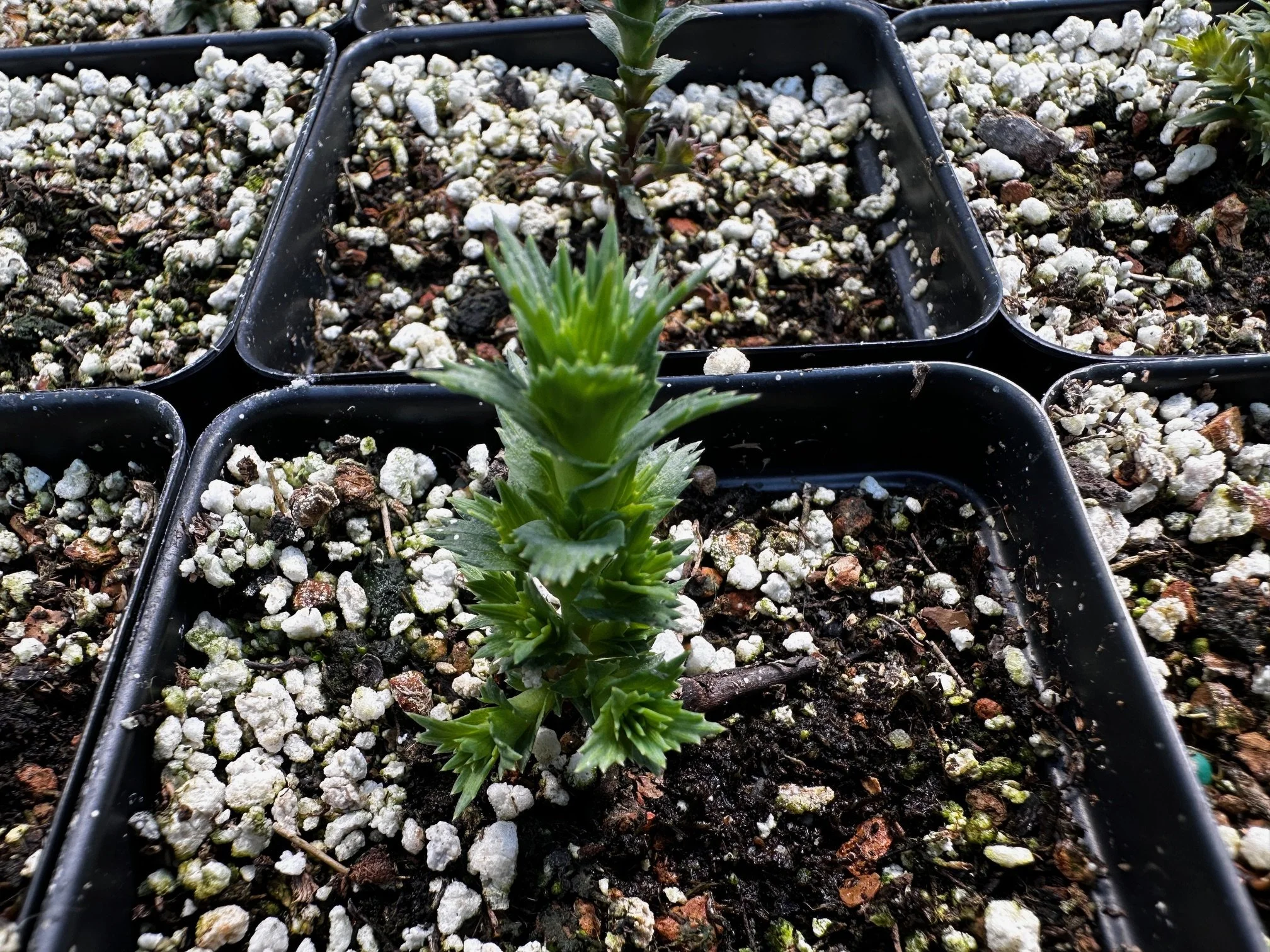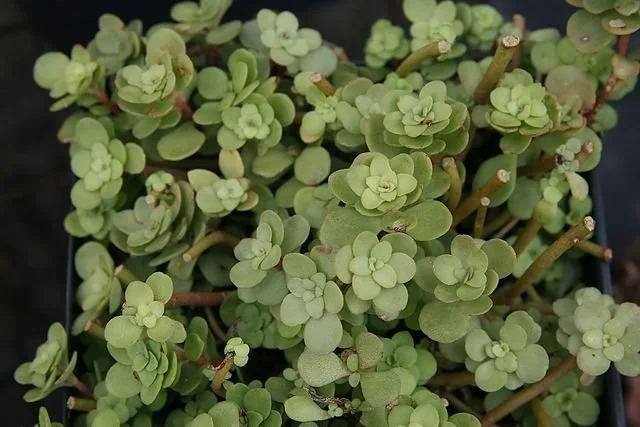
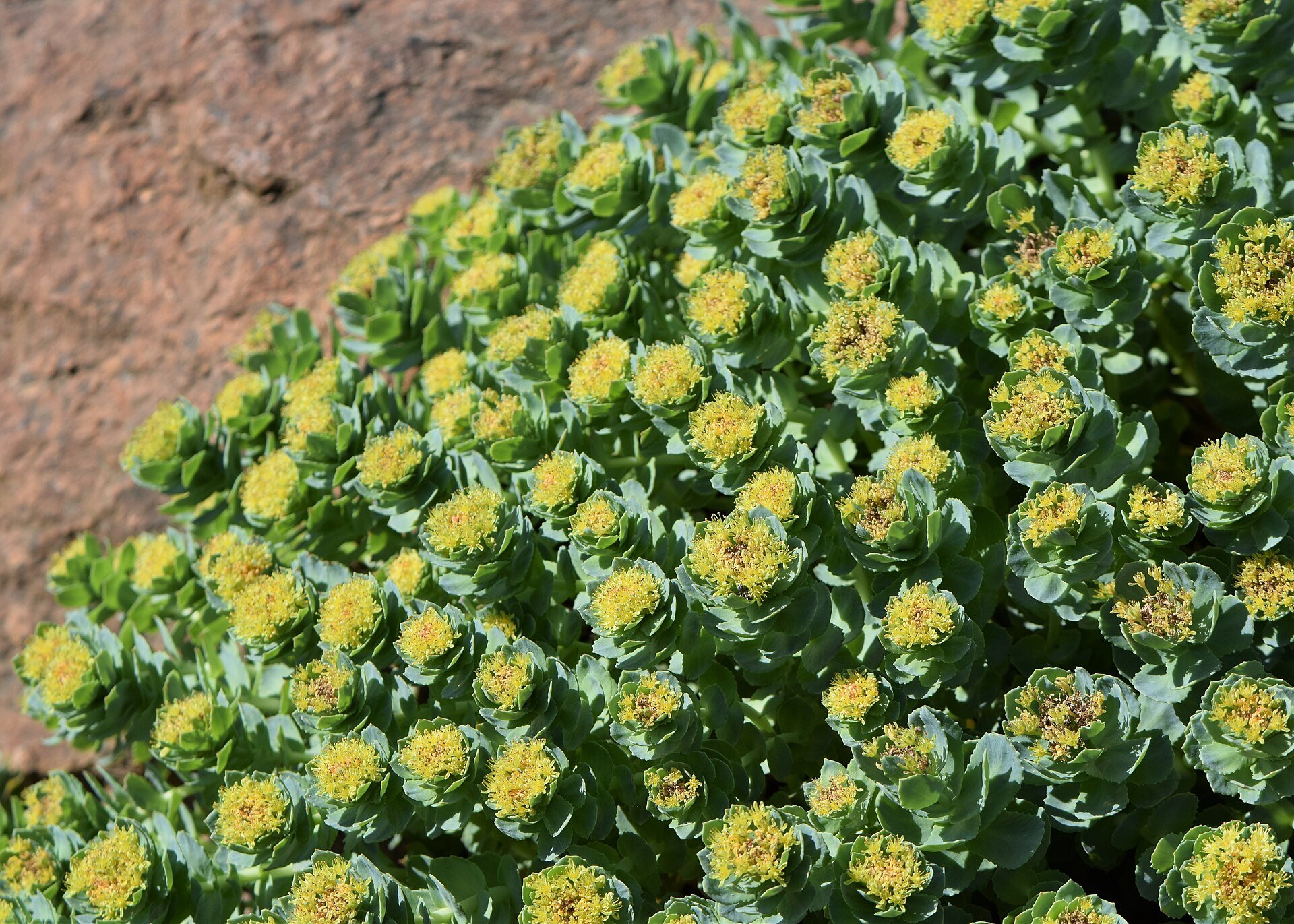
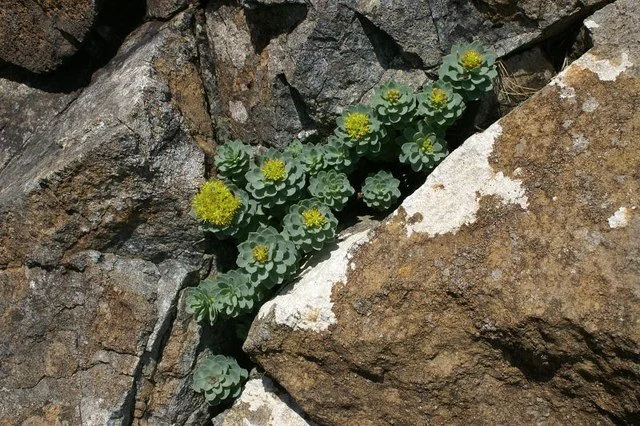
Rhodiola rosea is a hardy, mat-forming perennial native to arctic and high-alpine regions of Europe, Asia, and North America, where it grows on cold, exposed cliffs, tundra slopes, and rocky coastal bluffs. Adapted to some of the most extreme environments on earth, it forms tight colonies of fleshy, blue-green to gray-green leaves on short, upright stems arising from a thick, aromatic rootstock.
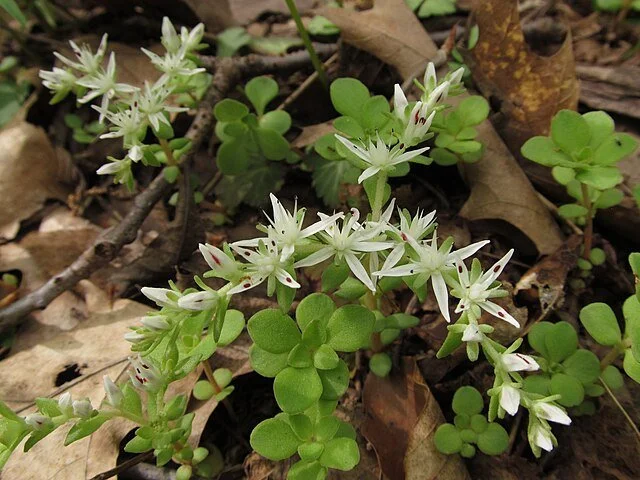
In late spring to early summer, it produces small clusters of starry yellow-green flowers, typically borne above the foliage on separate male and female plants. While modest in appearance, the plant is valued as much for its resilience and ecological specialization as for its floral display.
Beyond its ornamental interest, Rhodiola rosea has a long history of medicinal use across northern Europe and Asia. Not that I’m recommending you eat it without consulting your medical practitioner first. Its rhizomes and roots have been traditionally harvested and used as an adaptogenic herb, believed to help the body resist physical, emotional, and environmental stress. In traditional herbal medicine systems, it has been used to support stamina, reduce fatigue, enhance mental clarity, and improve recovery from exertion or harsh climatic conditions. Modern herbal research has focused on compounds such as rosavins and salidroside, which are studied for their potential effects on stress response and cognitive function, though clinical results remain varied. There are some crazy stories of things happening to people collecting this, especially in the Mountains of The Soviet Central Asian time period. I’m glad I can grow it without having to take those risks and now so can you.
In cultivation, it thrives in sharply drained, gritty soils in full sun and cold conditions, excelling in rock gardens, alpine troughs, and scree plantings. It is intolerant of heat and humidity, preferring climates with cool nights and long winters that mirror its native range.
Hardy in USDA Zones 2–6, Rhodiola rosea is both a botanical survivor of extreme climates and a plant of enduring cultural significance, bridging ornamental alpine gardening and centuries of traditional medicinal use.
Rhodiola rosea is a hardy, mat-forming perennial native to arctic and high-alpine regions of Europe, Asia, and North America, where it grows on cold, exposed cliffs, tundra slopes, and rocky coastal bluffs. Adapted to some of the most extreme environments on earth, it forms tight colonies of fleshy, blue-green to gray-green leaves on short, upright stems arising from a thick, aromatic rootstock.
In late spring to early summer, it produces small clusters of starry yellow-green flowers, typically borne above the foliage on separate male and female plants. While modest in appearance, the plant is valued as much for its resilience and ecological specialization as for its floral display.
Beyond its ornamental interest, Rhodiola rosea has a long history of medicinal use across northern Europe and Asia. Not that I’m recommending you eat it without consulting your medical practitioner first. Its rhizomes and roots have been traditionally harvested and used as an adaptogenic herb, believed to help the body resist physical, emotional, and environmental stress. In traditional herbal medicine systems, it has been used to support stamina, reduce fatigue, enhance mental clarity, and improve recovery from exertion or harsh climatic conditions. Modern herbal research has focused on compounds such as rosavins and salidroside, which are studied for their potential effects on stress response and cognitive function, though clinical results remain varied. There are some crazy stories of things happening to people collecting this, especially in the Mountains of The Soviet Central Asian time period. I’m glad I can grow it without having to take those risks and now so can you.
In cultivation, it thrives in sharply drained, gritty soils in full sun and cold conditions, excelling in rock gardens, alpine troughs, and scree plantings. It is intolerant of heat and humidity, preferring climates with cool nights and long winters that mirror its native range.
Hardy in USDA Zones 2–6, Rhodiola rosea is both a botanical survivor of extreme climates and a plant of enduring cultural significance, bridging ornamental alpine gardening and centuries of traditional medicinal use.