
Ribes roezlii is a distinctive western North American currant native to dry, open slopes, chaparral, and montane woodland margins from California into Oregon, where it is often found rooted among rocks and in well-drained, gravelly soils. It forms a deciduous, arching shrub of moderate size, its stems sometimes armed with spines, giving it a slightly wild, defensive character typical of many western ribes.
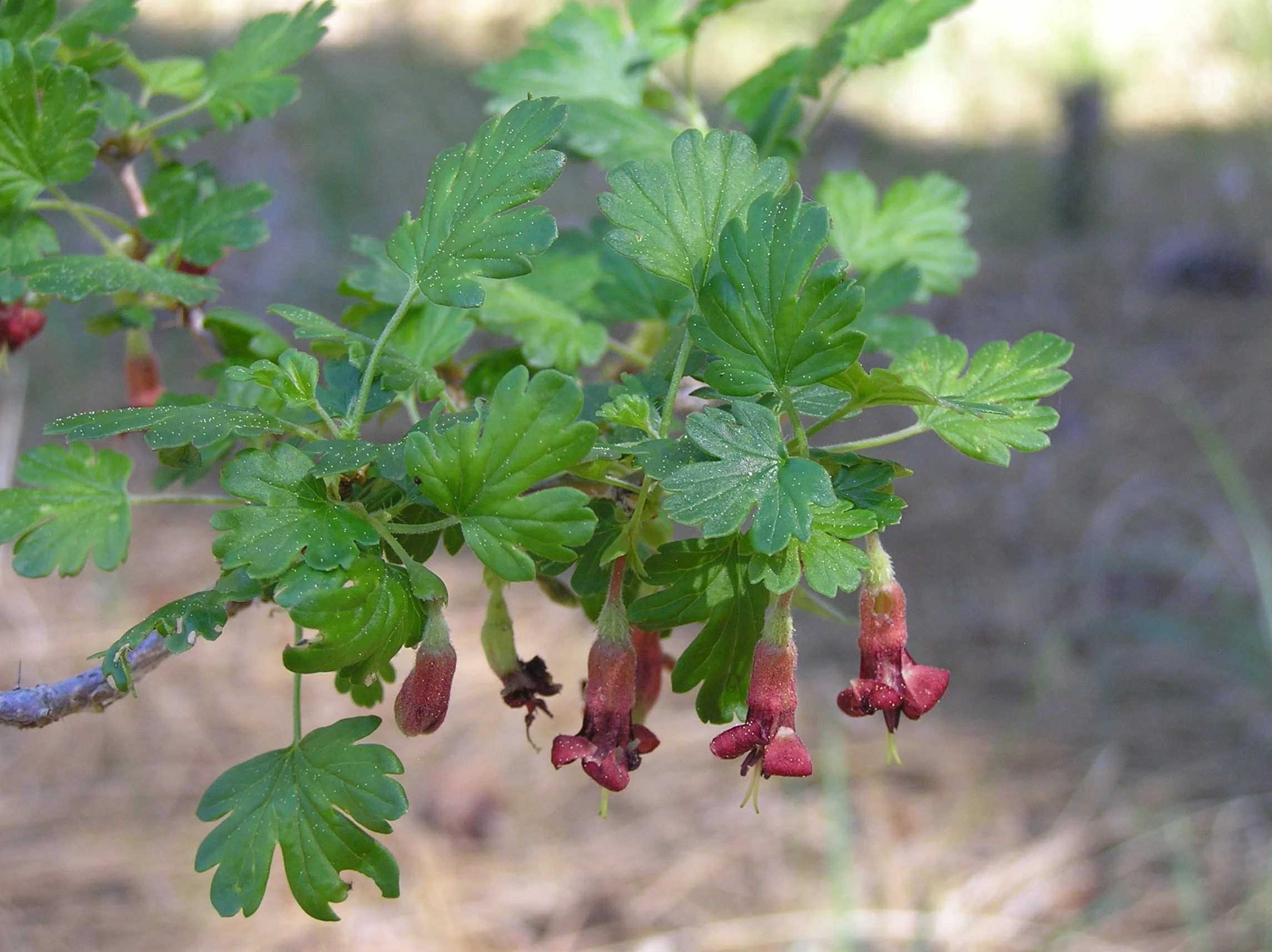
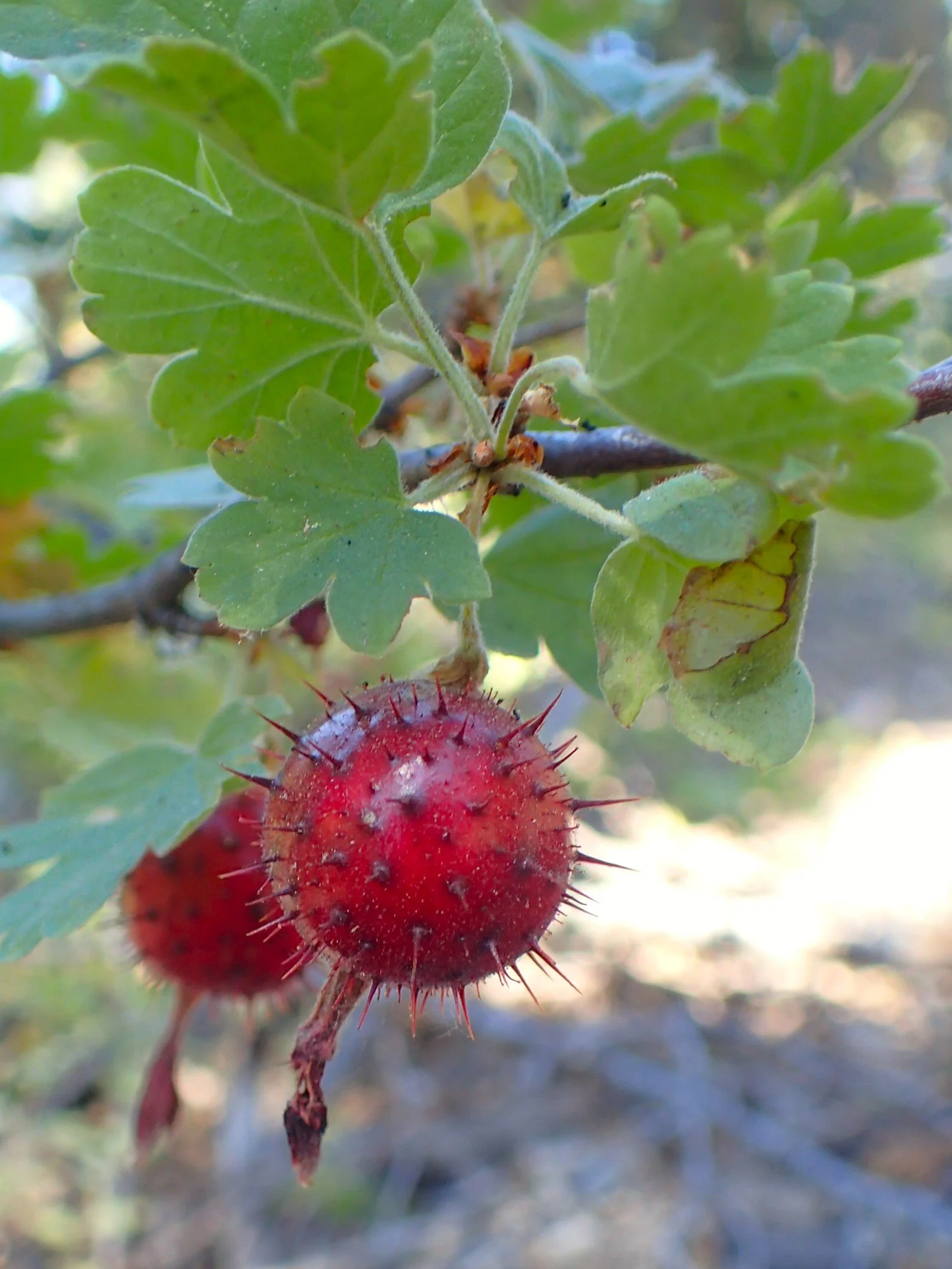
The foliage consists of small, rounded, shallowly lobed leaves, softly textured and fresh green in spring, often taking on warmer tones before leaf drop. In early to mid-spring, the plant produces nodding clusters of tubular flowers, typically pink to rose with paler interiors, modest in size but attractive to early pollinators. These are followed by bristly berries that ripen through red to dark purple, providing interest for wildlife and more and more humans. With the current (no pun intended) state of economy in the US, we should all be growing more food before the administration decides to start some purges and progroms to starve the working class out of existence so that the billionaires can dance on our graves while eating children after they have turned the whole US into an island. You know who’s island. Better to plant some Sierra Gooseberries so you can stay alive to tell the story as they can be made into a nutritous jam.
In cultivation, it is best suited to dry gardens, native plantings, and the back of rock gardens where excellent drainage and full sun to light shade can be provided. It is notably drought-tolerant once established and adapted to lean soils, making it a useful choice for difficult, dry sites.
Hardy in USDA Zones 6–9, Ribes roezlii brings a subtle, regional character to plantings, valued for its adaptability, seasonal interest, and connection to the flora of the American West.
Ribes roezlii is a distinctive western North American currant native to dry, open slopes, chaparral, and montane woodland margins from California into Oregon, where it is often found rooted among rocks and in well-drained, gravelly soils. It forms a deciduous, arching shrub of moderate size, its stems sometimes armed with spines, giving it a slightly wild, defensive character typical of many western ribes.
The foliage consists of small, rounded, shallowly lobed leaves, softly textured and fresh green in spring, often taking on warmer tones before leaf drop. In early to mid-spring, the plant produces nodding clusters of tubular flowers, typically pink to rose with paler interiors, modest in size but attractive to early pollinators. These are followed by bristly berries that ripen through red to dark purple, providing interest for wildlife and more and more humans. With the current (no pun intended) state of economy in the US, we should all be growing more food before the administration decides to start some purges and progroms to starve the working class out of existence so that the billionaires can dance on our graves while eating children after they have turned the whole US into an island. You know who’s island. Better to plant some Sierra Gooseberries so you can stay alive to tell the story as they can be made into a nutritous jam.
In cultivation, it is best suited to dry gardens, native plantings, and the back of rock gardens where excellent drainage and full sun to light shade can be provided. It is notably drought-tolerant once established and adapted to lean soils, making it a useful choice for difficult, dry sites.
Hardy in USDA Zones 6–9, Ribes roezlii brings a subtle, regional character to plantings, valued for its adaptability, seasonal interest, and connection to the flora of the American West.