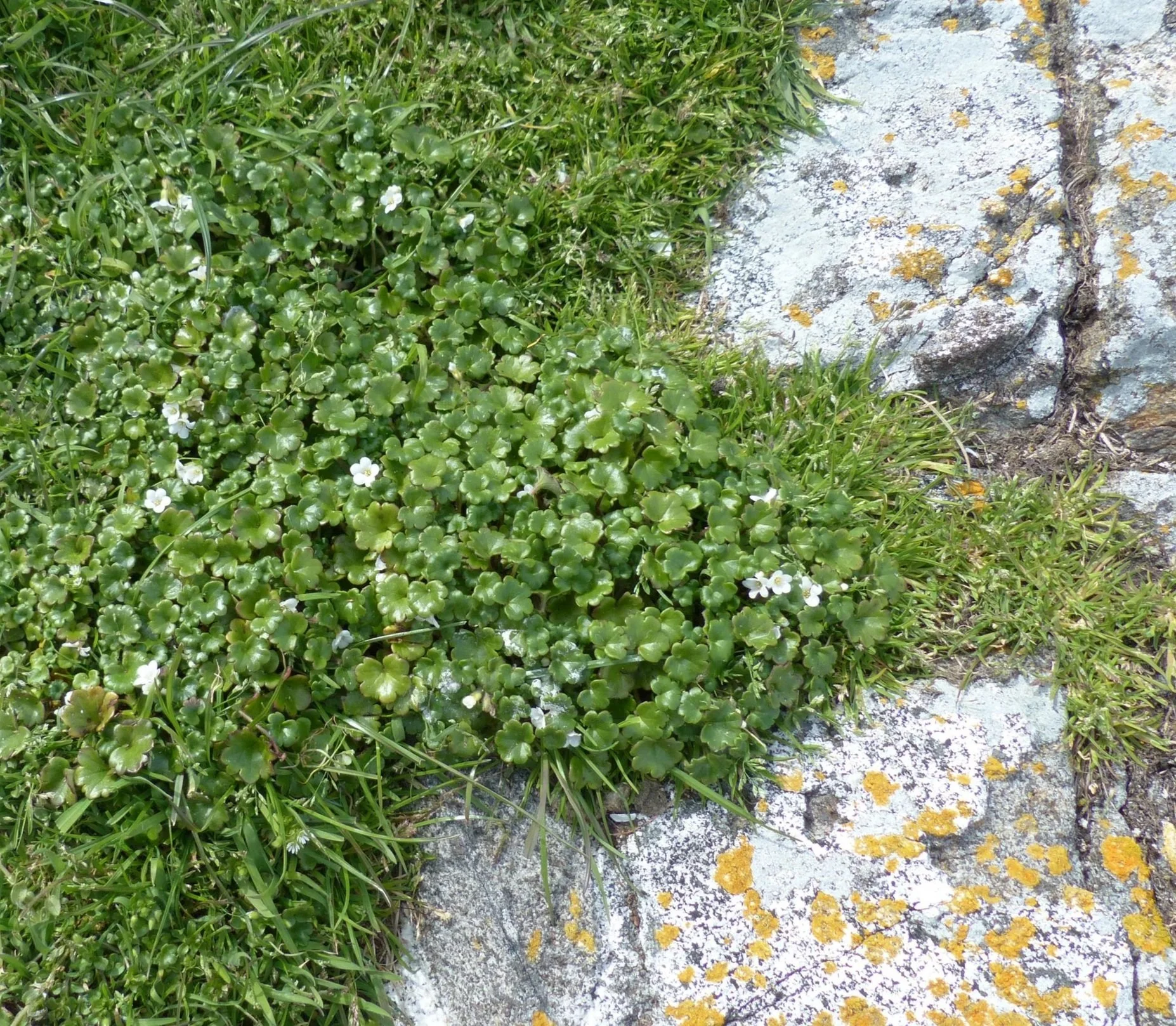
Romanzoffia tracyi (Tracy’s mistmaiden) is a delicate yet resilient woodland perennial native to moist, shaded cliffs and mossy rock faces of the Pacific Northwest, particularly in northern California and southern Oregon. In nature it is often found cascading from seepage zones where cool water trickles through fractured rock, rooting into thin organic films and crevices.
Romanzoffia has always been special to me for the memories of some wonderful botanizing trips with my mentor Jack Poff. He loved the Columbia River Gorge and it’s fantastic flora. I remember seeing R. sitchensis at Mitchell Point, and he explained how the Mist Maidens were an underutilized rock garden plant. I have long felt that way and now I have R. tracyi, R. Unalaschencis and R. californica and hope to do some breeding to see if we can change that perception.
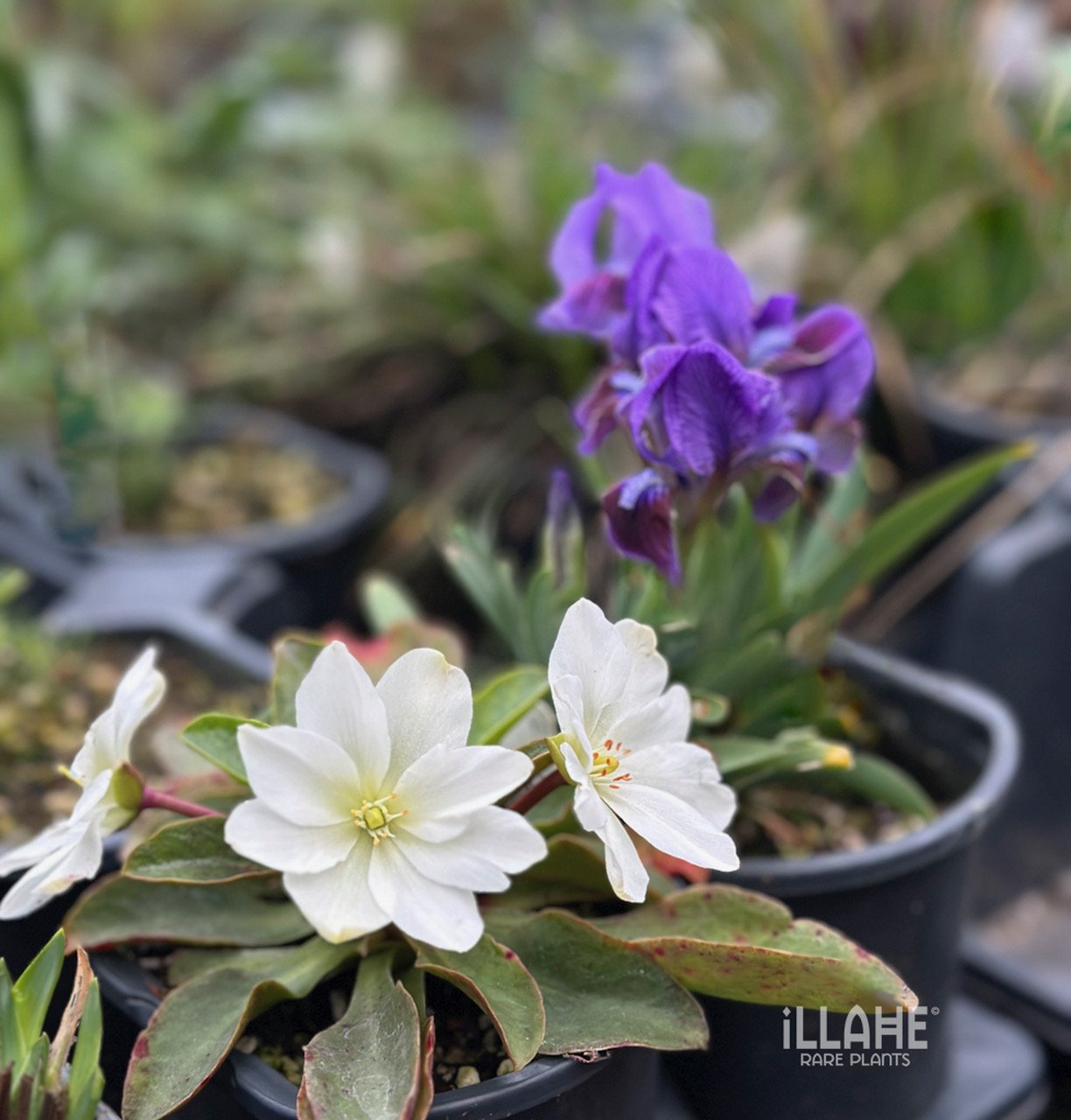
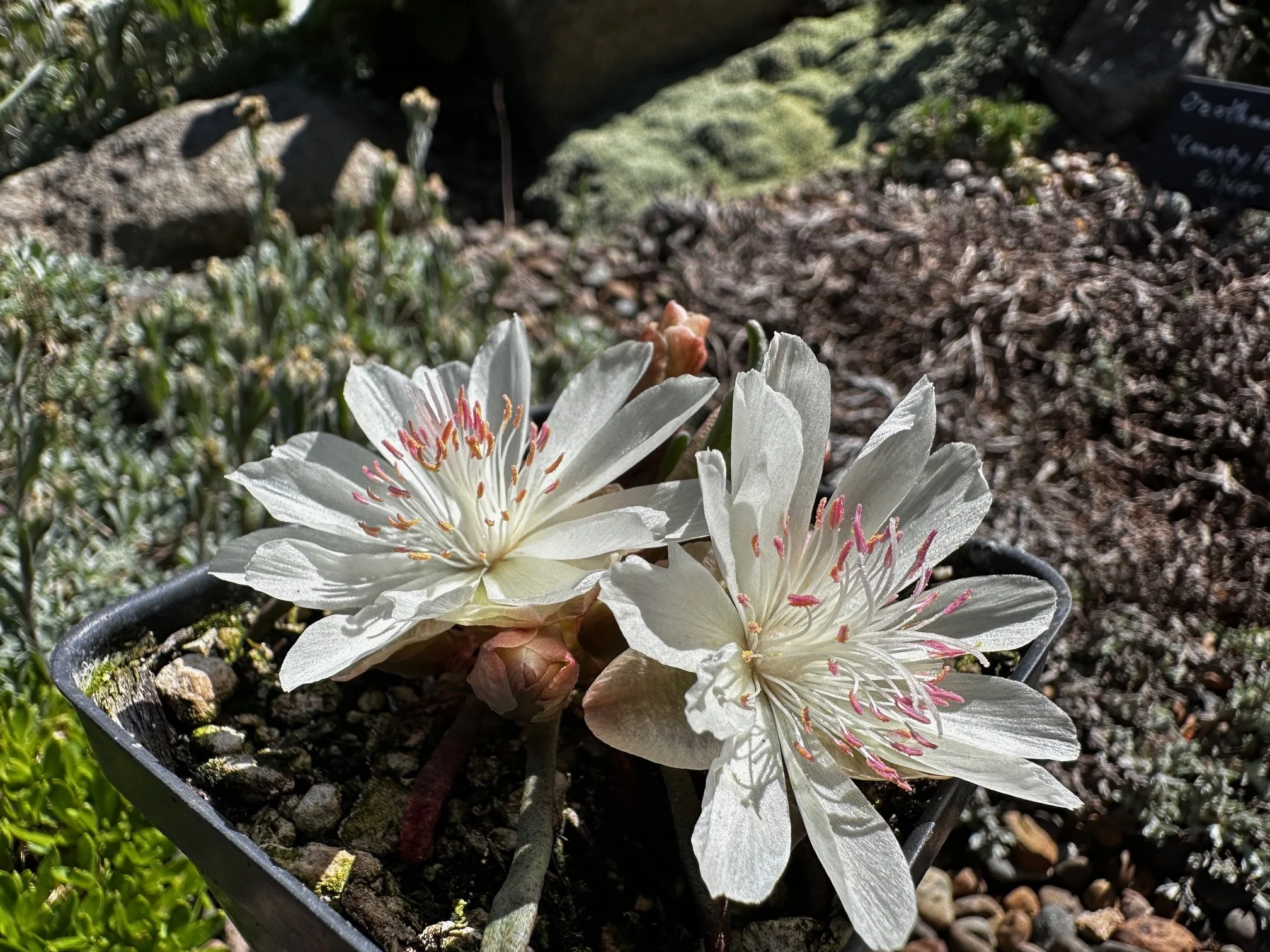
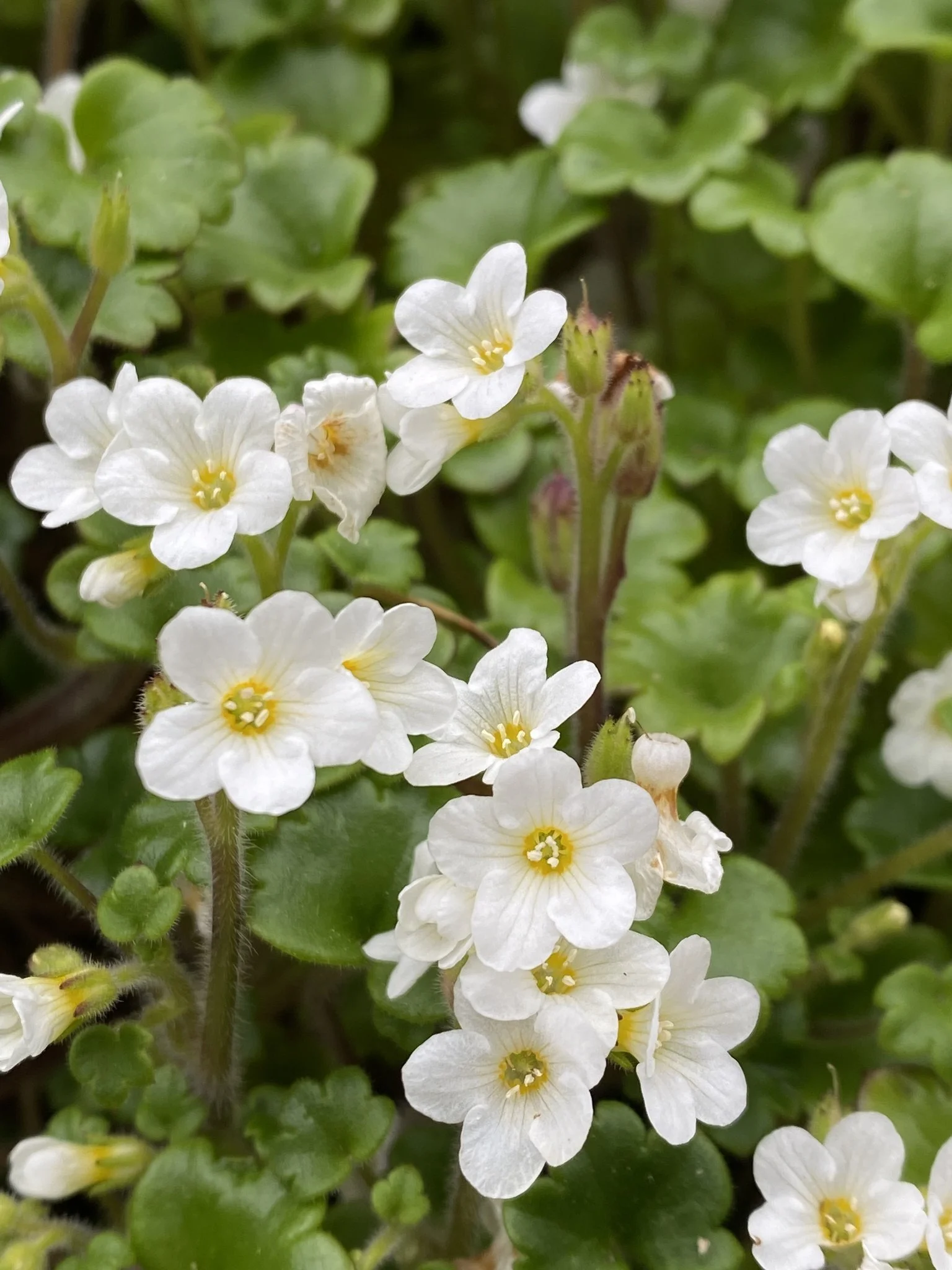
This low, semi-evergreen plant forms a loose rosette of rounded to kidney-shaped, softly lobed leaves with a bright, fresh green succulent texture that remains attractive through much of the year in favorable conditions. In spring, slender stems rise just above the foliage bearing nodding, pure white, five-petaled flowers with a faintly translucent quality, giving the impression of small stars suspended in shade.
Best grown in cool, consistently moist but well-drained soils rich in organic matter, it excels in shaded rock gardens, woodland plantings, and vertical crevice walls where its natural habit can be mimicked. It is intolerant of drought and summer heat, preferring environments that remain cool and humid through the growing season.
Romanzoffia tracyi is named in honor of Joseph Tracy (1854–1934), an American botanist and plant collector associated with the early exploration of the flora of northern California.
Tracy was active in documenting the plants of the coastal and Siskiyou regions during a period when much of that flora was still poorly known to science. He worked closely with other western botanists and contributed specimens and field observations that helped clarify the distribution of many Pacific Northwest and California species, particularly those associated with shaded forest and serpentine or rocky habitats.
The genus Romanzoffia itself honors Count Nikolai Rumyantsev (Romanov/Romanzoff), a Russian patron of exploration, reflecting an older tradition of commemorating scientific patrons in plant nomenclature.
Romanzoffia tracyi (Tracy’s mistmaiden) is a delicate yet resilient woodland perennial native to moist, shaded cliffs and mossy rock faces of the Pacific Northwest, particularly in northern California and southern Oregon. In nature it is often found cascading from seepage zones where cool water trickles through fractured rock, rooting into thin organic films and crevices.
Romanzoffia has always been special to me for the memories of some wonderful botanizing trips with my mentor Jack Poff. He loved the Columbia River Gorge and it’s fantastic flora. I remember seeing R. sitchensis at Mitchell Point, and he explained how the Mist Maidens were an underutilized rock garden plant. I have long felt that way and now I have R. tracyi, R. Unalaschencis and R. californica and hope to do some breeding to see if we can change that perception.
This low, semi-evergreen plant forms a loose rosette of rounded to kidney-shaped, softly lobed leaves with a bright, fresh green succulent texture that remains attractive through much of the year in favorable conditions. In spring, slender stems rise just above the foliage bearing nodding, pure white, five-petaled flowers with a faintly translucent quality, giving the impression of small stars suspended in shade.
Best grown in cool, consistently moist but well-drained soils rich in organic matter, it excels in shaded rock gardens, woodland plantings, and vertical crevice walls where its natural habit can be mimicked. It is intolerant of drought and summer heat, preferring environments that remain cool and humid through the growing season.
Romanzoffia tracyi is named in honor of Joseph Tracy (1854–1934), an American botanist and plant collector associated with the early exploration of the flora of northern California.
Tracy was active in documenting the plants of the coastal and Siskiyou regions during a period when much of that flora was still poorly known to science. He worked closely with other western botanists and contributed specimens and field observations that helped clarify the distribution of many Pacific Northwest and California species, particularly those associated with shaded forest and serpentine or rocky habitats.
The genus Romanzoffia itself honors Count Nikolai Rumyantsev (Romanov/Romanzoff), a Russian patron of exploration, reflecting an older tradition of commemorating scientific patrons in plant nomenclature.