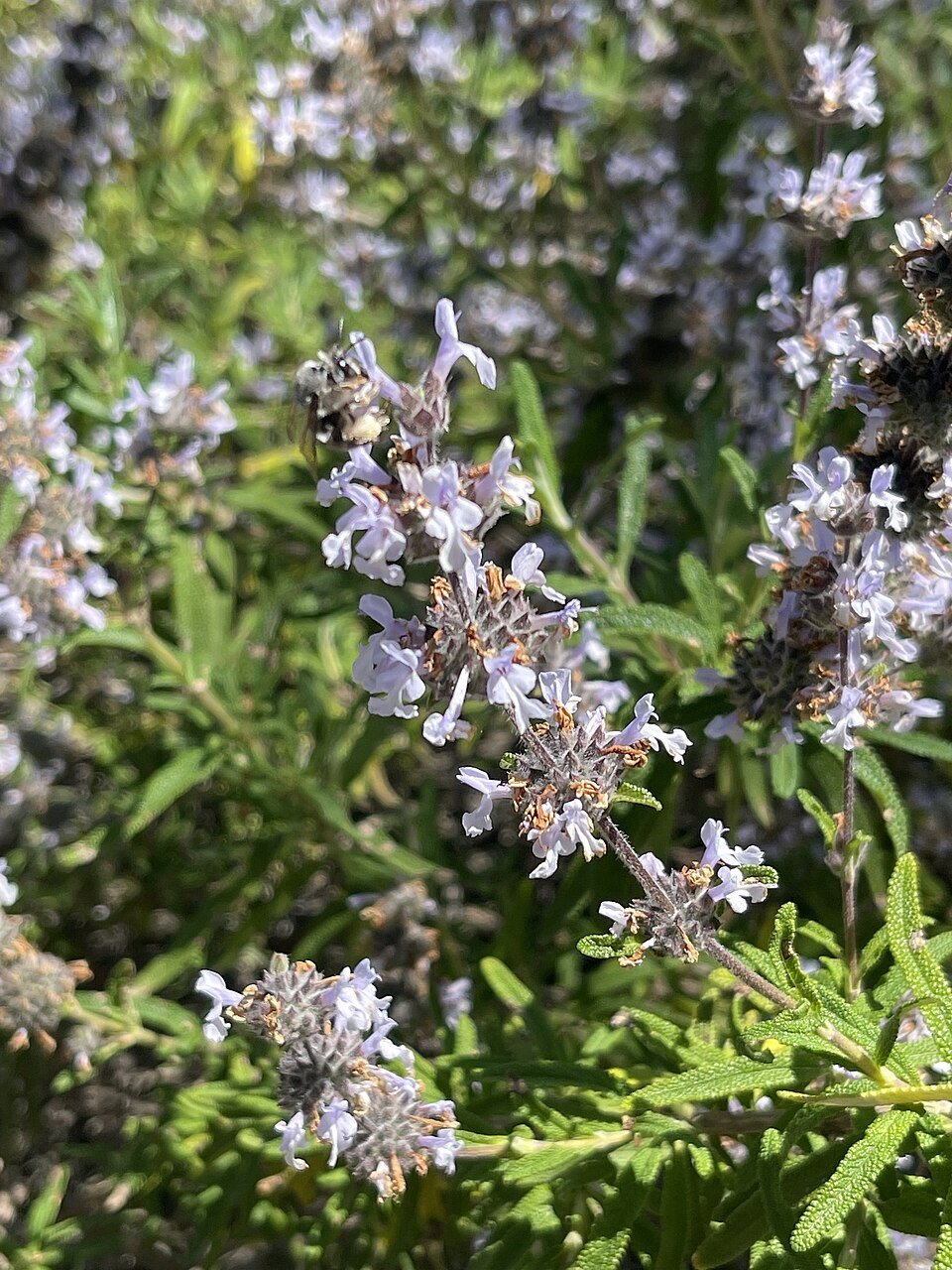
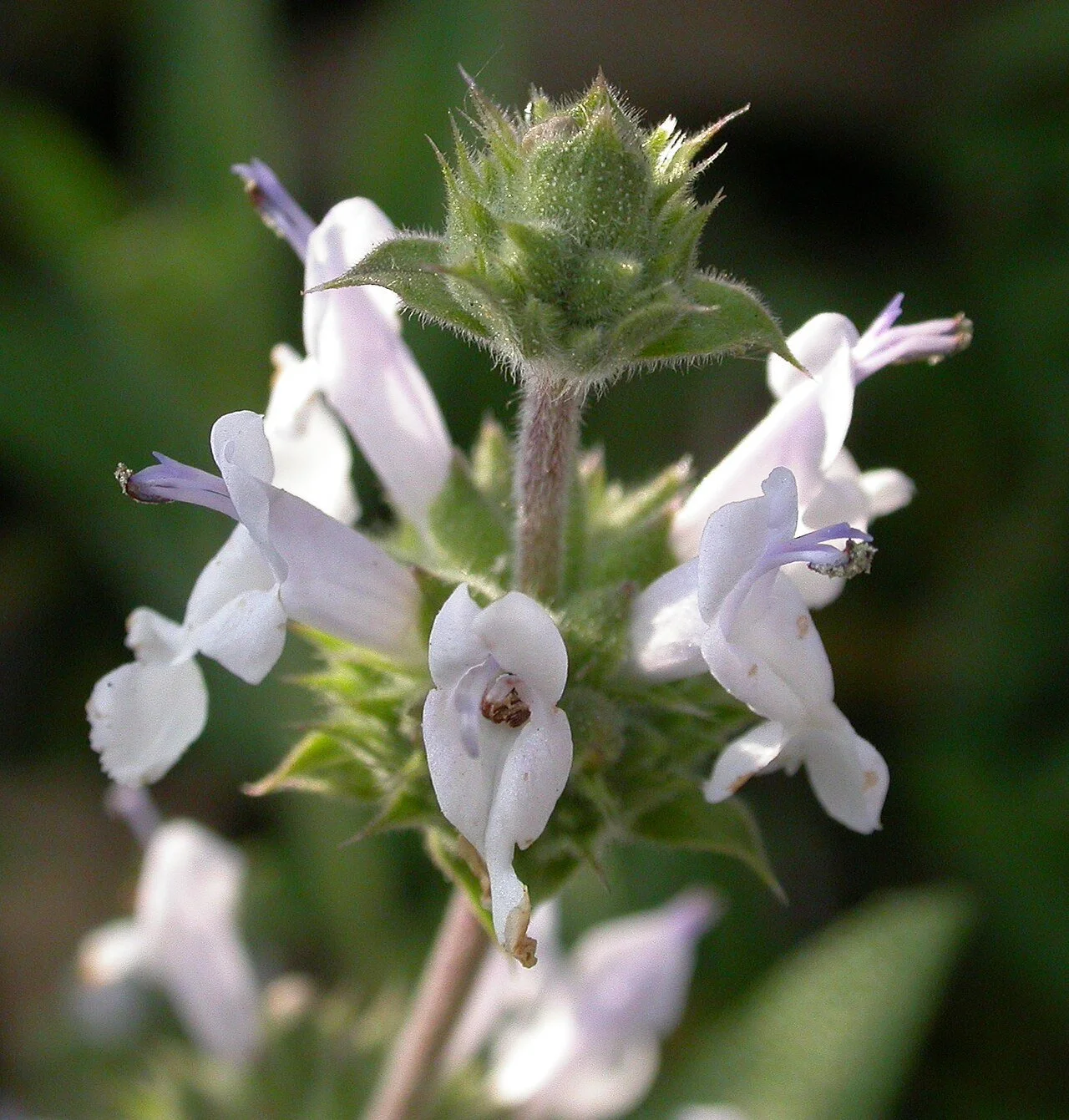
A handsome, aromatic California native forming a rounded evergreen to semi-evergreen shrub with strongly scented, dark green leaves and whorls of small white to pale lavender flowers in spring. The flowers are an important nectar source for native bees and other pollinators, and the plant is particularly valuable in wildlife-oriented, drought-tolerant plantings.
Black sage is native from the California Coast Ranges south into Baja California, where it grows in coastal sage scrub, chaparral, and lower montane shrublands on dry slopes and rocky or coarse-textured soils. It is remarkably tolerant of drought once established and occurs on soils derived from sandstone, shale, granite, serpentine, and basalt. Combine it with some of Marks monkeyflowers Diplacus for an outstanding dryland garden show.
While larger than the typical rock-garden plant, Salvia mellifera is an excellent choice for a dry rock garden, xeric border, or larger-scale Mediterranean planting where there is room for a shrub. Give it full sun and exceptionally good drainage; in areas with wet winters, planting it on a raised mound or among rocks can help reproduce the sharply drained conditions of its native habitat. Its aromatic foliage and ability to thrive with very little summer water make it especially interesting for gardens designed around California and Mediterranean-climate plants.
A handsome, aromatic California native forming a rounded evergreen to semi-evergreen shrub with strongly scented, dark green leaves and whorls of small white to pale lavender flowers in spring. The flowers are an important nectar source for native bees and other pollinators, and the plant is particularly valuable in wildlife-oriented, drought-tolerant plantings.
Black sage is native from the California Coast Ranges south into Baja California, where it grows in coastal sage scrub, chaparral, and lower montane shrublands on dry slopes and rocky or coarse-textured soils. It is remarkably tolerant of drought once established and occurs on soils derived from sandstone, shale, granite, serpentine, and basalt. Combine it with some of Marks monkeyflowers Diplacus for an outstanding dryland garden show.
While larger than the typical rock-garden plant, Salvia mellifera is an excellent choice for a dry rock garden, xeric border, or larger-scale Mediterranean planting where there is room for a shrub. Give it full sun and exceptionally good drainage; in areas with wet winters, planting it on a raised mound or among rocks can help reproduce the sharply drained conditions of its native habitat. Its aromatic foliage and ability to thrive with very little summer water make it especially interesting for gardens designed around California and Mediterranean-climate plants.