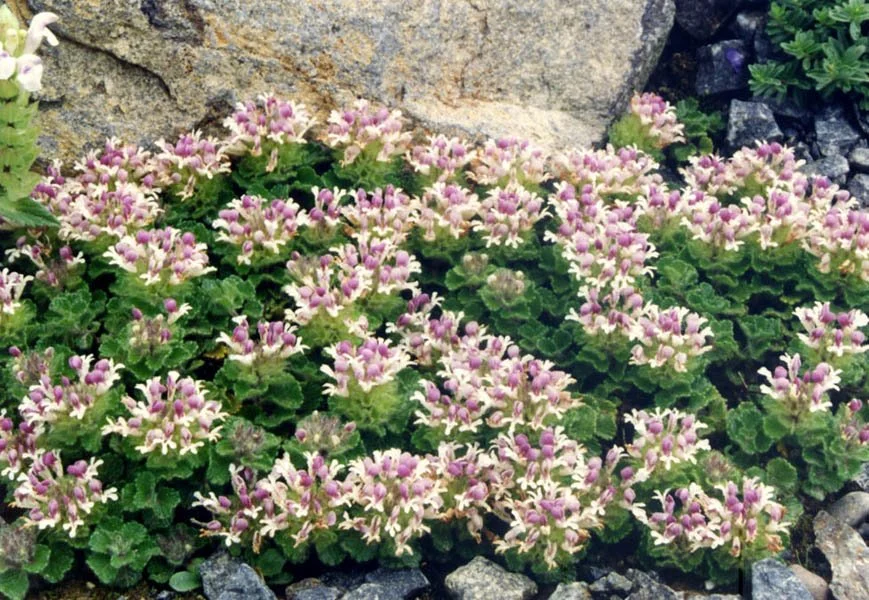
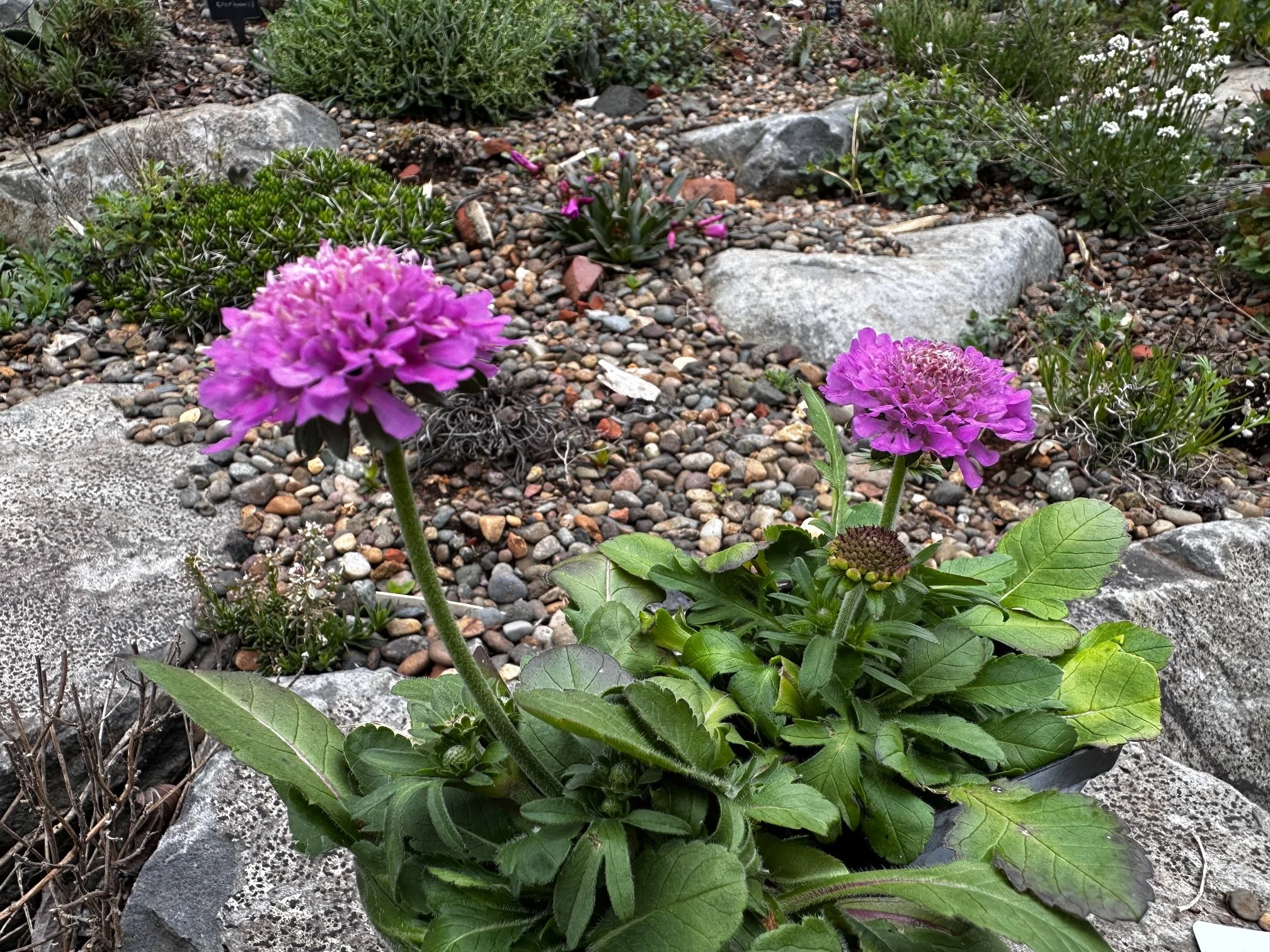
A compact, long-blooming selection of the alpine scabious, ‘Ritz Rose’ forms neat, low mounds of finely cut, gray-green foliage from which arise slender, wiry stems carrying soft rose-pink, pincushion-like flowers. The blooms are held well above the foliage and have a delicate, airy quality, with outer florets often slightly paler than the central dome, giving the flower heads a subtle two-toned effect. Flowering begins in late spring and, with regular deadheading, can continue sporadically through summer.
In cultivation, ‘Ritz Rose’ is a valuable perennial for rock gardens, gravel plantings, and mixed borders, offering a lighter, more refined habit than many larger scabious selections. It thrives in full sun with sharply drained, moderately fertile soil and benefits from a relatively cool root zone. While tolerant of summer drought once established, it performs best with occasional moisture during prolonged dry periods. Hardy to approximately USDA Zone 4–7, it is well suited to temperate climates with cold winters.
This cultivar is especially prized for its soft coloration and extended bloom period, bringing a long blooms season and pollinator activity to the garden. Its fine texture and upright floral stems make it an excellent companion for grasses and other airy perennials in naturalistic plantings.
A compact, long-blooming selection of the alpine scabious, ‘Ritz Rose’ forms neat, low mounds of finely cut, gray-green foliage from which arise slender, wiry stems carrying soft rose-pink, pincushion-like flowers. The blooms are held well above the foliage and have a delicate, airy quality, with outer florets often slightly paler than the central dome, giving the flower heads a subtle two-toned effect. Flowering begins in late spring and, with regular deadheading, can continue sporadically through summer.
In cultivation, ‘Ritz Rose’ is a valuable perennial for rock gardens, gravel plantings, and mixed borders, offering a lighter, more refined habit than many larger scabious selections. It thrives in full sun with sharply drained, moderately fertile soil and benefits from a relatively cool root zone. While tolerant of summer drought once established, it performs best with occasional moisture during prolonged dry periods. Hardy to approximately USDA Zone 4–7, it is well suited to temperate climates with cold winters.
This cultivar is especially prized for its soft coloration and extended bloom period, bringing a long blooms season and pollinator activity to the garden. Its fine texture and upright floral stems make it an excellent companion for grasses and other airy perennials in naturalistic plantings.