Scutellaria laeteviolacea — Violet Skullcap
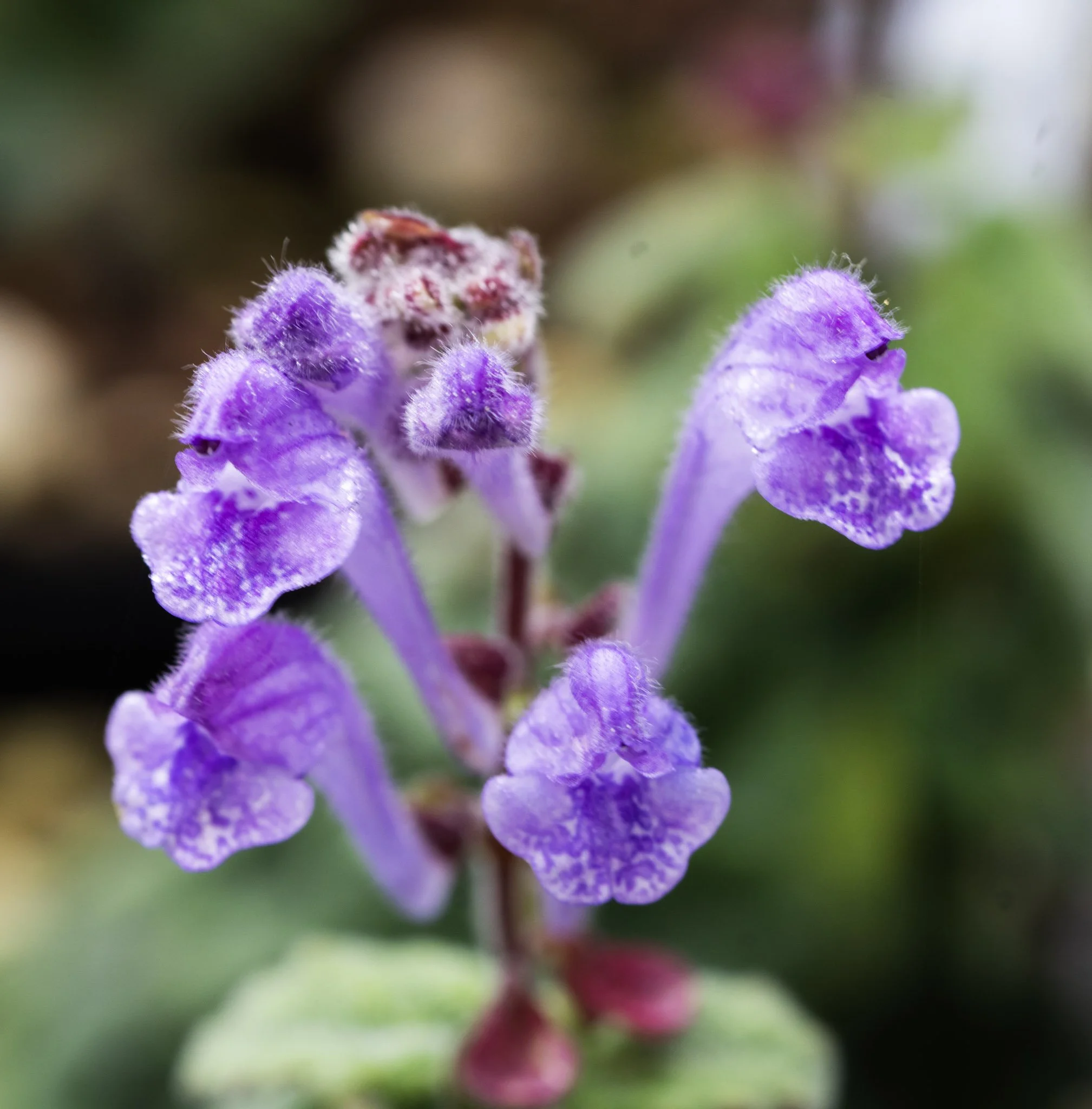
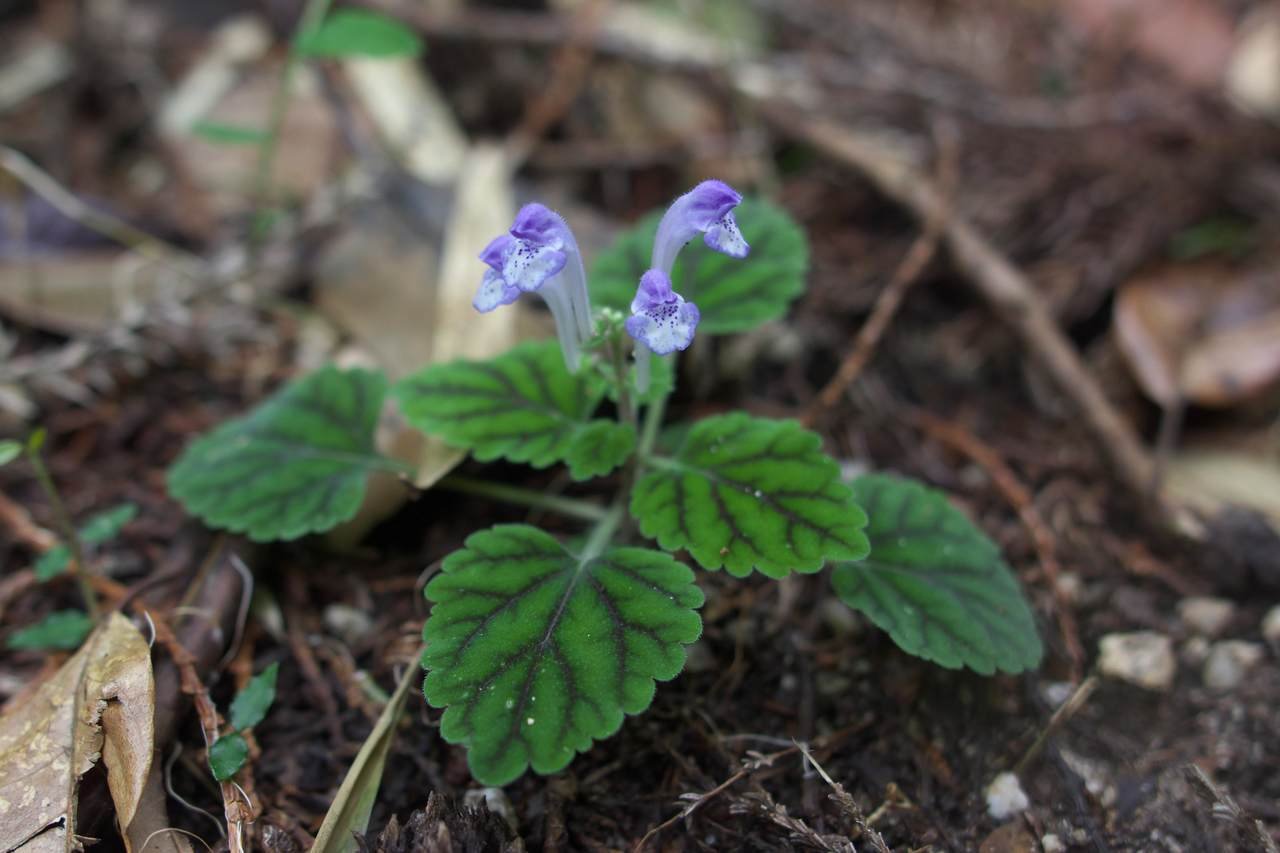
A charming and somewhat unusual Asian skullcap forming a low, compact clump of fresh green, triangular to rounded leaves, often with a purplish cast beneath. In spring and early summer, slender stems carry a succession of rich purple to red-purple, hooded flowers, each with the characteristic helmet-like form of Scutellaria. The relatively small stature, reaching roughly 4–12 inches, makes it especially useful for the smaller garden.
Native to southeastern China, Korea, and central and southern Japan, S. laeteviolacea is found in moist woodland margins, grassy slopes, thickets, and rocky sites. In Japan it is particularly associated with damp forest edges and shaded rocky ground.
An excellent plant for a woodland rock garden, shaded trough, or cool crevice where the soil remains evenly moist but well drained. It is a good choice for the rock gardener looking for something different from the familiar North American skullcaps, and its small scale allows it to be tucked between stones or beneath taller alpine plants. Give it partial shade and humus-rich, moisture-retentive soil rather than the hot, dry conditions preferred by many western rock-garden plants. Pair it with Haberleas, or Ramondas in a shady rocky nook and enjoy a spectacular show!
Scutellaria laeteviolacea — Violet Skullcap
A charming and somewhat unusual Asian skullcap forming a low, compact clump of fresh green, triangular to rounded leaves, often with a purplish cast beneath. In spring and early summer, slender stems carry a succession of rich purple to red-purple, hooded flowers, each with the characteristic helmet-like form of Scutellaria. The relatively small stature, reaching roughly 4–12 inches, makes it especially useful for the smaller garden.
Native to southeastern China, Korea, and central and southern Japan, S. laeteviolacea is found in moist woodland margins, grassy slopes, thickets, and rocky sites. In Japan it is particularly associated with damp forest edges and shaded rocky ground.
An excellent plant for a woodland rock garden, shaded trough, or cool crevice where the soil remains evenly moist but well drained. It is a good choice for the rock gardener looking for something different from the familiar North American skullcaps, and its small scale allows it to be tucked between stones or beneath taller alpine plants. Give it partial shade and humus-rich, moisture-retentive soil rather than the hot, dry conditions preferred by many western rock-garden plants. Pair it with Haberleas, or Ramondas in a shady rocky nook and enjoy a spectacular show!