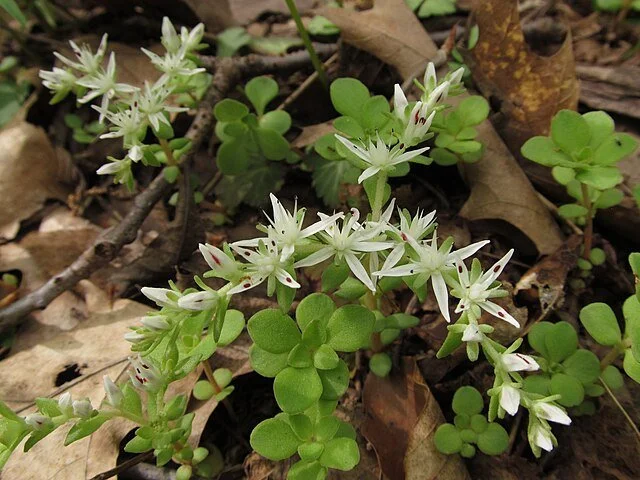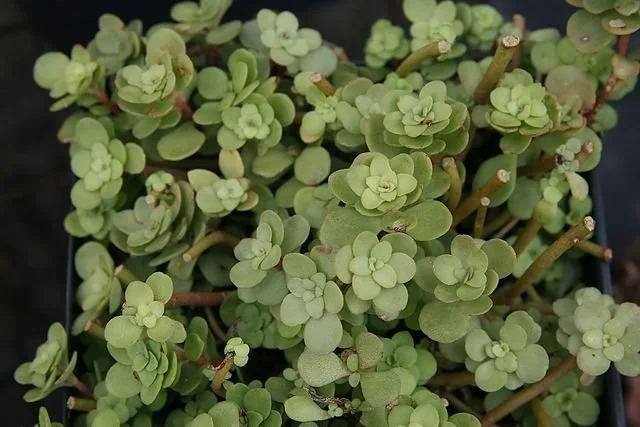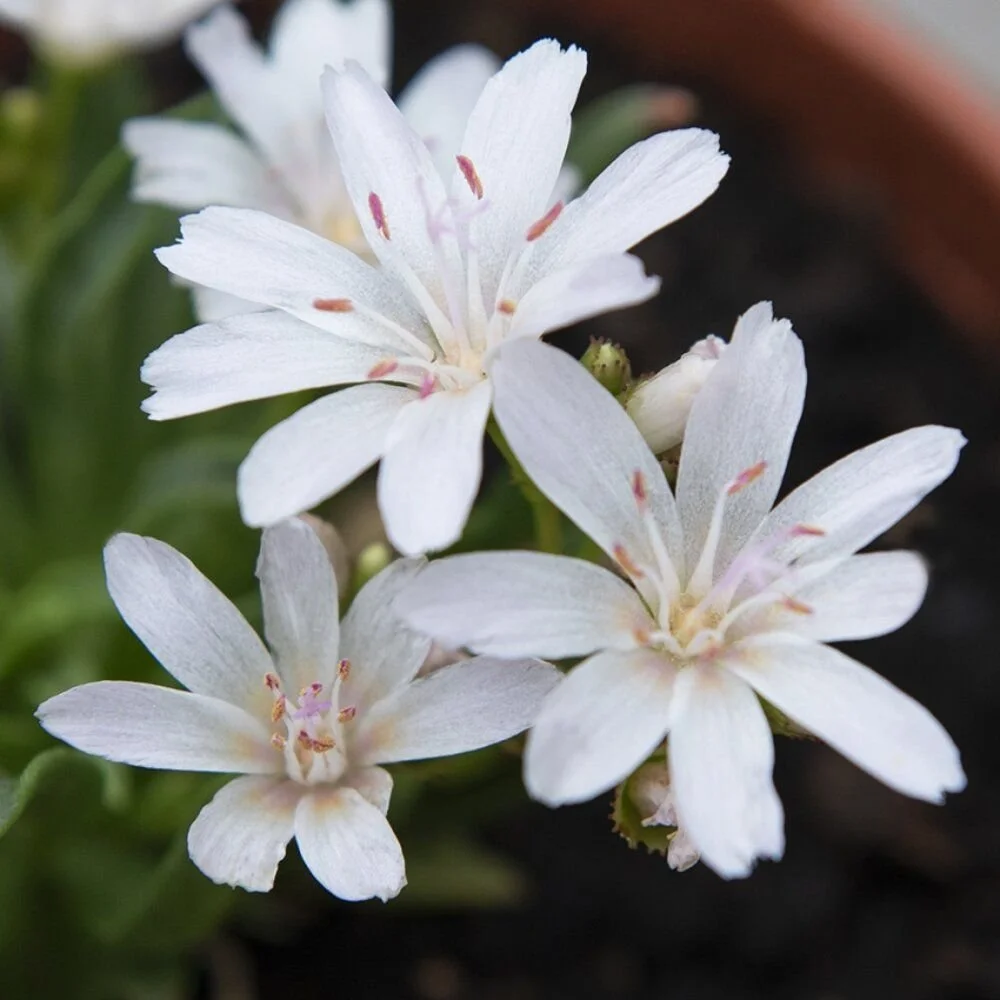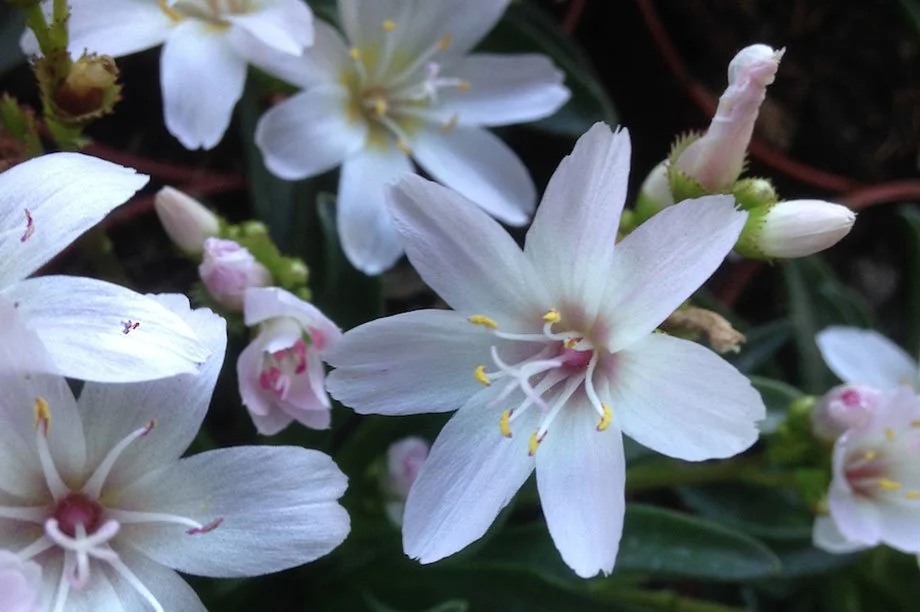
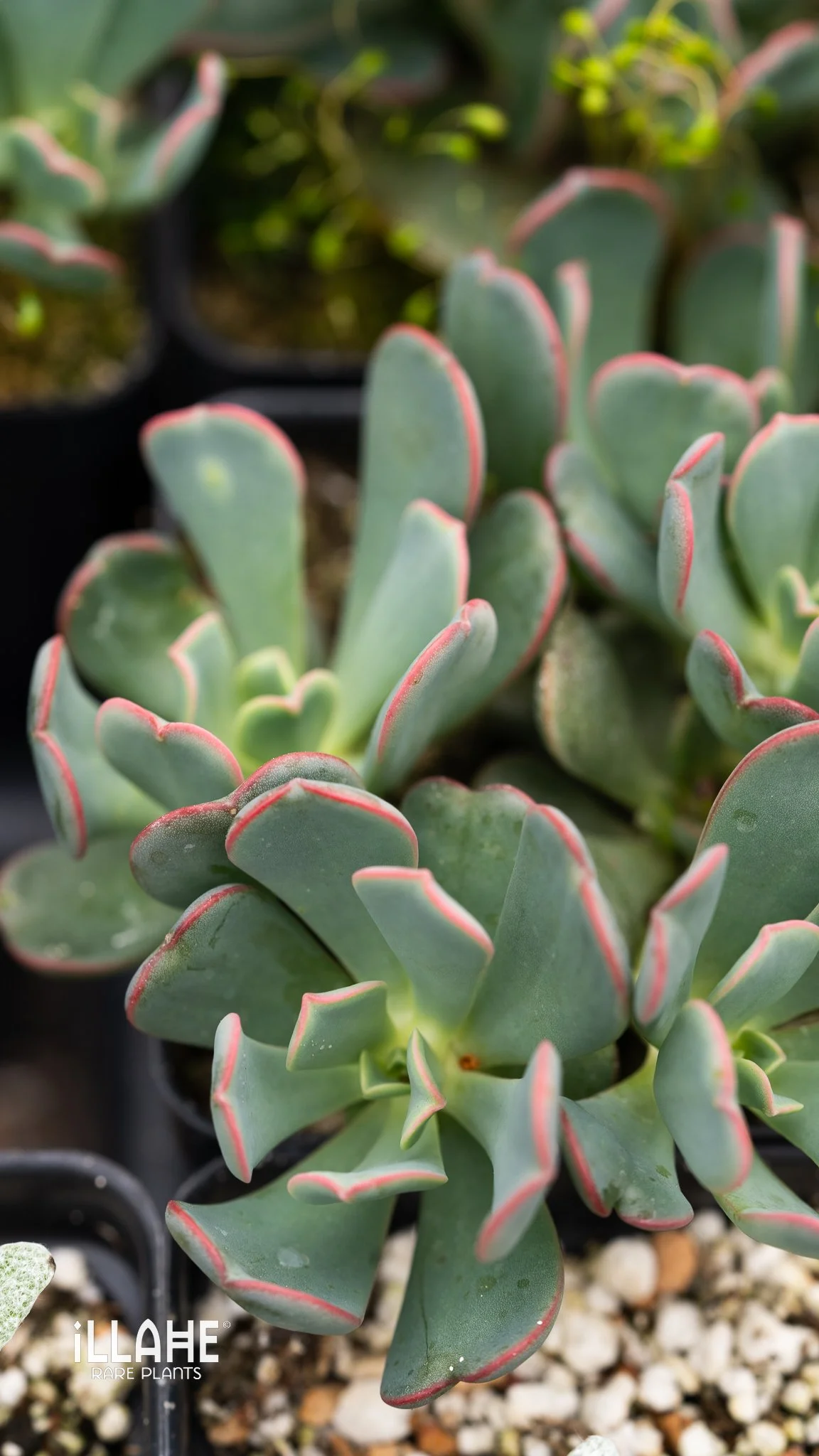
A stalwart Northwest Native mat-forming stonecrop of coastal and montane rock habitats, Sedum laxum develops low, spreading cushions of smooth, fleshy leaves arranged in loose rosettes along creeping stems. The foliage is typically bright green with a slight glaucous sheen, often taking on reddish or bronze tones under strong sun or drought stress. My form tends to get bright red margins, making a real show. In late spring to early summer, upright stems carry clusters of star-shaped, pale pink to white flowers that rise just above the foliage, creating a delicate seasonal display against the otherwise restrained mat.
Native to rocky outcrops and forested cliffs of the western United States, it is especially associated with moist, shaded crevices and serpentine or granitic substrates in parts of the Pacific Northwest and northern California. It occupies sites that receive winter and spring moisture from rainfall and snowmelt but experience dry conditions through summer, often growing in partial shade under conifers or in cool rock fissures. I let it run through the low rock wall in front of the greenhouses where it thrives.
In cultivation, Sedum laxum is well suited to rock gardens, shaded scree beds, and trough plantings where drainage is excellent but moisture is more consistent than for desert sedums. It prefers light shade to full sun in cooler climates and performs best in lean, mineral-rich soils with occasional irrigation during prolonged dry periods. Hardy to approximately USDA Zone 5–7, it is more tolerant of summer moisture than many alpine sedums but still requires sharp winter drainage
A stalwart Northwest Native mat-forming stonecrop of coastal and montane rock habitats, Sedum laxum develops low, spreading cushions of smooth, fleshy leaves arranged in loose rosettes along creeping stems. The foliage is typically bright green with a slight glaucous sheen, often taking on reddish or bronze tones under strong sun or drought stress. My form tends to get bright red margins, making a real show. In late spring to early summer, upright stems carry clusters of star-shaped, pale pink to white flowers that rise just above the foliage, creating a delicate seasonal display against the otherwise restrained mat.
Native to rocky outcrops and forested cliffs of the western United States, it is especially associated with moist, shaded crevices and serpentine or granitic substrates in parts of the Pacific Northwest and northern California. It occupies sites that receive winter and spring moisture from rainfall and snowmelt but experience dry conditions through summer, often growing in partial shade under conifers or in cool rock fissures. I let it run through the low rock wall in front of the greenhouses where it thrives.
In cultivation, Sedum laxum is well suited to rock gardens, shaded scree beds, and trough plantings where drainage is excellent but moisture is more consistent than for desert sedums. It prefers light shade to full sun in cooler climates and performs best in lean, mineral-rich soils with occasional irrigation during prolonged dry periods. Hardy to approximately USDA Zone 5–7, it is more tolerant of summer moisture than many alpine sedums but still requires sharp winter drainage