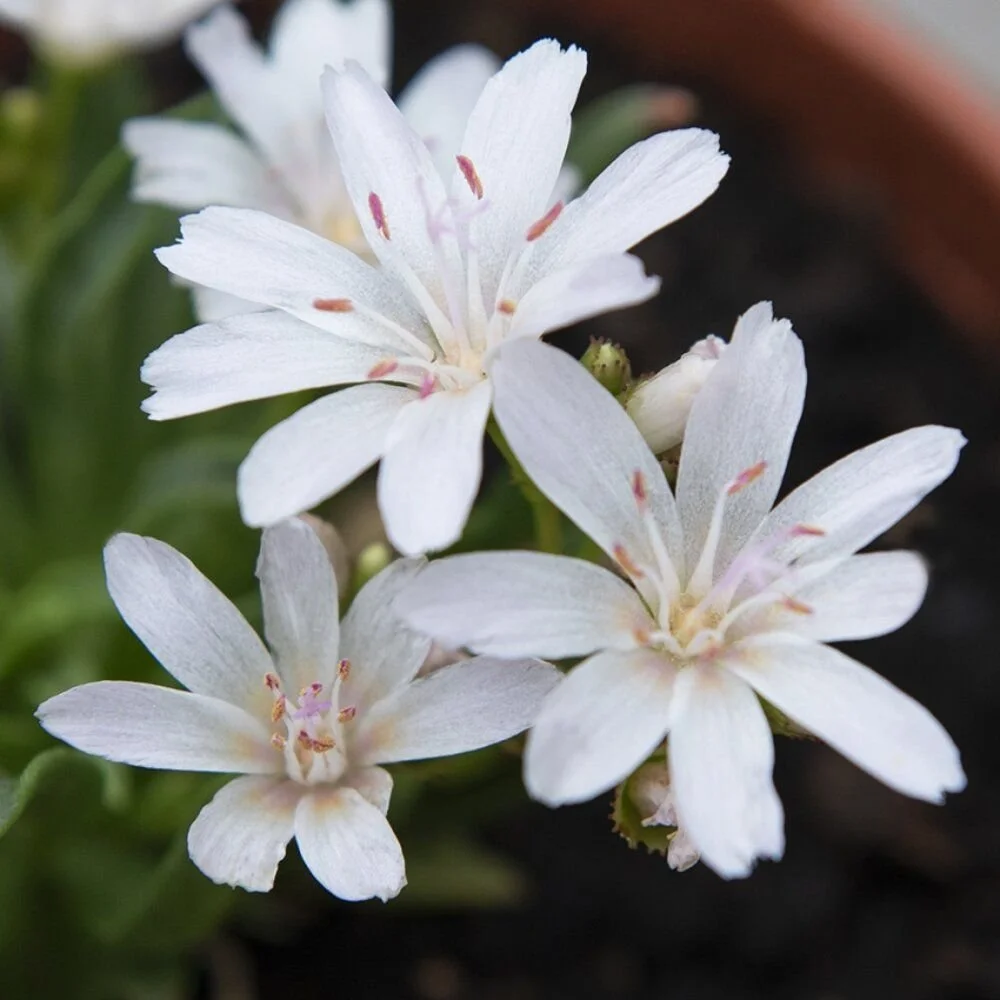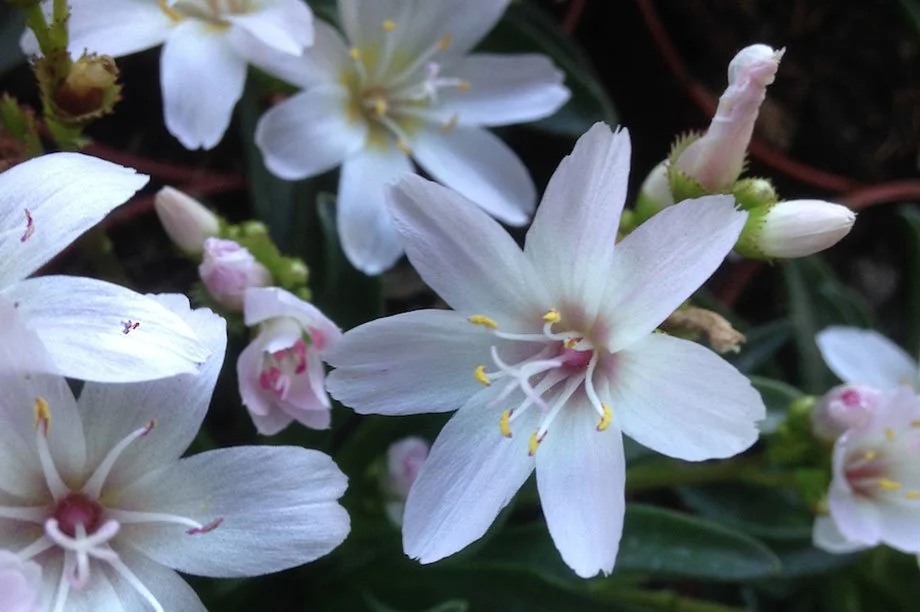
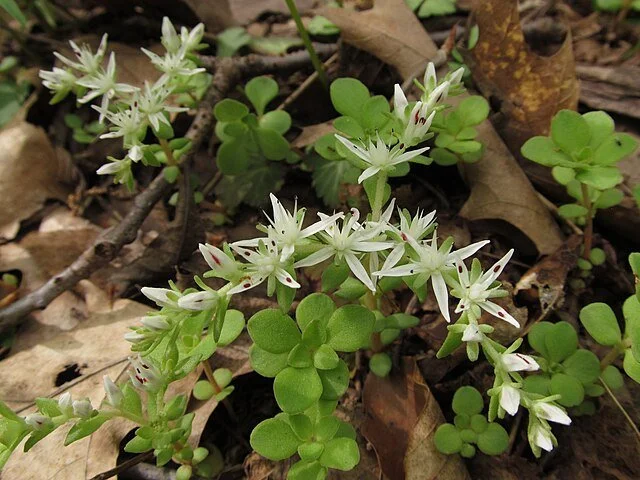
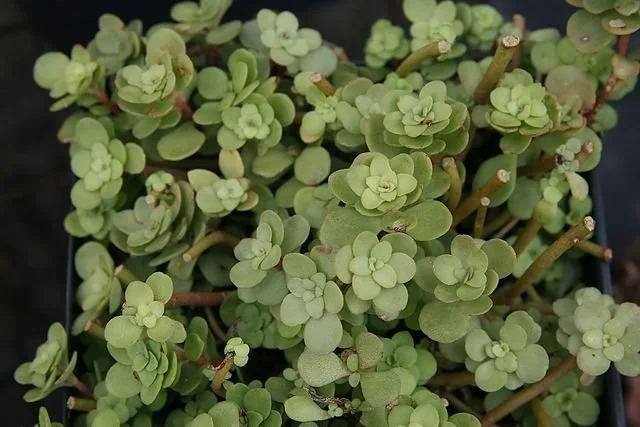
Sedum ternatum (woodland stonecrop) is a low, spreading native perennial found throughout eastern North America, including shaded, rocky woods and limestone outcrops in southern Michigan where it creeps across mossy ledges, forest floors, and streamside boulders. It was explained to me that this was the only Sedum native to Michigan as it was gifted to me by a NARGS chapter member on our recent Upper Midwest trip. This is one of the few truly shade-tolerant sedums, forming loose mats of small, rounded, bright green succulent leaves that root along the stems as they spread, creating an evergreen to semi-evergreen groundcover in favorable sites. In mid to late spring, it produces airy clusters of starry white flowers held just above the foliage, glowing in the dim light of deciduous woodland understories.
In cultivation it excels in rock gardens, shaded troughs, and naturalistic woodland plantings where soil is lean, humus-rich, and well-drained yet seasonally moist. Fully hardy in USDA Zones 3–8, it is especially valuable for stabilizing shallow soils on shaded slopes and between stones, bringing a subtle, refined texture where most sedums would fail. This would be one of the best plants you could consider for a shady rock garden.
Sedum ternatum (woodland stonecrop) is a low, spreading native perennial found throughout eastern North America, including shaded, rocky woods and limestone outcrops in southern Michigan where it creeps across mossy ledges, forest floors, and streamside boulders. It was explained to me that this was the only Sedum native to Michigan as it was gifted to me by a NARGS chapter member on our recent Upper Midwest trip. This is one of the few truly shade-tolerant sedums, forming loose mats of small, rounded, bright green succulent leaves that root along the stems as they spread, creating an evergreen to semi-evergreen groundcover in favorable sites. In mid to late spring, it produces airy clusters of starry white flowers held just above the foliage, glowing in the dim light of deciduous woodland understories.
In cultivation it excels in rock gardens, shaded troughs, and naturalistic woodland plantings where soil is lean, humus-rich, and well-drained yet seasonally moist. Fully hardy in USDA Zones 3–8, it is especially valuable for stabilizing shallow soils on shaded slopes and between stones, bringing a subtle, refined texture where most sedums would fail. This would be one of the best plants you could consider for a shady rock garden.