Synonym Solidago simplex v. nana.
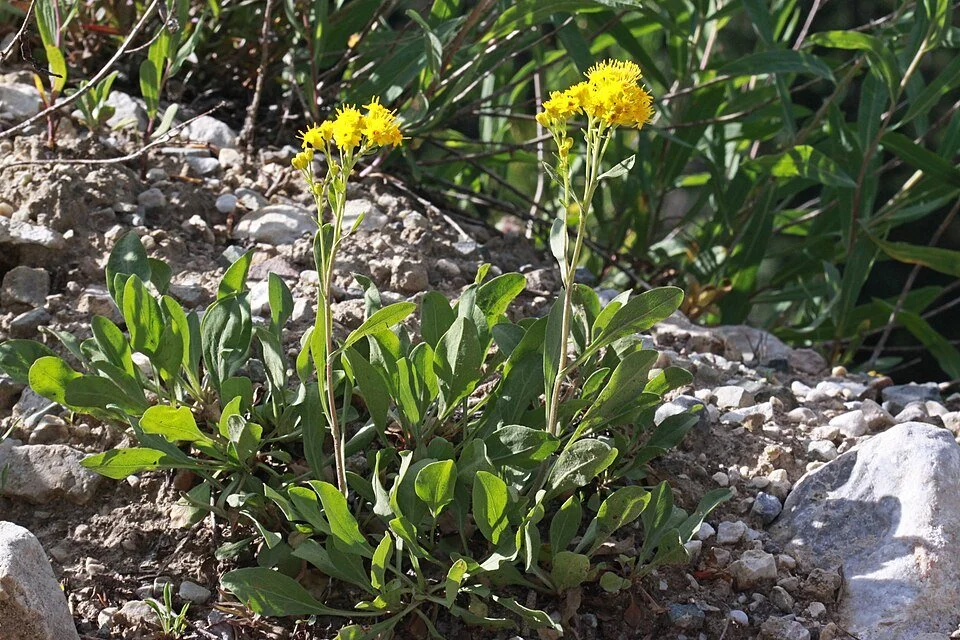
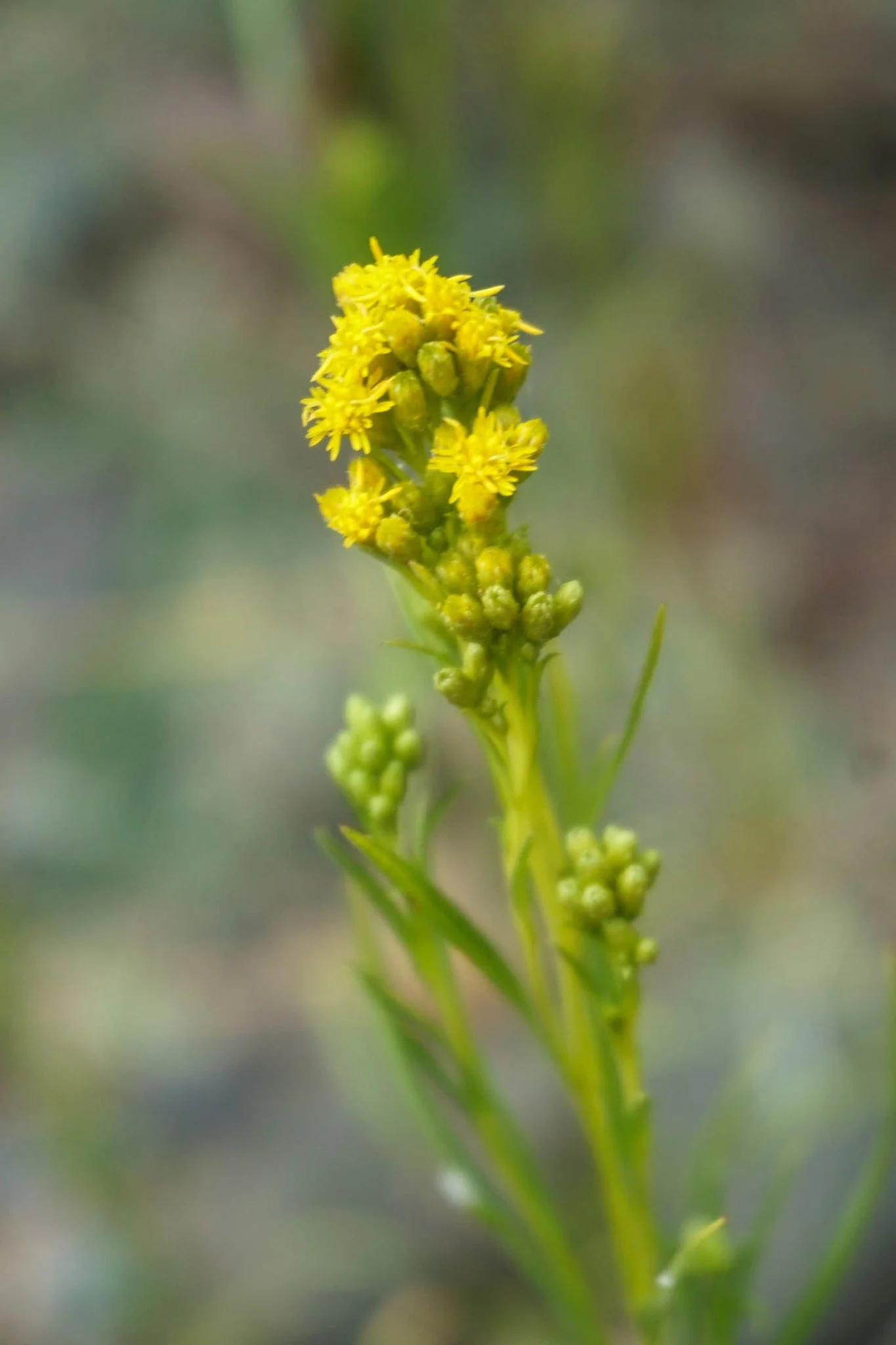
If you have ever kept bees, you know how important the goldenrod is for the late season bees. This dwarf alpine version is such a good addtion to the rock garden, for this and other reasons. It produces dense clusters of spatulate, slightly fleshy green leaves arranged along creeping to ascending stems, creating a compact, ground-hugging habit well suited to stabilization of sandy soils. In late summer to early fall, short upright stems rise above the foliage bearing sprays of small, bright golden-yellow flower heads typical of the genus, creating a fine-textured but luminous display late in the season. Extend the bloom season in your rock garden and fee the bees going into winter, it’s a win win.
In cultivation, Solidago spathulata var. nana excels in full sun and very well-drained, sandy or gravelly soils, particularly in coastal gardens, dry slopes, and naturalistic plantings. It is highly tolerant of wind, salt exposure, and drought once established, but resents heavy or poorly drained soils.
Hardy in USDA Zones 6–9, this dwarf goldenrod is valued for its ecological toughness, restrained size, and ability to provide late-season color in difficult coastal and dry garden conditions where few other perennials thrive.
Synonym Solidago simplex v. nana.
If you have ever kept bees, you know how important the goldenrod is for the late season bees. This dwarf alpine version is such a good addtion to the rock garden, for this and other reasons. It produces dense clusters of spatulate, slightly fleshy green leaves arranged along creeping to ascending stems, creating a compact, ground-hugging habit well suited to stabilization of sandy soils. In late summer to early fall, short upright stems rise above the foliage bearing sprays of small, bright golden-yellow flower heads typical of the genus, creating a fine-textured but luminous display late in the season. Extend the bloom season in your rock garden and fee the bees going into winter, it’s a win win.
In cultivation, Solidago spathulata var. nana excels in full sun and very well-drained, sandy or gravelly soils, particularly in coastal gardens, dry slopes, and naturalistic plantings. It is highly tolerant of wind, salt exposure, and drought once established, but resents heavy or poorly drained soils.
Hardy in USDA Zones 6–9, this dwarf goldenrod is valued for its ecological toughness, restrained size, and ability to provide late-season color in difficult coastal and dry garden conditions where few other perennials thrive.